By Senay GOKCEN | CEO, Editor-in-Chief
In this edition of Fashion Trendsetter’s Industry Q&A – a series spotlighting visionaries in fashion, interior design, and textiles-, today we’re welcoming Senior Fashion Designer Tanushri ROY.
If you’ve spent any time on social media-especially LinkedIn– exploring AI platforms or creative communities, chances are you’ve come across the name Tanushri ROY, a fashion and AI designer from Abu Dhabi, United Arab Emirates.

Her distinctive style consistently grabs attention-as caught mine last year, and I’ve been following her journey ever since. With a contemporary approach to fashion design, her creations stand out effortlessly, offering a fresh perspective that sets her apart in the AI fashion space. Her progression in AI fashion design has been nothing short of inspiring as she continues to raise the bar with every new creation. We’re excited to have Tanushri ROY with us today. Let’s get to know more about her creative journey and how she’s reshaping fashion with AI.

Senay Gokcen: Dear Tanushri, welcome to Fashion Trendsetter! We’ve known each other for some time, and now it’s time for our readers to get to know you as well. Can you share a bit about your early artistic journey? What first sparked your interest in fashion design?
Tanushri Roy: Thank you, Senay, and thank you to Fashion Trendsetter for having me. It truly means a lot to share my story here. When I look back, creativity was always part of me-it shaped my childhood in ways I only understand now.
From a very early age, I was drawn to art and craft-choosing my outfits, sketching, or helping my mother with her fashion design course. Those small moments shaped my world. Summers were spent learning new things like oil painting and doll-making, and my bedroom walls were covered with images from films, fashion, and art.

I even modeled briefly and would wait every year for the Miss Universe pageant, caught up in the glamour and spectacle. Looking back, I realize the seed was sown long before I entered NIFT, where I got structured training in design. I was often the one helping classmates with their paintings, sometimes even finishing their work for them. Fashion felt less like a career choice and more like a natural extension of my curiosity and creative spirit.
Fashion didn’t happen to me by chance, it was a natural extension of who I always was. I grew up with influences from monuments, folk art, and storybooks not runways. Those fragments shaped my imagination.
— Tanushri Roy, Senior Fashion Designer

“CELESTIQUE,” unveiled at Al Fashion Week Season 2 in Milan, is a sartorial homage to the cosmos’s infinite enigma. Inspired by the James Webb Space Telescope’s celestial revelations, this 20-piece collection transcends ordinary fashion, offering a journey into the depths of space and the realms of digital fantasy. Embracing the profound allure of the universe’s darkness, “CELESTIQUE” reflects the human yearning to explore the unfathomable, crafting an aesthetic odyssey from the enigmatic shadows of space itself… learn more
Growing up, were there any particular designers, artists, or movements that inspired your creative style?
I grew up in a small town in India with very limited exposure to global designers or fashion houses. My influences were closer to home: historical monuments, the artwork my parents kept on our walls, MF Husain’s bold paintings, and the folk crafts from my maternal grandmother’s village.
As a child I loved Russian storybooks, Japanese illustrated tales, nesting dolls, Japanese TV serials, and American movies. These small fragments of culture each so different shaped my imagination. They weren’t about high fashion but about storytelling and visual wonder. Only later, when I formally studied fashion, did I discover international design legends. But the foundation of my style was majorly shaped during study of Fashion Design at NIFT. I was extremely inspired and influenced by Japanese designers and art.

Meg Ball ‘s The Celestial Switch through my Lense combining inspirations from my older work ✨️✨️ for @AI Tag by Chad Lauffer
How did living in Dubai shape or influence your artistic perspective and approach to design?
Dubai is a place of contrasts, heritage and futurism, tradition and global modernity coexisting in one city. Living and working here taught me how to design for a truly diverse audience. You can’t only think of one type of woman you have to consider Arabic, South Asian, African, European, and expat communities, all bringing their own identities and expectations to fashion.
Dubai taught me to design for diversity, balancing modesty, modernity, and creativity.
— Tanushri Roy
This exposure shaped me to create fashion that balances modesty, modernity, and commercial viability, without losing creativity. Dubai also gave me access to large-scale retail ecosystems and innovation hubs, which helped me see how fashion and technology could evolve together.

Where embellished armor meets surreal landscapes.
Before integrating AI into your work, what was your creative process like? How has it evolved over the years?
Earlier, my process was very traditional: research, moodboards, sketching, swatching fabrics, and translating trends into collections. Over time, especially working in retail, I became more analytical looking closely at consumer trends and sales reports to design what would actually resonate.
When I discovered AI, my process expanded. AI became a tool to test ideas faster, visualize campaigns, and create editorials that were once limited by resources. But at its core, my process remains the same: I begin with curiosity, insight, and storytelling AI just allows me to amplify that.
Was there a pivotal moment or project in your career that made you realize you wanted to push boundaries with technology in fashion?
Winning AI Fashion Week Season 2 was a defining moment. I had been experimenting with AI quietly, without knowing where it would lead. That recognition showed me I wasn’t just playing with technology, I was helping shape a new conversation in fashion.

My best work still lies ahead. The journey hasn’t been linear, but every setback has sharpened my vision.
— Tanushri Roy
It gave me confidence, but it also reminded me of how much more I want to achieve. My journey has not been linear. There have been many ups and downs, and moments where I questioned myself because of how others dismissed or doubted my work. But every setback taught me something. I know my best work still lies ahead.
You’ve achieved a lot across both traditional and AI-driven design. How do you balance those two worlds creatively?
I don’t see them as separate worlds, they inform each other. Traditional design grounds me in construction, fabrics, and fit. AI allows me to dream without limits, to build entire worlds and stories around a garment or collection.
I use AI to explore possibilities, but I always bring it back to reality. What can be produced, what women will wear, how it fits into a market. For me, the balance is not about compromise it’s about making sure imagination and practicality walk hand in hand.

An ode to the untamed spirit within us all.
Your bio mentions a strong understanding of market dynamics and consumer trends-how do you marry that analytical side with your artistic instincts?
For me, creativity and strategy are not opposing forces they strengthen each other. I begin with insight: understanding what’s missing in the market, what Gen Z in the GCC is asking for, what silhouettes and moods are shifting. That gives me clarity.
Then, I let my instincts guide the creative direction. Years of designing , presenting, and launching collections have taught me when to trust my gut. It’s not about designing to numbers it’s about designing with intention, ensuring relevance without losing originality.
Bridging the Gap Between Art and Technology

A Modern Homage to India’s Royal Tapestry.
How did your journey begin as an AI artist and what drew you specifically to fashion design through AI?
It began with curiosity. I was already working full-time in retail design but spent late nights experimenting with AI, teaching myself prompts and tools. Fashion felt like the natural place to start because it’s both visual and emotional. AI gave me the chance to explore multiple identities, body types, and worlds something I couldn’t always do within the limits of traditional retail processes.

Where animal instinct meets high-fashion sovereignty.
AI gave me the chance to explore multiple identities, body types, and worlds.
— Tanushri Roy
Can you describe the different ways you use AI tools in your creative process?
I use AI for three things: visualizing designs and collections, creating editorials and campaigns, and building presentations that merge trend, story, and style. It helps me communicate ideas faster and more powerfully to teams, management, and even global audiences.

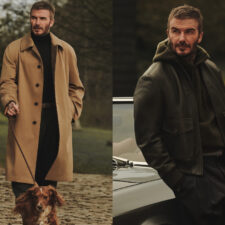
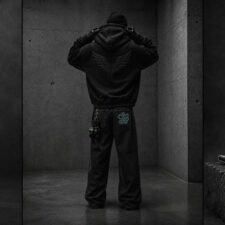
Dandyism meets deconstruction and skater culture.
How do you find a balance between the artistic expression you desire and the limitations of AI technology?
I see AI as a starting point, not the final word. When outputs feel limited or imperfect, I either refine them with other tools or combine them with manual edits. For me, balance means knowing when to embrace imperfection and when to push for refinement.

Sacred pause between the earth and the divine.
Do you ever face creative block when working with AI? If so, how do you overcome it?
Yes, especially when the outputs start to look repetitive or sterile. When that happens, I step away and give myself space. Sometimes I’ll watch something light, or I’ll scroll through Pinterest, WGSN, or other visual references to refresh my mind. Seeing how others are approaching creativity often sparks new directions.
AI is powerful, but creativity doesn’t come from the tool, it comes from the person using it.
AI doesn’t replace creativity, it amplifies it. The spark has to come from the person, not the tool.
— Tanushri Roy

In your opinion, can AI truly capture the essence and subjectivity of human-made art?
Not fully. It can surprise, mimic, and even provoke, but the soul and contradictions of human expression remain unique. That said, I believe AI doesn’t have to “replace” art it can expand it, showing us alternate ways of imagining and questioning.

A soul mirrored across infinite skies.
Fashion Design & Innovation
How do your AI-generated designs push the boundaries of conventional fashion design?
My AI work often explores extremes, fantasy, sci-fi, nostalgia, and surreal worlds. It’s not just about garments but about provoking new emotions. Whether it’s alien-inspired editorials or reimagined sportswear, the goal is to stretch the idea of what fashion could look and feel like, even if it’s not yet practical.

What are some unique or unexpected ways you’ve seen AI used in the fashion industry?
I’ve seen AI used for everything from personalization to inventory forecasting. But what excites me most is how independent creatives are using it to bypass traditional barriers building portfolios, visualizing campaigns, and putting out bold work without needing large budgets or teams.
Do you believe AI can help create more sustainable or ethical fashion practices?
Yes. It can reduce waste by minimizing physical sampling, improve efficiency in design cycles, and make forecasting more accurate. It also democratizes tools, giving a voice to more diverse creators who may otherwise not have the resources to participate in fashion.

This collection explores raw, tactile surfaces inspired by burnt edges, cracked textures, and the deep saturation of mineral-rich terrain.
What role do you see AI playing in the future of personalized and customized fashion experiences?
AI can help fashion respond in real-time adapting styles, colors, and fits to micro-audiences rather than only pushing mass trends. I think personalization is the future, and AI will be central to making it possible.

A language of light written in couture geometry.
How do you think your work will impact the way people perceive and interact with fashion in the future?
I hope my work encourages people to question conventions and imagine new worlds. If it inspires even one person to think differently about fashion to feel transported, provoked, or understood then I’ve made an impact.
Personal Reflections and Insights
What are the biggest challenges and rewards of working as a Fashion AI Designer?
The biggest challenge is still credibility convincing people that AI work is serious and valuable. There have been many moments where my work was dismissed or disregarded, and it made me question my abilities. Those doubts slowed me down at times, and I know I haven’t yet reached my full potential.

Strength ignited, beauty accelerated.
The challenge is credibility, but the reward is freedom. Freedom to imagine without limits.
— Tanushri Roy
But the rewards are immense: global recognition, collaborations, and the freedom to imagine without limits. Being named an AI Fashion Week winner and working with platforms Refabric, Resleeve, Imagine Art and others showed me that my voice has a place in this evolving space.
What advice would you give to aspiring AI artists or those interested in exploring AI for creative purposes?
Start with curiosity, not perfection. Don’t be afraid of “bad” outputs. They teach you more than the good ones. Use AI as a collaborator, not a replacement, and let your individuality come through. In a world full of noise, your uniqueness is your strength.
What excites you most about the future of AI in fashion design?
The possibility that more voices especially from places far outside traditional fashion capitals can shape the industry. I’m excited by the thought that someone in a small town, like where I grew up, could one day create world-class fashion using AI.

Not hidden, not revealed. Simply transformed.
What message do you hope to convey through your work?
I try to look at things from a different perspective. For me, the concept matters more than polish the “wow, it could be done this way too” moment. I hope my work frees people from conventional shackles while still staying relatable.
I try to create that ‘wow, it could be done this way too’ moment.
— Tanushri Roy
Much of what I create is rooted in fantasy, sci-fi, or nostalgia, because I want it to transport people to other worlds. But behind it all, I want them to feel the depth of thought that it’s not frivolous, but intentional.
Looking back, what would you tell your younger self about pursuing this unconventional career path?
I’d tell her: don’t shrink to fit in. There will be people who dismiss your work or make you question your abilities, and the road will have more downs than ups. But those struggles don’t define you they shape you.
You have something unique to give, and your best work still lies ahead. Strengthen your voice, trust your instincts, and don’t say yes just to please others. One day, the world will hear you clearly.
We sincerely thank Tanushri Roy for generously sharing her expertise and perspectives. Her expertise in fashion retail and innovation provides a compelling glimpse into the future of the industry. Stay tuned for more exclusive conversations with the visionaries shaping the worlds of fashion, interior design, and textiles.
— Senay GOKCEN | CEO, Editor-in-Chief, Fashion Trendsetter
About Tanushri Roy
Based in Abu Dhabi, Tanushri Roy is an experienced and versatile womenswear designer known for blending commercial insight with creative innovation. She currently leads womenswear design at Lulu Retail Group, where she oversees multiple categories while exploring AI-driven Processes across design, e-commerce, and marketing.
A winner of AI Fashion Week Season 2, Tanushri has also collaborated with and served as a brand ambassador for global AI platforms including Refabric and Think Diffusion. Her work spans traditional retail design, AI-generated fashion, and futuristic editorials that merge storytelling with technology. With a strong eye for consumer trends and market dynamics, Tanushri continues to push boundaries at the intersection of creativity and technology while believing her best work is still ahead.
Highlights
- Winner – AI Fashion Week Season 2
- Senior Womenswear Designer – Lulu Retail Group (UAE)
- 💫Shefi Scholar💫
- Top 100+ AI Creatives on LinkedIn/AI Design ::: Fashion
- Creative Partner Programmes:
ThinkDiffusion | Imagineart|Resleeve|@Freepik AI Partner | AMBASSADOR-3DDSocialworld|SheIsAI|Refabric|Style3D| FEATURED CREATOR- F* Word - Portfolio – AI x Fashion concepts spanning fantasy, sci-fi, nostalgia, and editorial storytelling
- Based in Dubai – Designing for the GCC market with a global vision
Connect with Tanushri Roy
LinkedIn – https://www.linkedin.com/in/tanushri-roy
Instagram – https://www.instagram.com/tandesign_me
Portfolio – https://www.behance.net/tanushri_roy
© 2025, Fashion Trendsetter. All rights reserved. No part of this Q&A article may be reproduced without our written permission. You are welcome to share this article, provided that proper credit is given to Fashion Trendsetter, including a link to the original source. Please use the following citation:
Gokcen, Senay. Fashion Trendsetter. “Industry Q&A: Tanushri Roy, Senior Fashion Designer,” September 2025, [https://www.fashiontrendsetter.com/v2/2025/09/18/industry-qa-tanushri-roy-senior-fashion-designer/]. Accessed Day/Month/Year.
If you’d like to participate in our Industry Q&A section, please email us at [email protected] with ‘Industry Q&A Request’ in the subject line.
Tags: Abu Dhabi, AI, AI digital, AI fashion, AI generated, AI illustration, celestial, cosmic aesthetics, Cosmos, creative direction, creative process, creative tools, Dubai, fashion, Fashion AI, fashion designer, fashion illustration, illustration, Imagine Art, industry, LinkedIn, NIFT, QandA, Refabric, Resleeve, Senay GOKCEN, social media, Tanushri Roy, Top
Share this page