By Senay GOKCEN | CEO, Editor-in-Chief
In this edition of Fashion Trendsetter’s Industry Q&A, we turn our focus to Jiwya®, a brand redefining the foundations of contemporary fashion, through a deeply considered, plant-based philosophy. Founded by Aishwarya Lahariya, and Adhiraj Shinde, Jiwya emerges not simply as a label, but as a response to the systemic challenges embedded within the global fashion ecosystem.
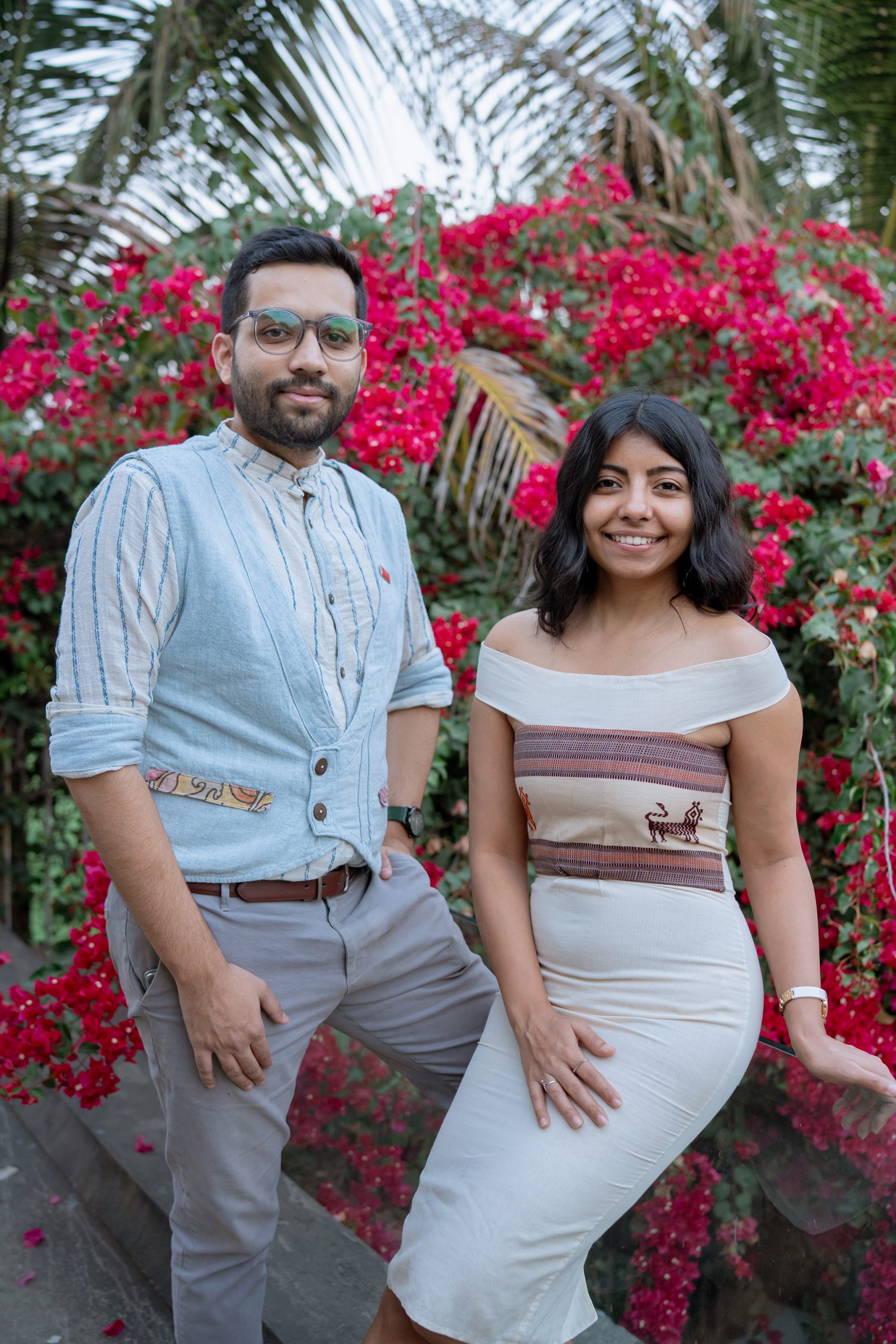
Adhiraj Shinde and Aishwarya Lahariya, Jiwya Founders.
Photo courtesy of Jiwya.
While both Co-Founders share a background as textile scientists and a long-standing creative partnership, it is Aishwarya Lahariya, Co-Founder and Designer, who joins us for this conversation. Through her perspective, we explore the thinking, research, and conviction behind Jiwya’s “soil-to-soil” approach-an evolving model that places material integrity, cultural knowledge, and environmental responsibility at its core.
Industry Q&A: Aishwarya Lahariya, Co-Founder & Designer of Jiwya
Senay Gokcen: Dear Aishwarya Lahariya, it’s a pleasure and honor to welcome you to Fashion Trendsetter. I was truly inspired by the works you have done at Jiwya. Can you please share the story behind Jiwya’s founding? What brought you and Adhiraj Shinde together to build this brand?
Aishwarya Lahariya: Hi, I am Aishwarya Lahariya, a textile scientist and co-founder and designer of Jiwya. With my co-founder, Adhiraj Shinde, we started Jiwya to create a fashion ecosystem that can be a category creator in making pieces that tell a story while putting people, planet and animals first over profits.
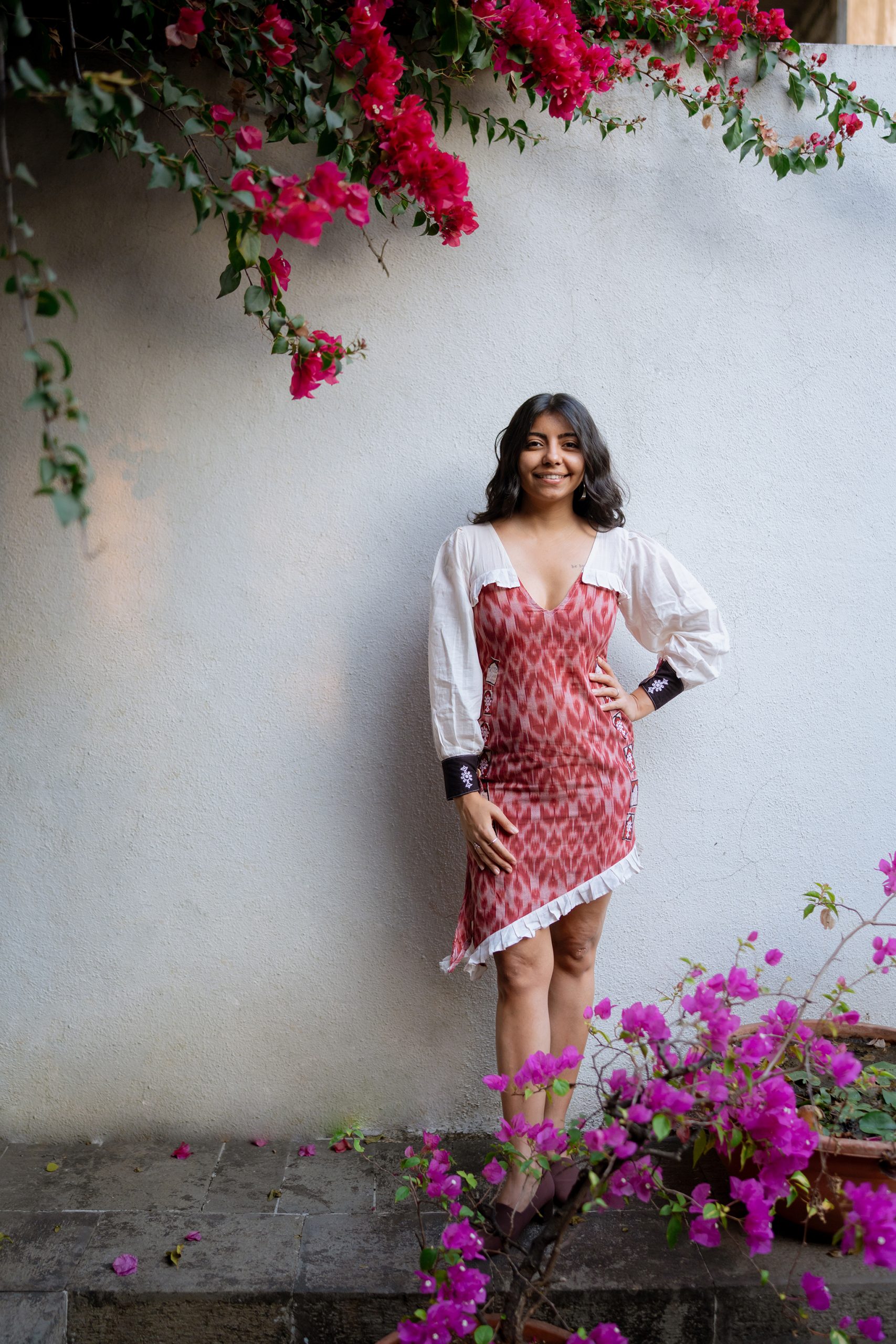
Aishwarya Lahariya, Co-Founder of Jiwya.
Photo courtesy of Jiwya.
The journey for Jiwya started in a way in 2022 when we decided to quit our jobs in the US and move back to India. Most of 2022 was wrapping our lives in the US and settling back in India while brainstorming ideas and conducting research in our make shift kitchen lab. We wanted to create an entire fashion supply chain that does not rely on harmful synthetic chemicals and animal products. Entire 2023 was researching, foundational work, traveling 19000 kilometers across India to learn generational textile arts and incorporating them in Jiwya. We finally launched our most basic website in December 2023 and our first 100% plant-based collection in November 2024. Both of us, cofounders have known each other since 2013. We were lab partners, research partners and eventually life partners. We shared this frustration of something as simple as our clothing being so polluting. Our projects before Jiwya, jobs we worked and many other avenues personally too focused on eliminating toxic materials from our lifestyle. Before we knew it the frustration kept growing and we just couldn’t sit idle about it.
You both stepped away from established paths to create Jiwya. What specifically prompted that decision, and what gap did you feel needed to be addressed?
Both of us, founders, are textile scientists. We have been behind the curtain where all materials for fashion are prepared and the reality of it is very nasty. It was purely the growing frustration that being insiders of the industry, we aren’t able to clean up. In our roles and research, we would consistently try to introduce safer chemistry, planet friendly solutions but that never felt enough. Especially with the humungous problem of the most simple textile-our clothing- being the 3rd largest global polluter. Conventional fashion relies primarily on synthetic fibres aka plastics, animal derived materials, significantly polluting dyes and chemicals and throws away 1 truckload of fabric and garment waste every second. These aren’t just numbers, as textile scientists we started feeling that we have to lead by example and use our technical expertise to solve these issues that are swallowing the planet. Jiwya did not start because fashion needs another brand. It started because fashion needs change. This change for us is our soil-to-soil ecosystem.
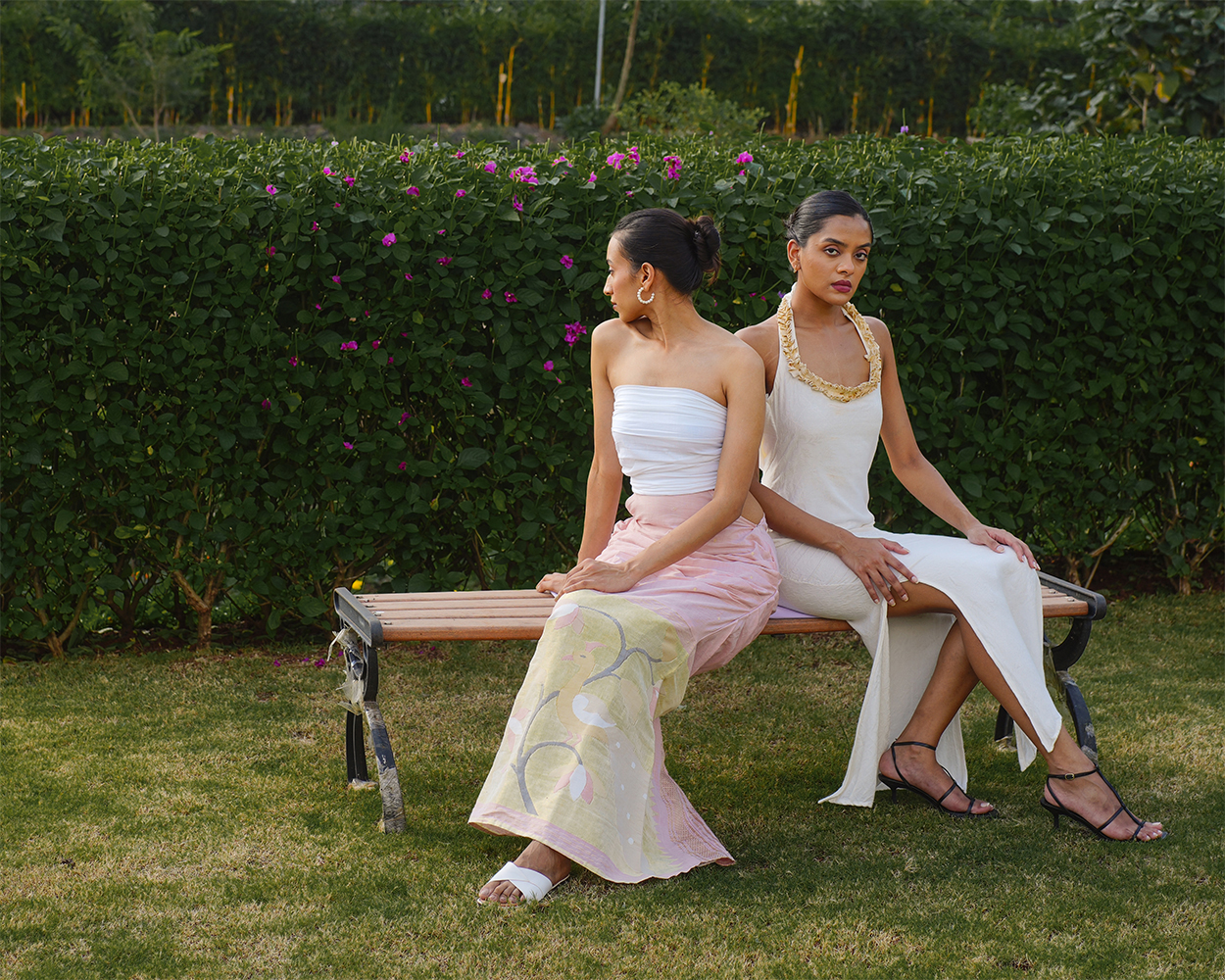
Jiwya – Madhumalati Gown and Mogra Gown
Photo courtesy of Jiwya.
Before launching Jiwya, what observations about the fashion industry shaped your thinking and ultimately led you to take a different approach?
Apart from what I said above with the numbers and statistics, the ground reality is even worse. Together, Adhiraj and I have worked in startups, fortune 500 mills, technical application like carbon fibres and medical textile and automotive textiles. Across industries, the regulations lack severely (except medical). There is no intent or internal drive to do better. Business as usual is okay, using toxic chemical sis okay, exploited labour is okay. Majority of factories and mills and garment units across India (and South Asia) are one step away from being the next Rana Plaza. Beaches across Global South are filled with mountains of textile waste thrown by unsold goods from fast fashion. Yet, the ones with money aren’t doing anything about it. The conventional fashion supply chain hides behind layers of contractors and subcontractors to keep shifting blame. This is colonialism dressed as capitalism. So we decided to break it all and build a totally different way-regenerative, hyperlocal, easy to adopt, zero-waste and with potential to scale up in a controlled manner.
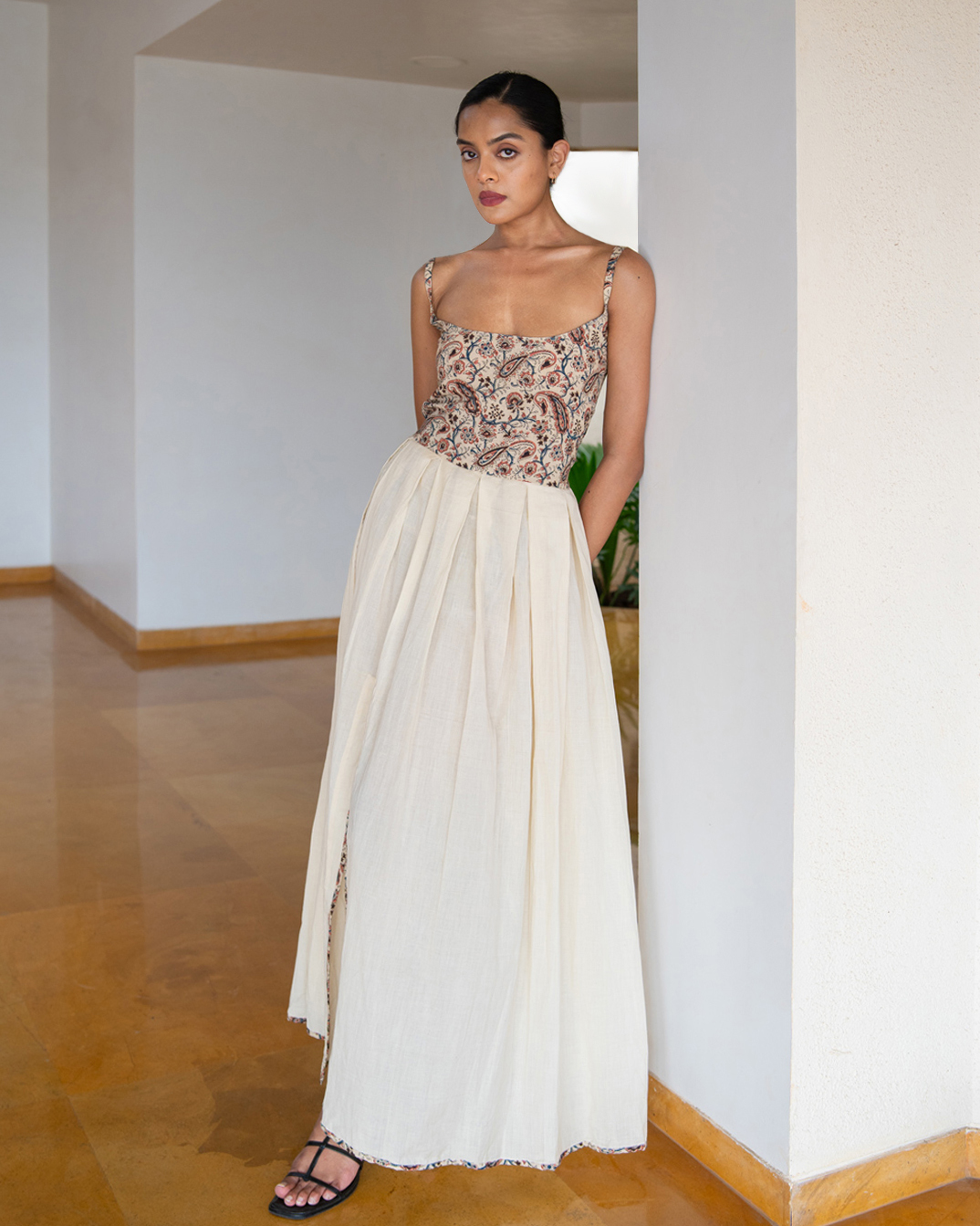
Jiwya Rajkumari Gown.
Photo courtesy of Jiwya.
Jiwya speaks about a “soil-to-soil” philosophy. How would you define this concept in practical terms?
It’s simple, taking only what soil can give again and again, caring for the soil and ensuring whatever we use can go back to the soil to nourish it back.
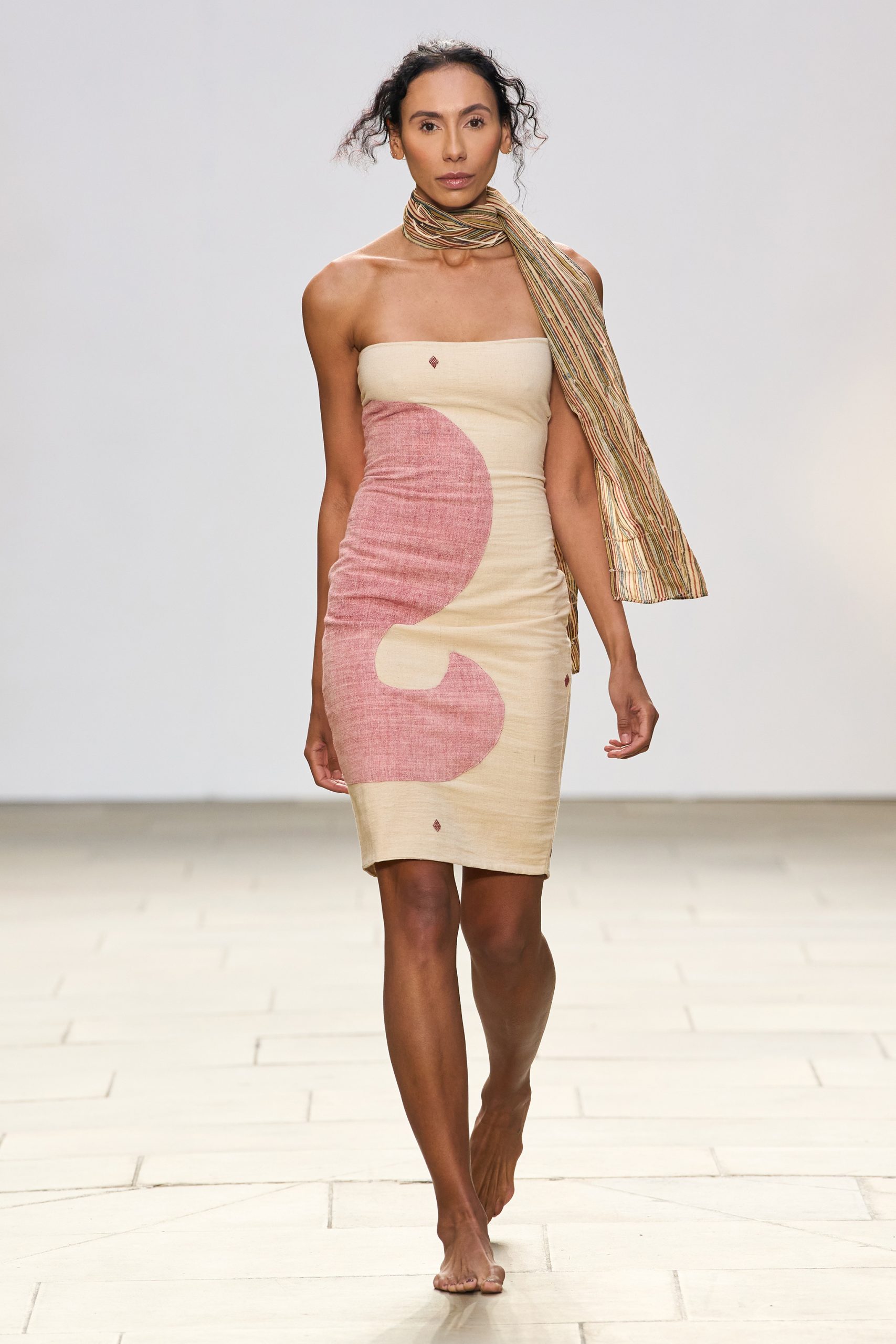
Jiwya Mahua Dress, Kalee Dupatta, London Fashion Week SS26.
Photo: Umberto Fratini / Gorunway.com, courtesy of Jiwya.
You position plant-based systems as an alternative to recycled or synthetic-led sustainability. Where do you believe current approaches fall short?
Everywhere! Less than 1% clothing ever made is recycled. The ones recycled are not clothing to clothing but bottles and fish net made into garments. Why? The bottle or fish net was never supposed to be next to the skin. A bottle can be recycled into a bottle 5 times. The moment it is made into a t-shirt, the next step is landfill. Recycling plastics is not an endlessly circular solution, it is a band-aid. The plastic industry needs to stop bringing more fossil fuel out and start managing the ones already out. This is extreme wishful thinking on my part. With plant-based fibres, you can easily compost them at end of life that nourishes the soil, you can grow them back, you can recycled them back into fibres and yarns mechanically, without dissolving in chemicals. All of this at sustained pace, nothing can last if we dream of producing exponential amounts of products.
Your narrative emphasizes a strong connection between nature, craft, and clothing. Why was it important to build the brand around this relationship?
Because we are lacking empathy in every aspect of life today. Business, politics, decision making, society. Caring for nature brings back empathy, investing in stories of land and culture bring back shared history, it brings stories that humans care for. It shows you that in the end we all want smaller moments that bring joy and joy spreads when shared. I can quote 10 statistics and scientific research that verify how spending time in nature bring well being to mental health, how community spirit brings back better support to families etc. etc. I am doing all of that with something next to our skin everyday- our clothes.
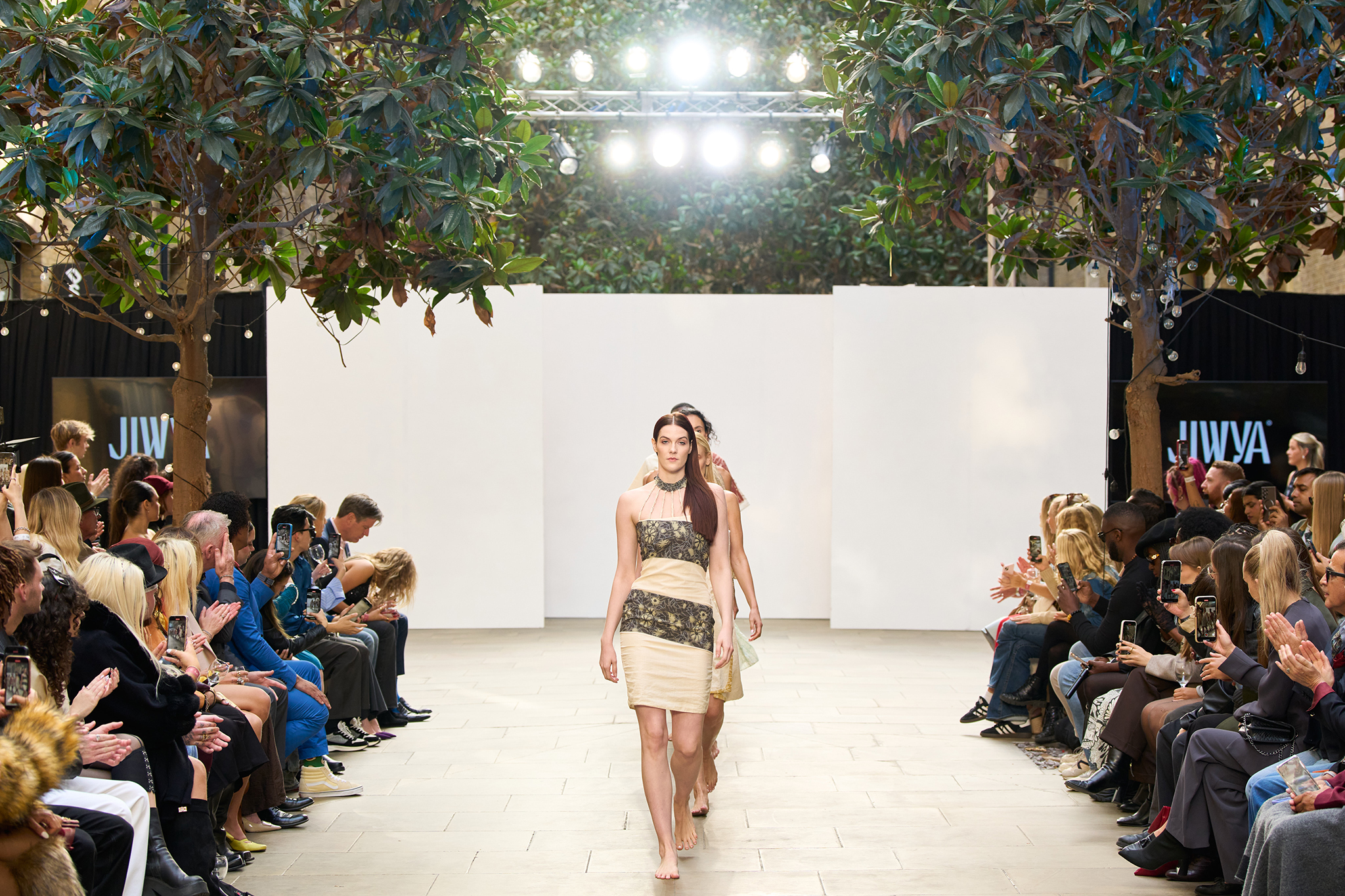
Jiwya Katidha Collection, London Fashion Week SS26.
Watch the runway show here. Photo: Umberto Fratini / Gorunway.com, courtesy of Jiwya.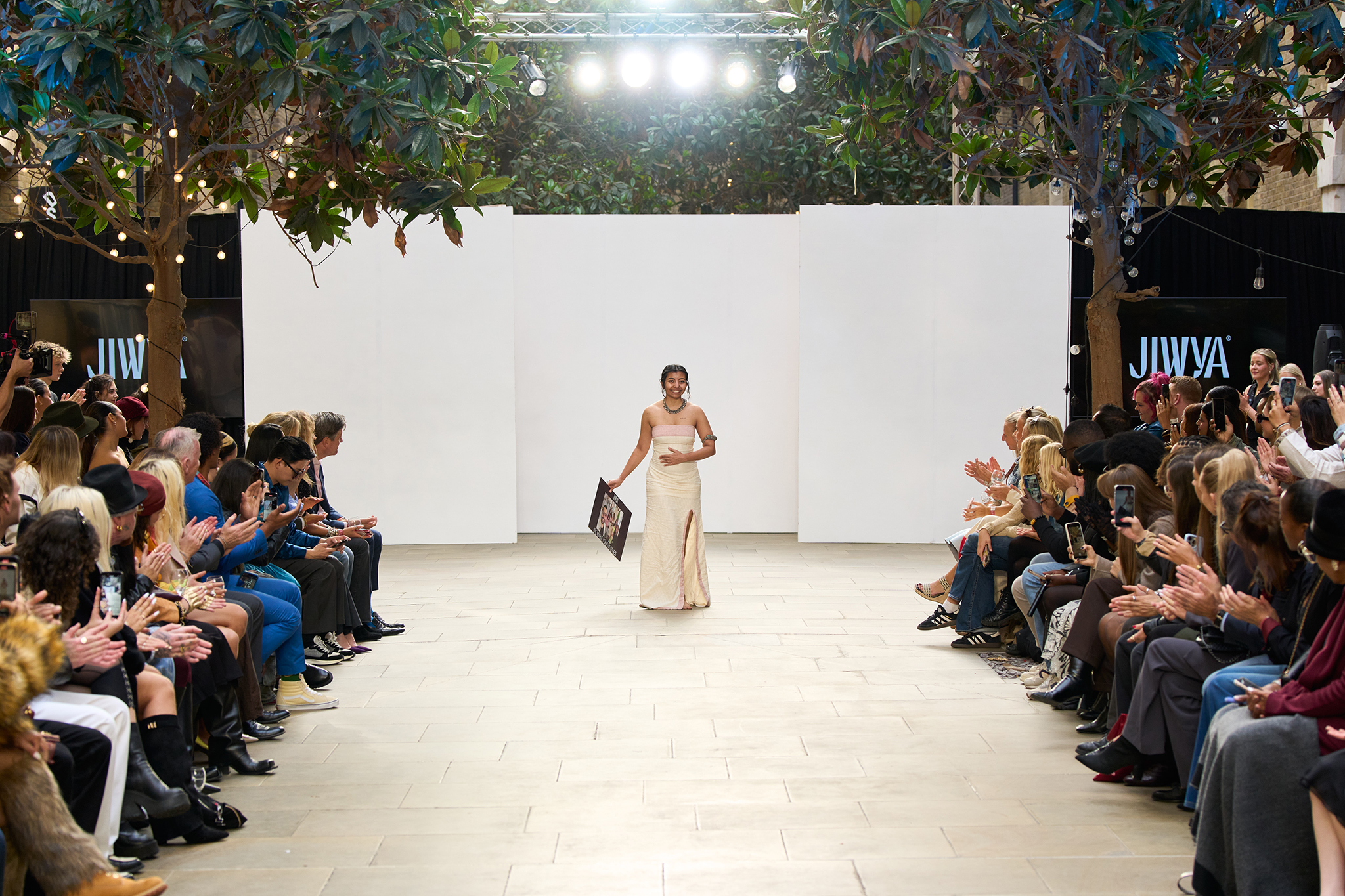
Jiwya Palaash Gown on Co-Founder & Designer Aishwarya Lahariya, London Fashion Week SS26.
Photo: Umberto Fratini / Gorunway.com, courtesy of Jiwya.
Jiwya highlights a fully plant-based process, from fiber to final garment. What does your creation process look like from beginning to end, and which stage has proven the most challenging to develop?
There this neat little video on our website and socials, just 1.5 min. If you can see it you know our entire process. When you are walking against the tide, it’s mostly opening a door to find another one locked. As scientists, my cofounder and I were able to meet the material philosophy faster than anything else. Finding the right material, using the right process and technically sound production. The toughest in this realm was actually finding stitching thread that wasn’t polyester and then training our team to work with the speed of a non-polyester thread. In the journey across India, it was initially tough convincing art clusters to work with us and our plant-based materials to make fabrics, because they have been duped more than we can imagine. Another challenge was finding local small vendors who would make coconut shell buttons for us, doing as many steps as possible in Nashik (where our atelier is) to reduce our carbon footprint would be some. Today except for the artisan’s specific arts, everything else happens in Nashik. The toughest part was and still is bringing awareness towards the real value of arts and authentic materials that don’t harm.
View this post on Instagram
You’ve worked with a wide network of artisan communities. How do you ensure consistency, quality, and authenticity while operating at that scale?
The art part is as unpredictable as human nature. It changes every time we interact with a different art cluster. However, we know each artisan-the weaver, the spinner, the embroiderer personally. We have spent time with them through our India travels, shared meals, and understood their art. We have a unique way of balancing their art cycles with our supply chain. This purely requires patience, understanding and due time required for an authentic art to flourish. I feel seeing these arts up close, you can only use them in an authentic way to do justice to each strand of effort. I honestly can’t imagine any other way of being and it shudders me when I see these arts exploited or appropriated.
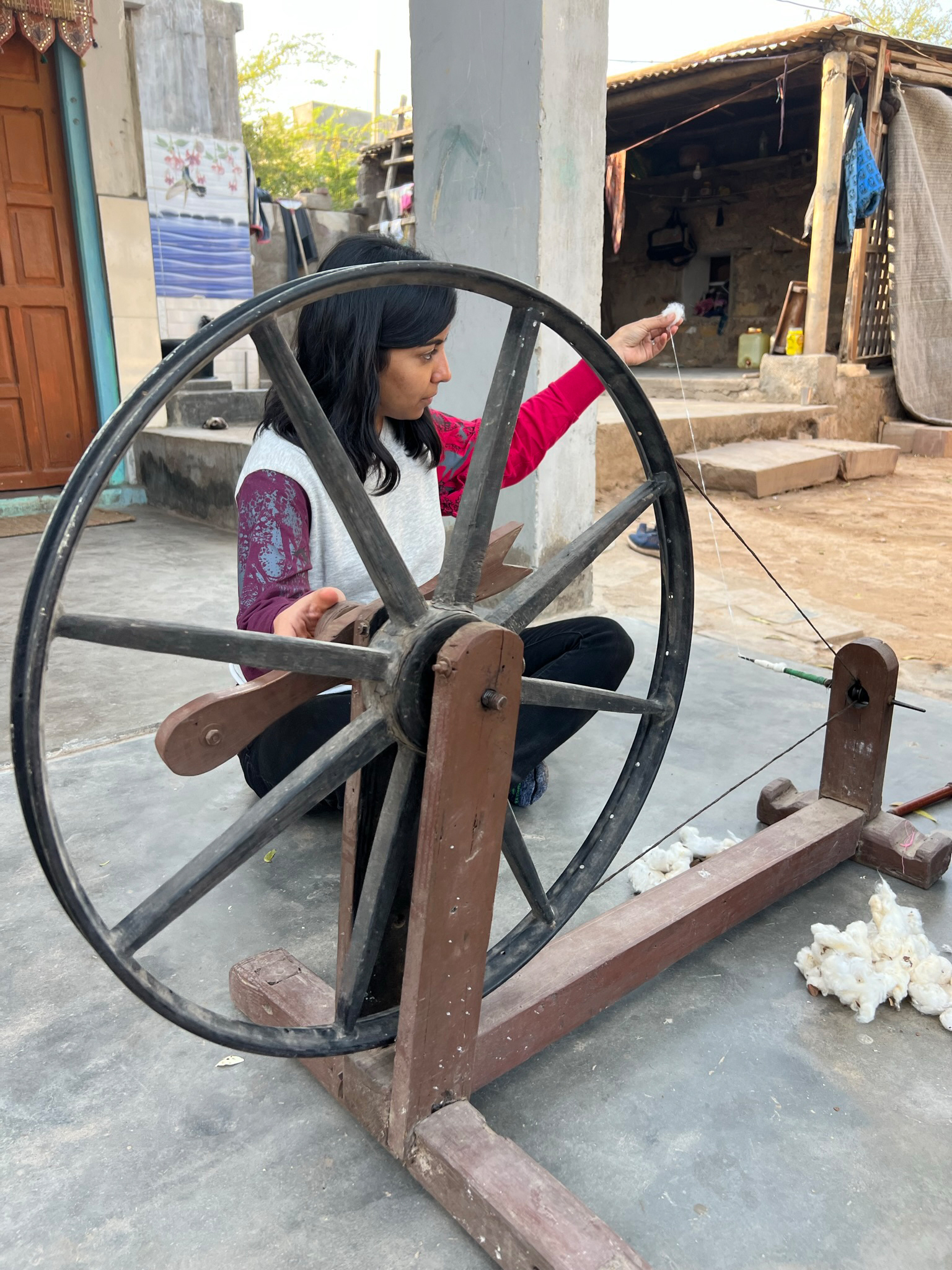
Aishwarya Lahariya – Learning hand-spinning of yarns.
Photo courtesy of Jiwya.
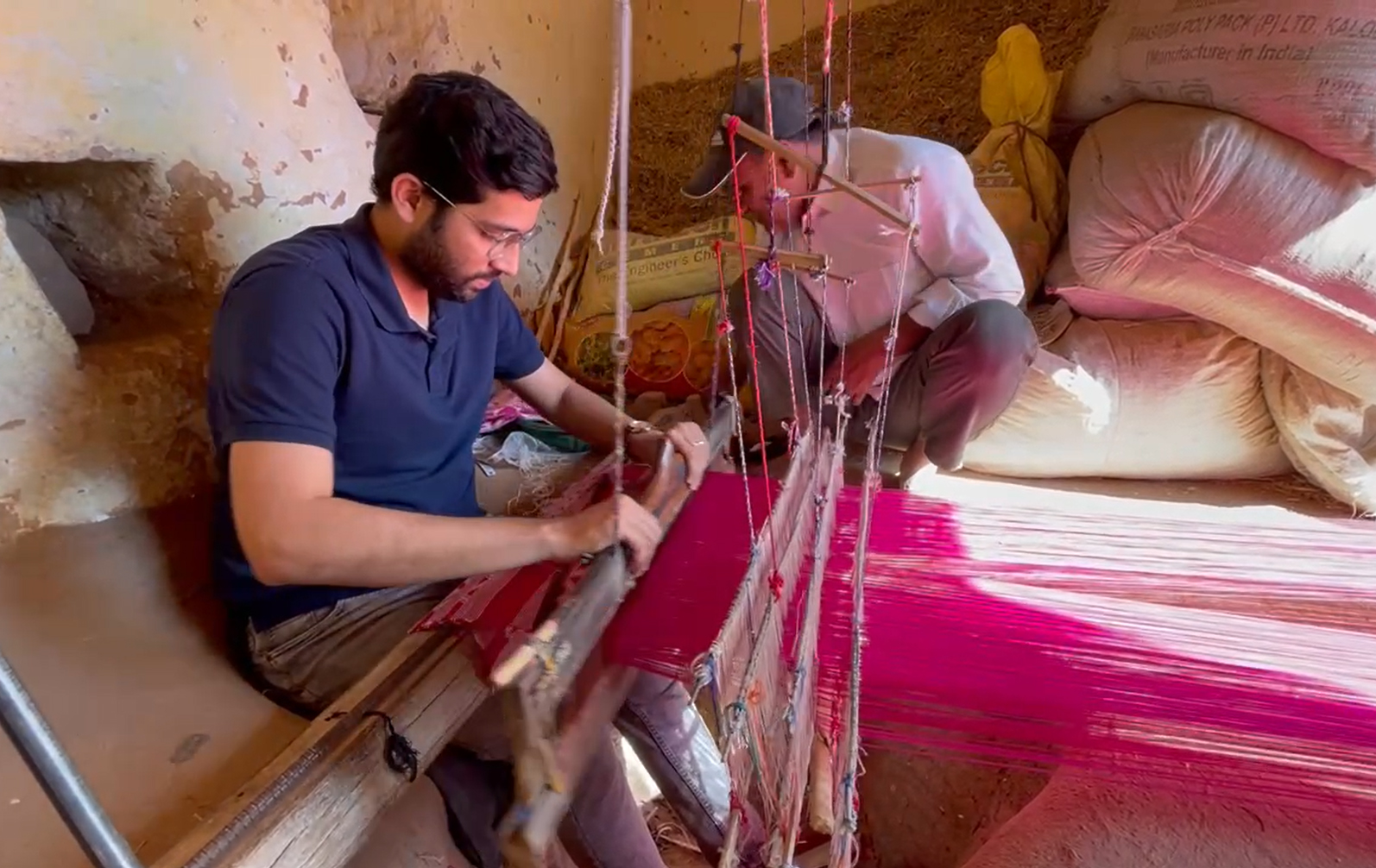
Adhiraj Shinde – Learning to weave with the artisans.
Photo courtesy of Jiwya.
You describe Jiwya as a new model of luxury. How do you define luxury within this context, and how does it differ from traditional notions of the term?
The notion of luxury has changed with time. At the start of it, time consuming arts, effort led artisanship, detailed crafts would gather money because it took time and it valued the hands that make them. Their intricate version were luxury and their simple version were for everyday. The the brand making around it started and today luxury simply means legacy. Nobody is sitting to vet if the brand they once called luxury is staying true to its definition or not. You add the mix of synthetic material, polluting chemicals and animal based material and the rabbit hole deepens. At Jiwya, luxury means using material that come from the soil, with care and respect. It means valuing the cultural arts and practices. It means paying with dignity to each hand involved. At over time, we want to make plant-based material accessible to all and not be the luxury they are today. That requires an overhaul of policy, regulations, behavioral change but we are always hopeful that can happen.
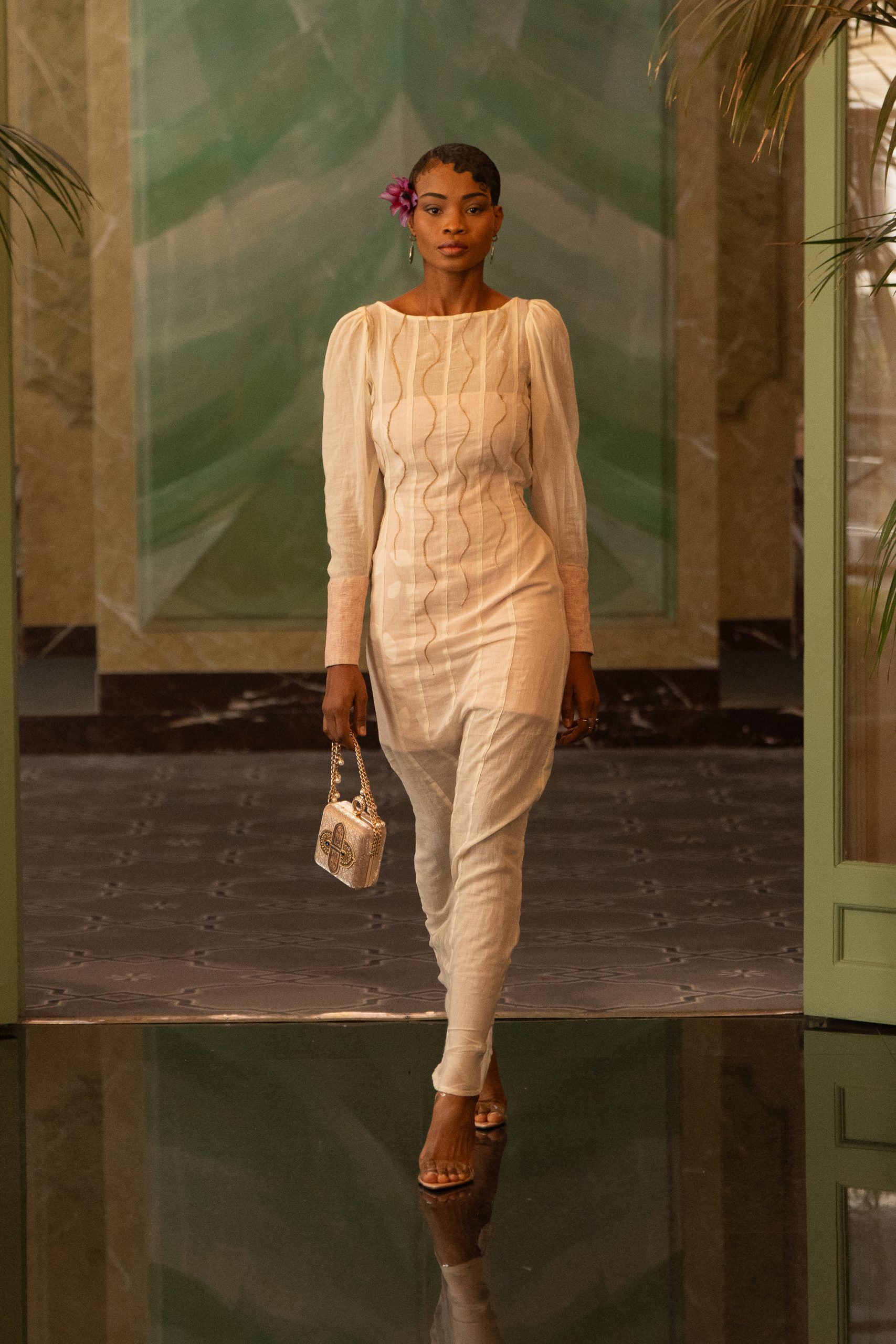
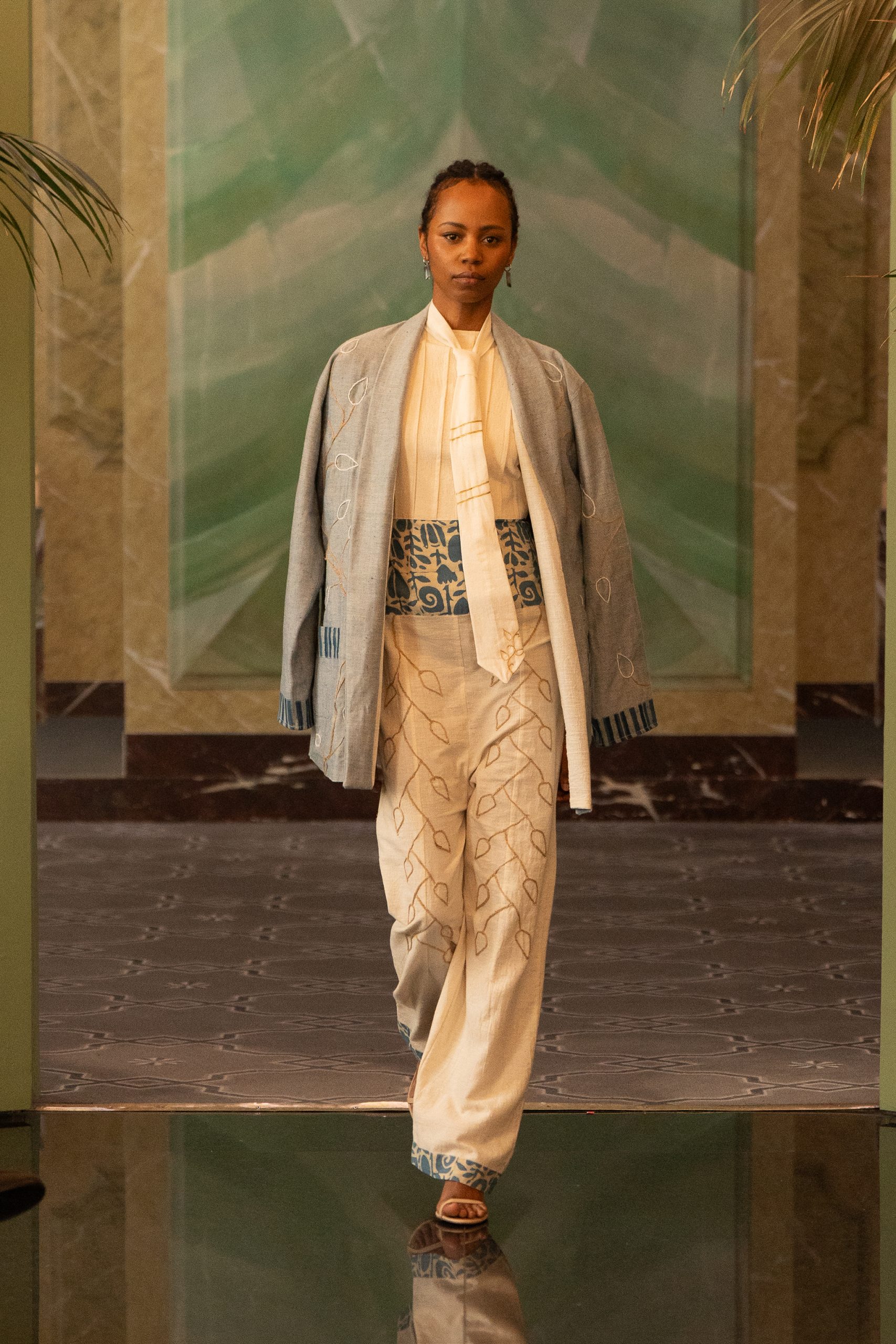
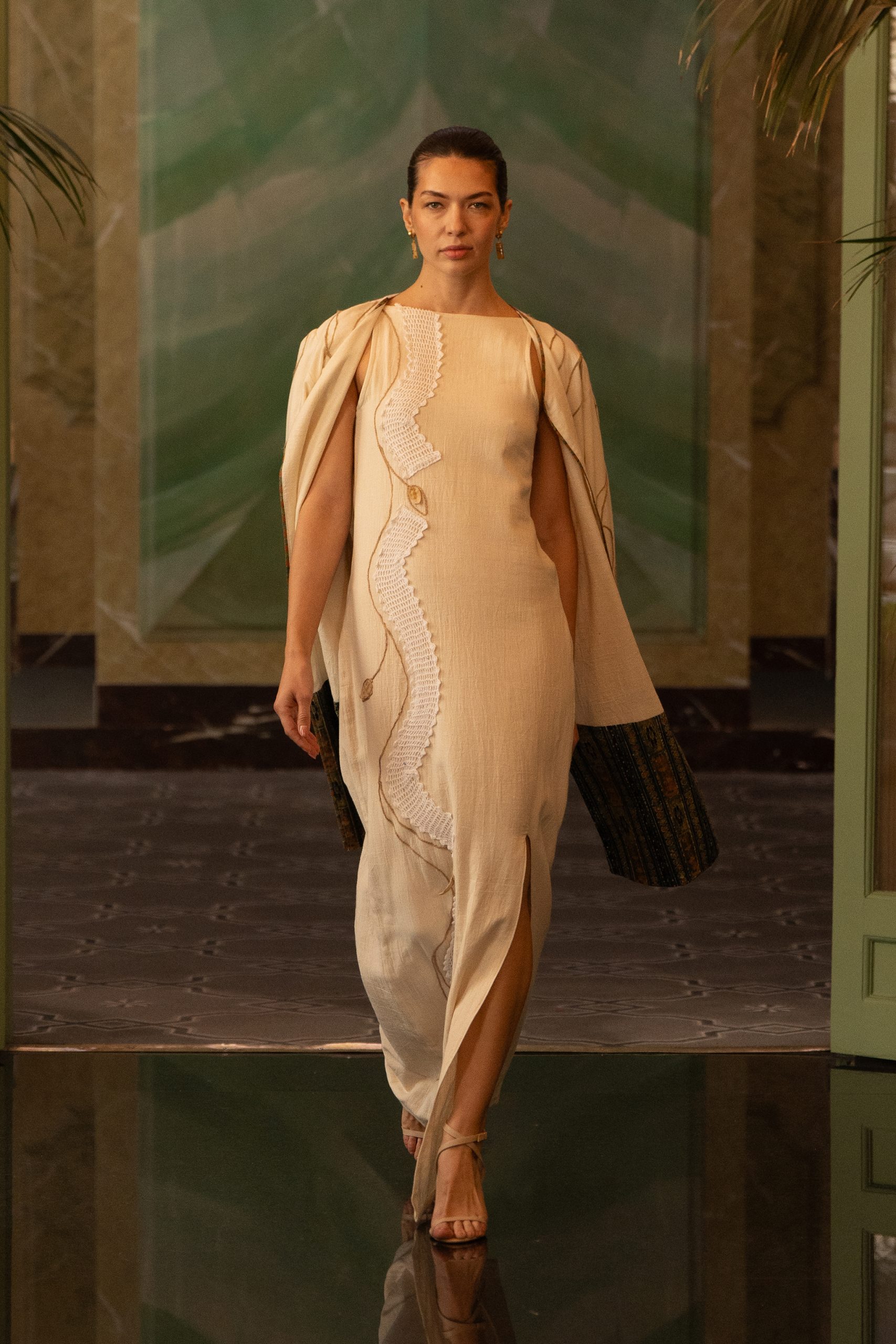
[Photos L-R] – (1) Jiwya Aboli Jumpsuit and Goonj Gown from Lata, (2) Jiwya Chandni Jumpsuit, Parna Jacket and Boond Tie from Lata and (3) Jiwya Latika Gown and Gulbahar Jacket from Lata, Autumn/Winter 2026 Paris Fashion Week.
Photos courtesy of Jiwya.
What do you believe the industry still misunderstands about sustainability today?
There are two major misconceptions that need to go away:
1 – Recycled polyester or nylon is sustainable. It is NOT.
2 – Thrifting or buying second hand solves the problem of overconsumption. It doesn’t.
For fashion to change, consumers need to slow down, buy better quality, make it last and become part of the system of repair, reuse, then thrifting and then closing the loop with upcycling.
About Jiwya
Jiwya (G-V-YUH) – derived from Sanskrit for ‘Jeev’, which means caring for each life, soul, spirit on this planet. It stands for respecting every life through the soil-to-soil life cycle of our 100% plant-powered creations.
For more information please visit:
Website: https://www.jiwya.com/
Instagram: https://www.instagram.com/jiwya_official/
LinkedIn: https://in.linkedin.com/company/jiwya
YouTube: https://www.youtube.com/@jiwya_official
Aishwarya Lahariya
Instagram: https://www.instagram.com/aishwarya_lahariya/
LinkedIn: https://www.linkedin.com/in/aishwarya-lahariya/
Adhiraj Shinde
Instagram: https://www.instagram.com/adhiraj__shinde/
LinkedIn: https://www.linkedin.com/in/adhiraj-shinde/
A heartfelt thank you to Aishwarya Lahariya, Co-Founder & Designer of Jiwya, for sharing her deeply considered perspective with us. Through her insights, we gain a compelling look into a new kind of fashion system-one rooted in material integrity, cultural continuity, and a profound respect for nature. Her approach challenges conventional narratives and invites a more conscious, responsible future for the industry. We’re honored to spotlight her voice and the vision behind Jiwya in this conversation.
Stay tuned for more exclusive interviews with the trailblazers redefining the future of fashion, interior design, and textiles.
— Senay GOKCEN | CEO, Editor-in-Chief, Fashion Trendsetter
© 2026, Fashion Trendsetter. All rights reserved. No part of this Q&A article may be reproduced without our written permission. You are welcome to share this article, provided that proper credit is given to Fashion Trendsetter, including a link to the original source. Please use the following citation:
Gokcen, Senay. Fashion Trendsetter. “Industry Q&A: Aishwarya Lahariya, Co-Founder & Designer of Jiwya,” May 2026, [https://www.fashiontrendsetter.com/v2/2026/05/01/industry-qa-aishwarya-lahariya-co-founder-designer-of-jiwya/]. Accessed Day/Month/Year.
If you’d like to participate in our Industry Q&A section, please email us at [email protected] with ‘Industry Q&A Request’ in the subject line.
Tags: Adhiraj Shinde, Aishwarya Lahariya, apparel, article, artisanal, clothing, collection, contemporary design, design, designer spotlight, eco fabrics, eco fashion, fabrics, fashion, fashion and lifestyle, fashion designers, fashion ecosystem, fashion industry, industry, innovation, interview, Jiwya, plant-based, QandA, research, Senay GOKCEN, style, sustainability, textile industry, textile science, textile scientist, textile waste, textiles, Top, zero waste
Share this page