By Senay GOKCEN | CEO, Editor-in-Chief
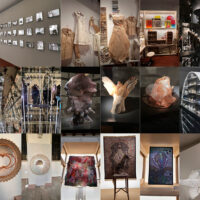
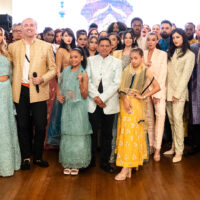
An international celebration of craftsmanship brought more than 700 objects by 500+ craft artists from 70+ countries together in 15 immersive installations at Fondazione Giorgio Cini in Venice.
From 1-30 September 2026, the magnificent Fondazione Giorgio Cini on San Giorgio Maggiore Island became a meeting place for craftsmanship, creativity and contemporary design. Organized in partnership with the Fondazione Cologni dei Mestieri d’Arte, Homo Faber 2026: An Island of Light brought together more than 700 handcrafted objects by over 500 craft artists from more than 70 countries.
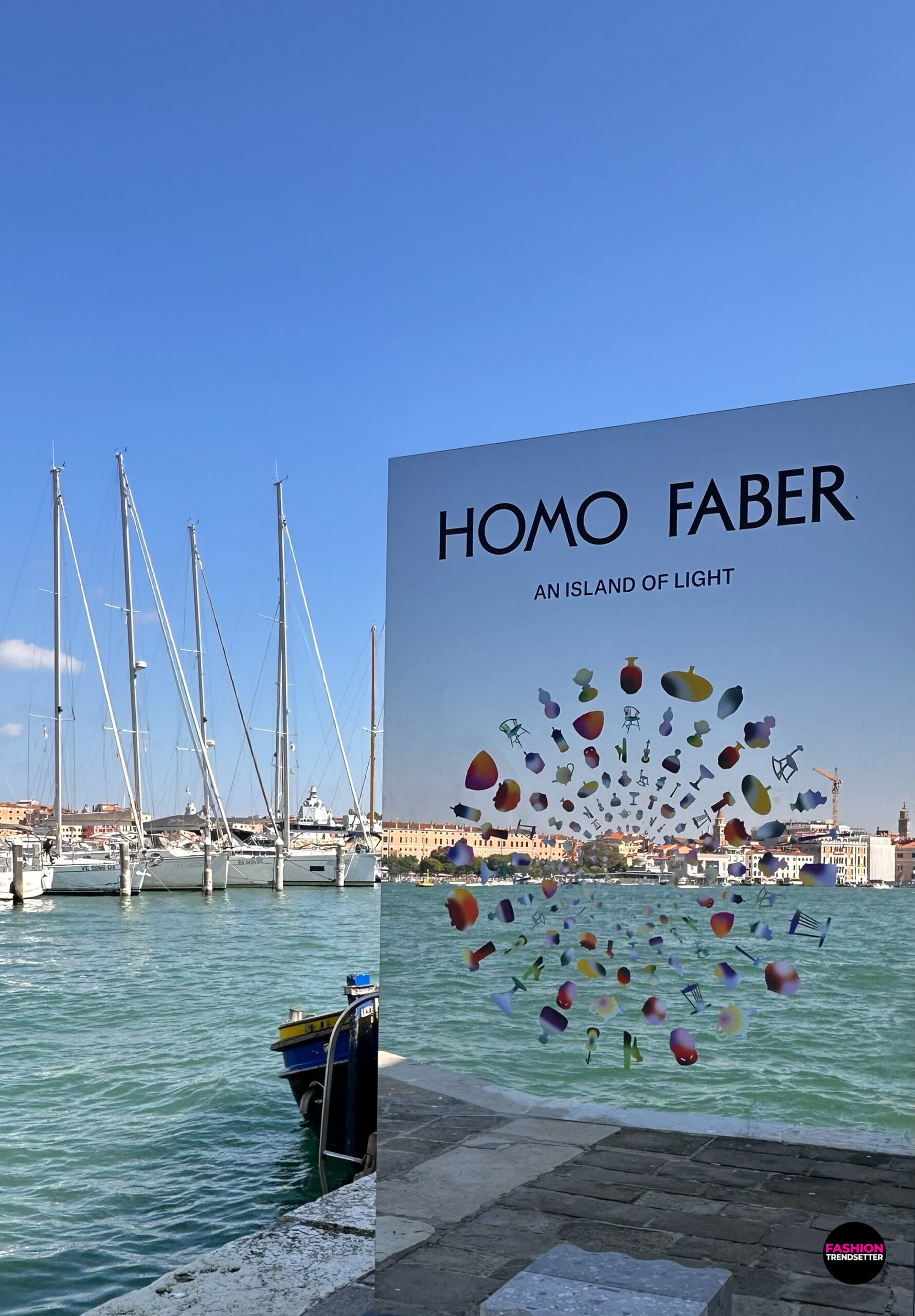
Homo Faber 2026: An Island of Light
An international celebration of craftsmanship brought more than 700 objects by 500+ craft artists from 70+ countries together in 15 immersive installations at Fondazione Giorgio Cini in Venice.
Photo © 2026, Senay Gokcen for Fashion Trendsetter.
The fourth edition of the Homo Faber Biennial, curated by the Michelangelo Foundation for Creativity and Craftsmanship, was conceived by acclaimed British artist and designer Es Devlin, whose artistic direction transformed the historic setting of the Fondazione Giorgio Cini into a carefully choreographed journey through materials, objects, craftsmanship and the people behind them.
Visiting Homo Faber 2026 with my team was a compelling experience that went far beyond the scale of the exhibition or the remarkable number of objects on display. What made it particularly meaningful was the opportunity to reconnect with the essence of craftsmanship: the skill, patience, and human touch embodied in objects created by hand.
In an era increasingly shaped by digital processes and accelerated production, witnessing this dedication to the art of making felt both deeply moving and profoundly relevant. Perhaps we have been away from that feeling for too long.
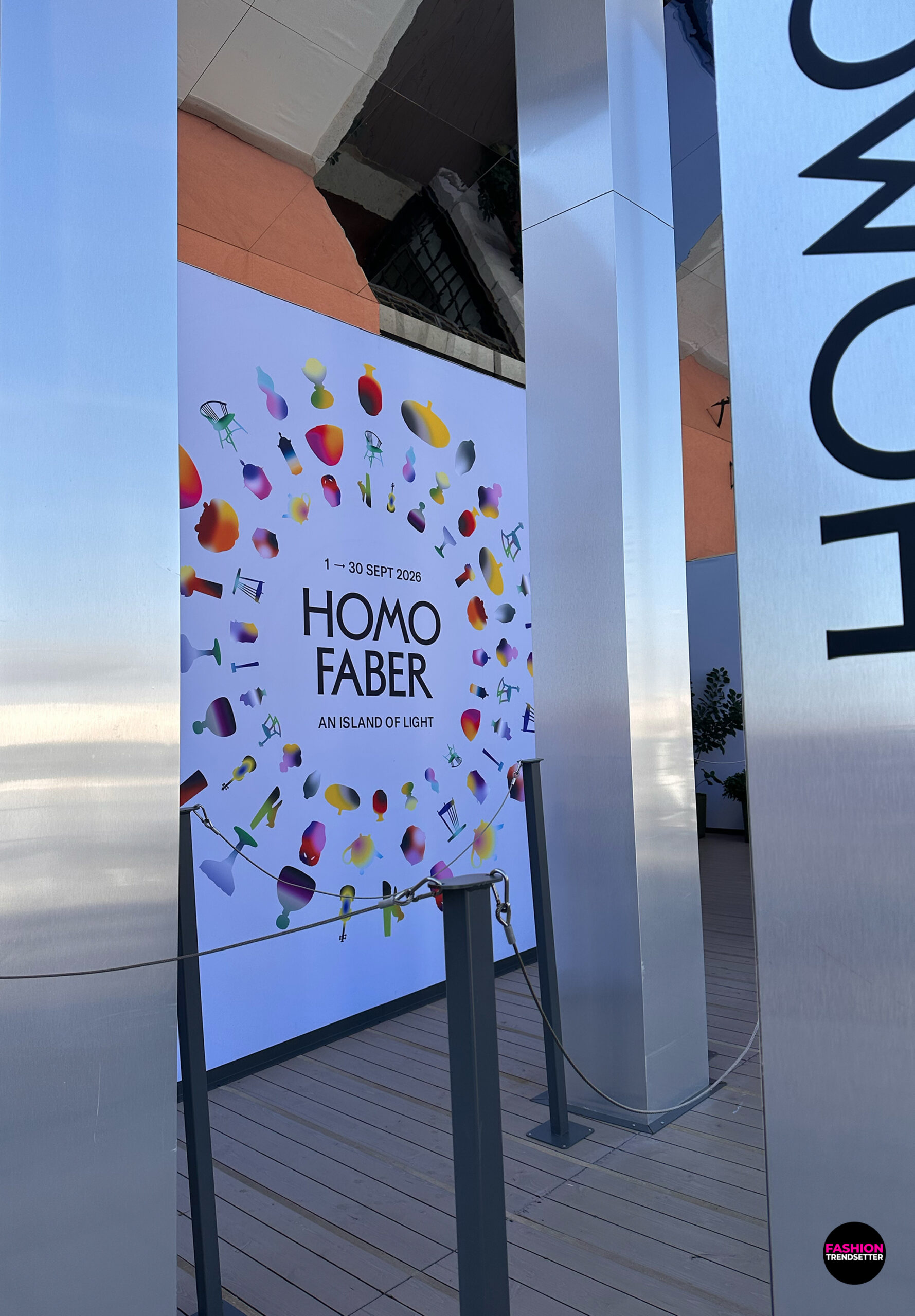
Homo Faber 2026: An Island of Light – Entrance
Photo © 2026, Senay Gokcen for Fashion Trendsetter.
15 Spaces, One Journey
Homo Faber 2026 unfolded through 15 immersive installations, each creating a different chapter within the larger story of craftsmanship.
The exhibition spaces followed this sequence:
1. A Language of Hands
2. An Index of Artisans
3. An Alphabet of Objects
4. A Library of Lungs
5. A Full Moon Rising
6. A Rooted Ascent
7. An Atelier Alive
8. An Infinite Birdsong
9. A Great Turning
10. A Luminous Ark
11. A Feast of Light
12. A Rainbow of Forms
13. A Place for Workshops
14. Twenty Silent Songs
15. Come Home Again Venice
The Language of the Hand
The exhibition began with A Language of Hands, and for me, this was one of the most memorable moments of the entire experience. A film showing craftspeople immersed in their work immediately created an emotional connection with the exhibition. Watching their hands, their concentration and the slow process of making brought something into focus that is easy to forget in everyday life.
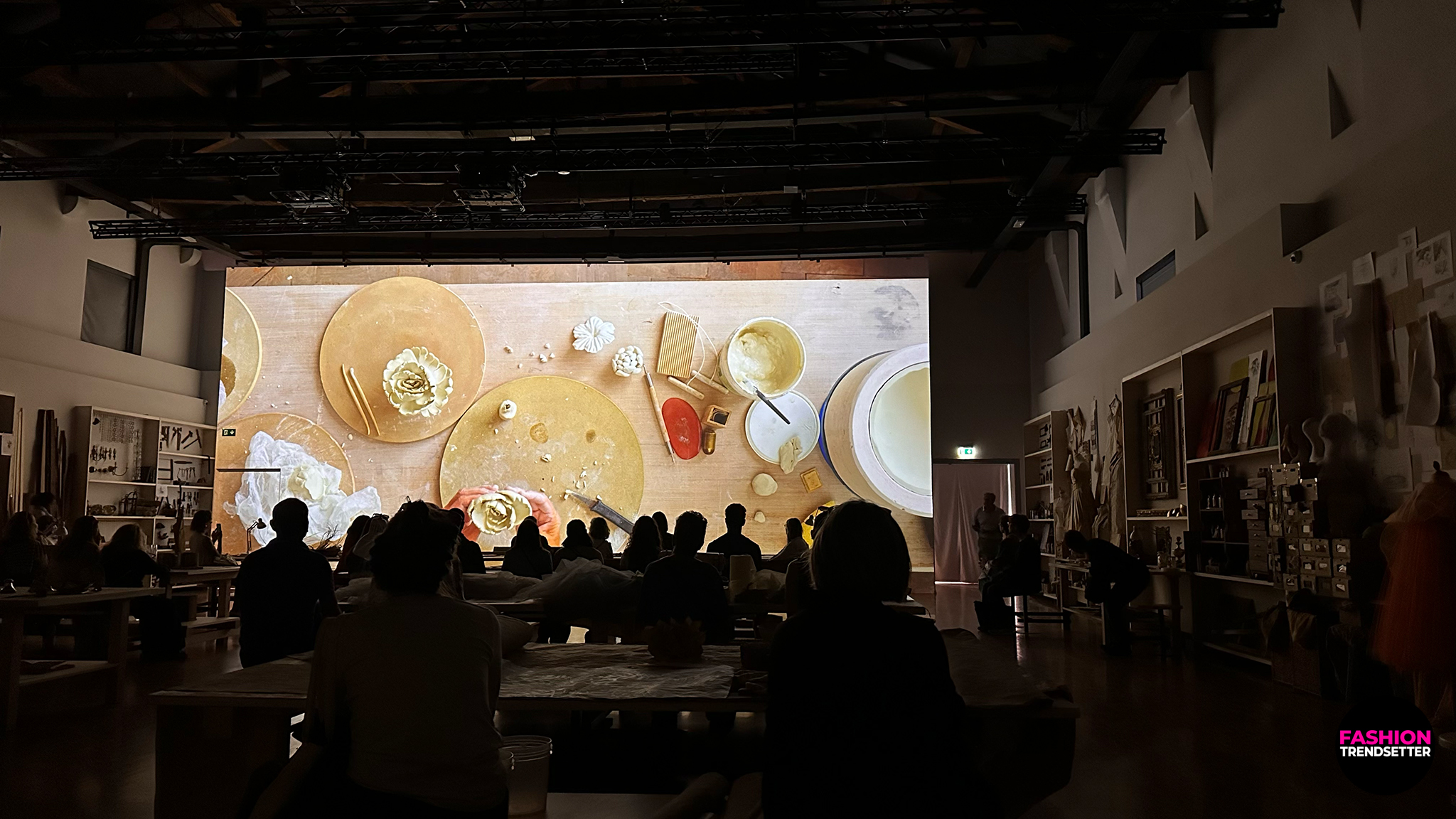
Homo Faber 2026: An Island of Light – A Language of Hands
Away from the bustle of central Venice, A Language of Hands offered moments of calm and contemplation within the artisans’ ateliers. Surrounded by the tools and materials essential to creation, the space introduced visitors to the world of craftsmanship through a visual poem projected onto the walls. The hands of the craft artists became a language of their own, expressing knowledge, dedication, and creativity. Through the gestures of making, craftsmanship revealed its timeless human essence, where skills passed down through generations transformed materials into meaningful creations. Photo © 2026, Senay Gokcen for Fashion Trendsetter.
We are living through an incredibly fast creative age. Digital tools, artificial intelligence and new technologies have changed the way we design, communicate and produce. As designers, we have learned to move quickly with this changing world.
But somewhere along the way, we may have lost some of our connection with the physical act of making.
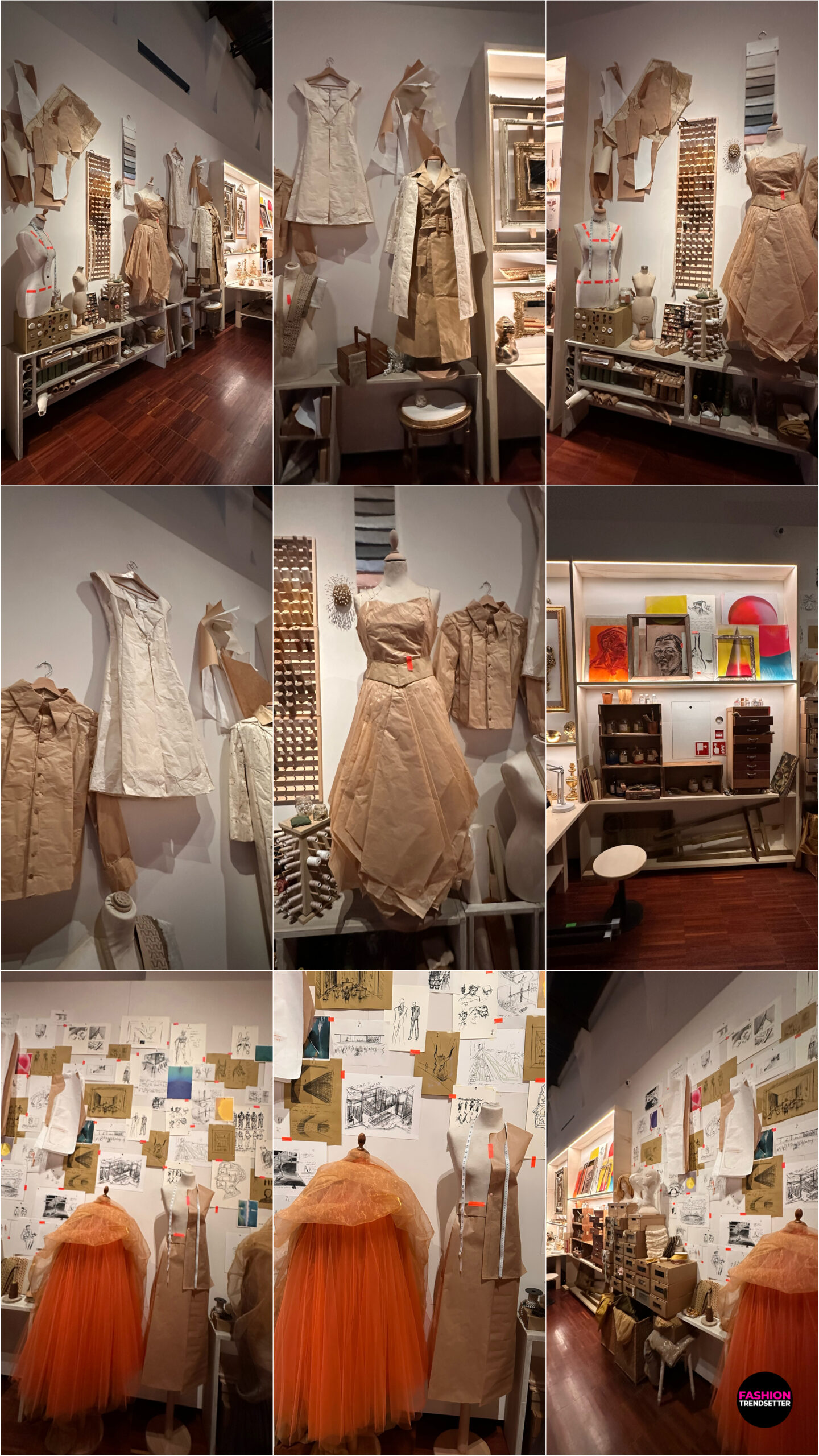
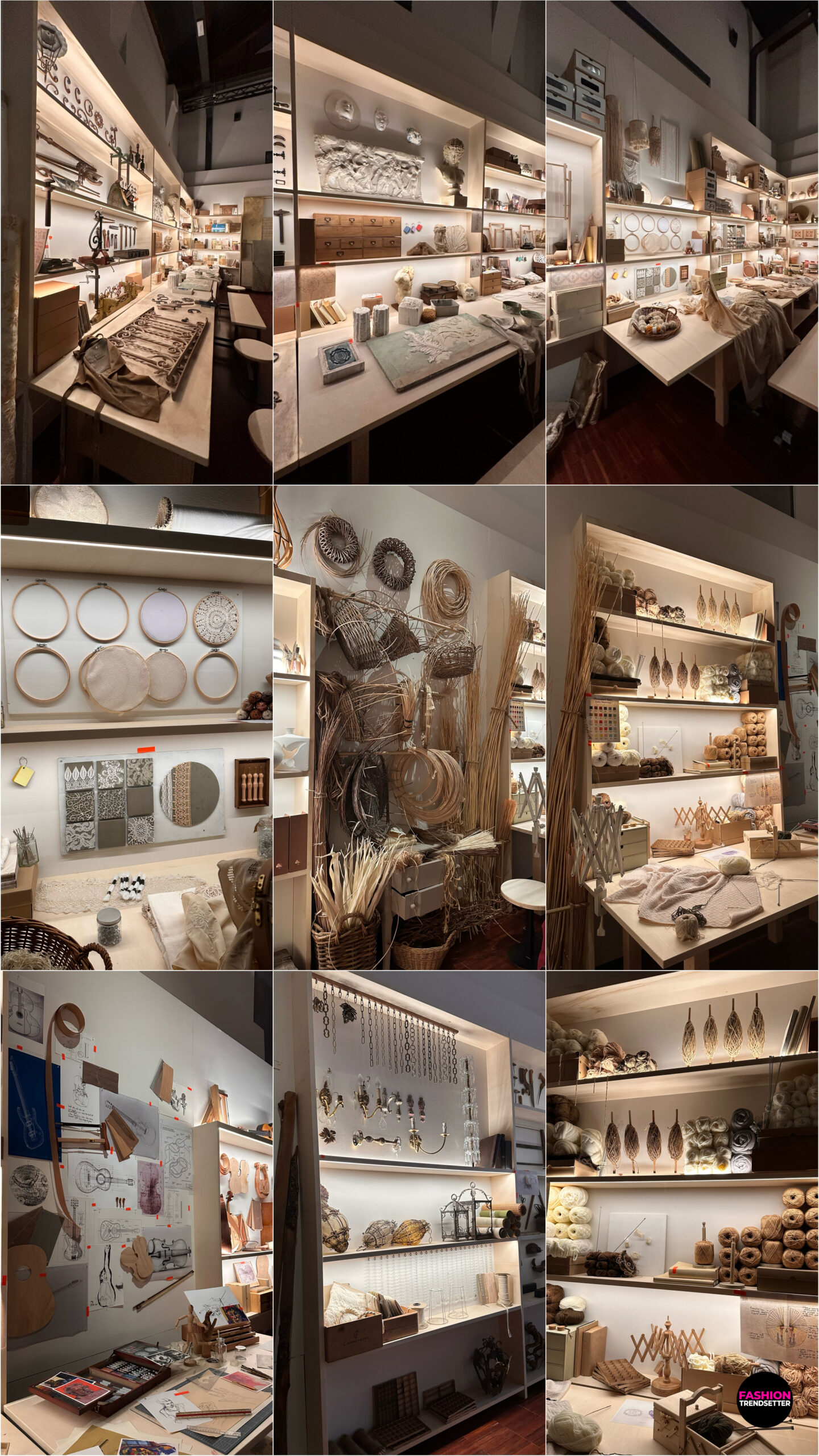
Homo Faber 2026: An Island of Light – A Language of Hands
Photos © 2026, Senay Gokcen & Efe Kaan Gokcen for Fashion Trendsetter.
We used to spend time touching materials, shaping them, experimenting with them and learning through our hands. Today, so much of the creative process happens through screens. Technology has given us extraordinary possibilities, but the human hand still tells a different story.
That was perhaps why the opening space of Homo Faber felt so moving. It reminded us how much we have missed seeing craftsmanship not simply as a finished product, but as a process.
The organizers themselves aimed to bring visitors closer to the act of making through live demonstrations, participatory workshops and encounters with craftspeople and their techniques. [1] And it worked.
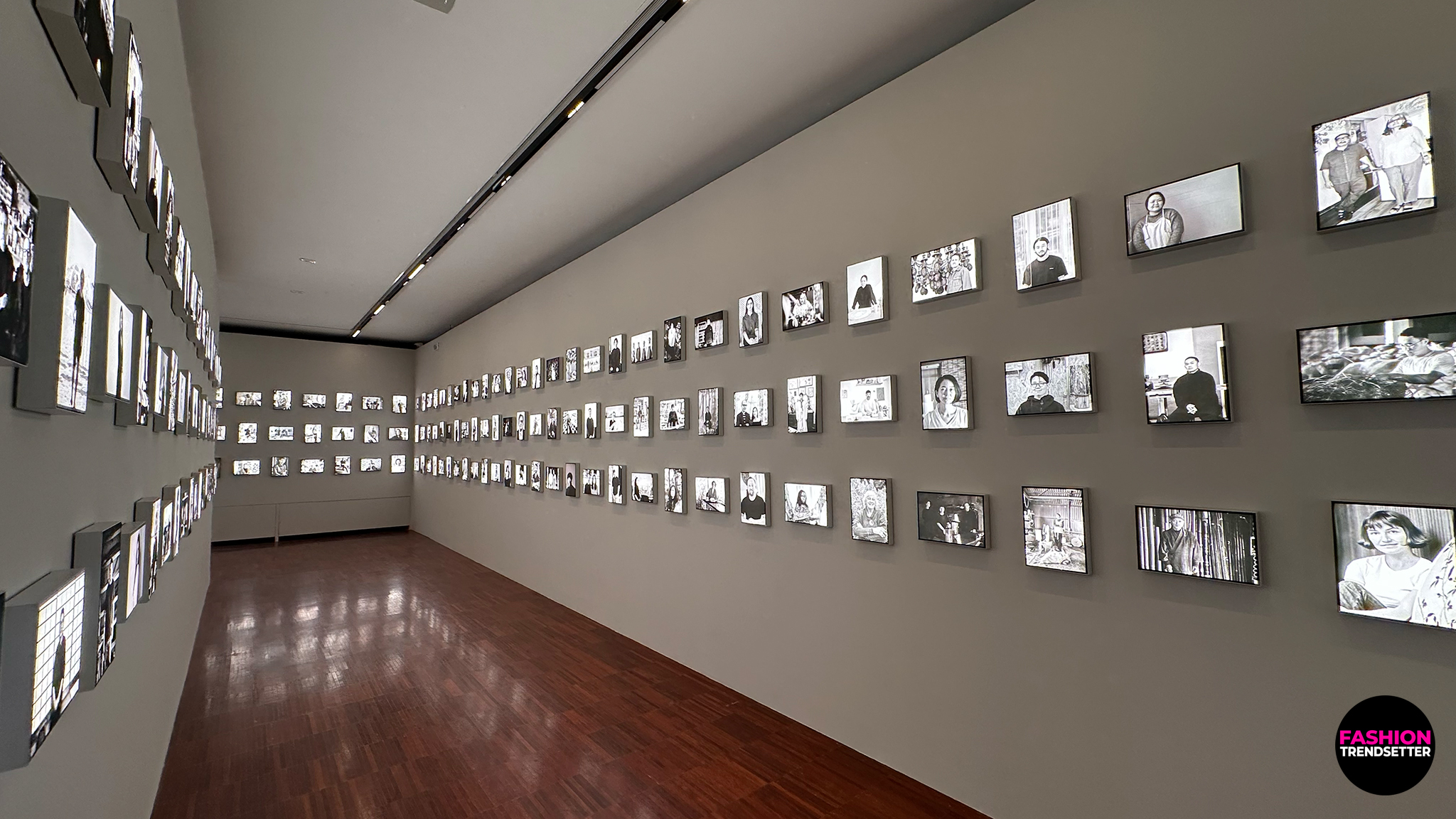
Homo Faber 2026: An Island of Light – An Index of Artisans
An extensive photographic display showcased the talented artisans whose creations formed the heart of the exhibition. Bringing together more than 500 makers from over 70 countries, the presentation highlighted the extraordinary diversity of contemporary craftsmanship, from emerging talents to master craft artists. Each portrait offered a glimpse into the people behind the objects, honoring the hearts, hands, and minds that preserved traditional knowledge, inspired innovation, and gave material creations their meaning. Photo © 2026, Senay Gokcen for Fashion Trendsetter.
Craftsmanship as a Living Culture
Walking through the exhibition, we made a real effort to look closely at the objects rather than simply moving from one installation to another. There were pieces representing traditional techniques alongside contemporary interpretations of craftsmanship, creating an interesting dialogue between heritage and new creative approaches.
More than 500 craft artists were represented, and notably, 85 percent of the artisans were exhibiting at Homo Faber for the first time. [1] For us, this was particularly meaningful.
It is easy to talk about preserving traditional crafts, but preservation means very little if the people who possess that knowledge are not given the opportunity to continue working, developing their skills and finding an audience. Homo Faber placed those makers at the centre of the experience.
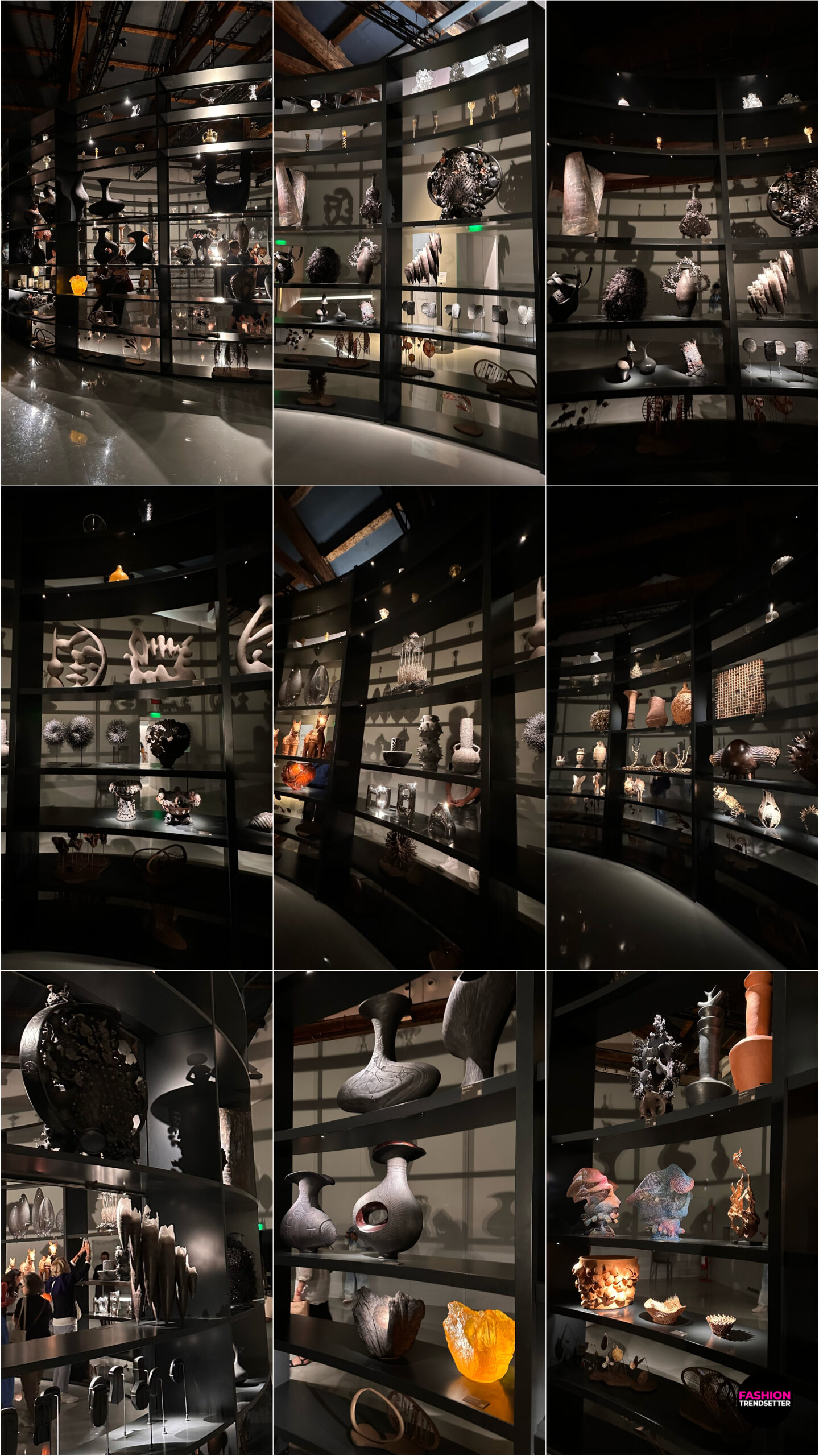
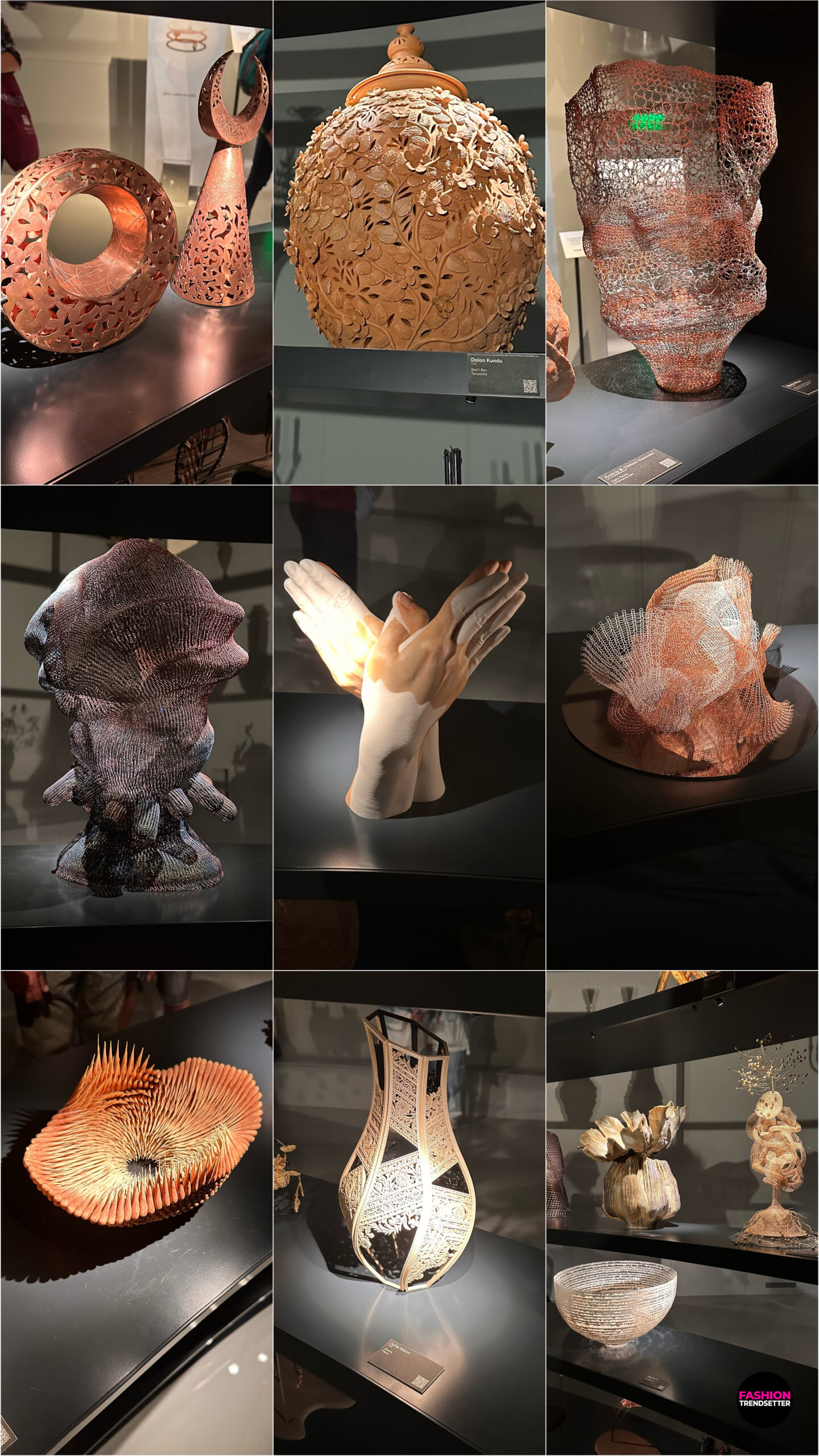
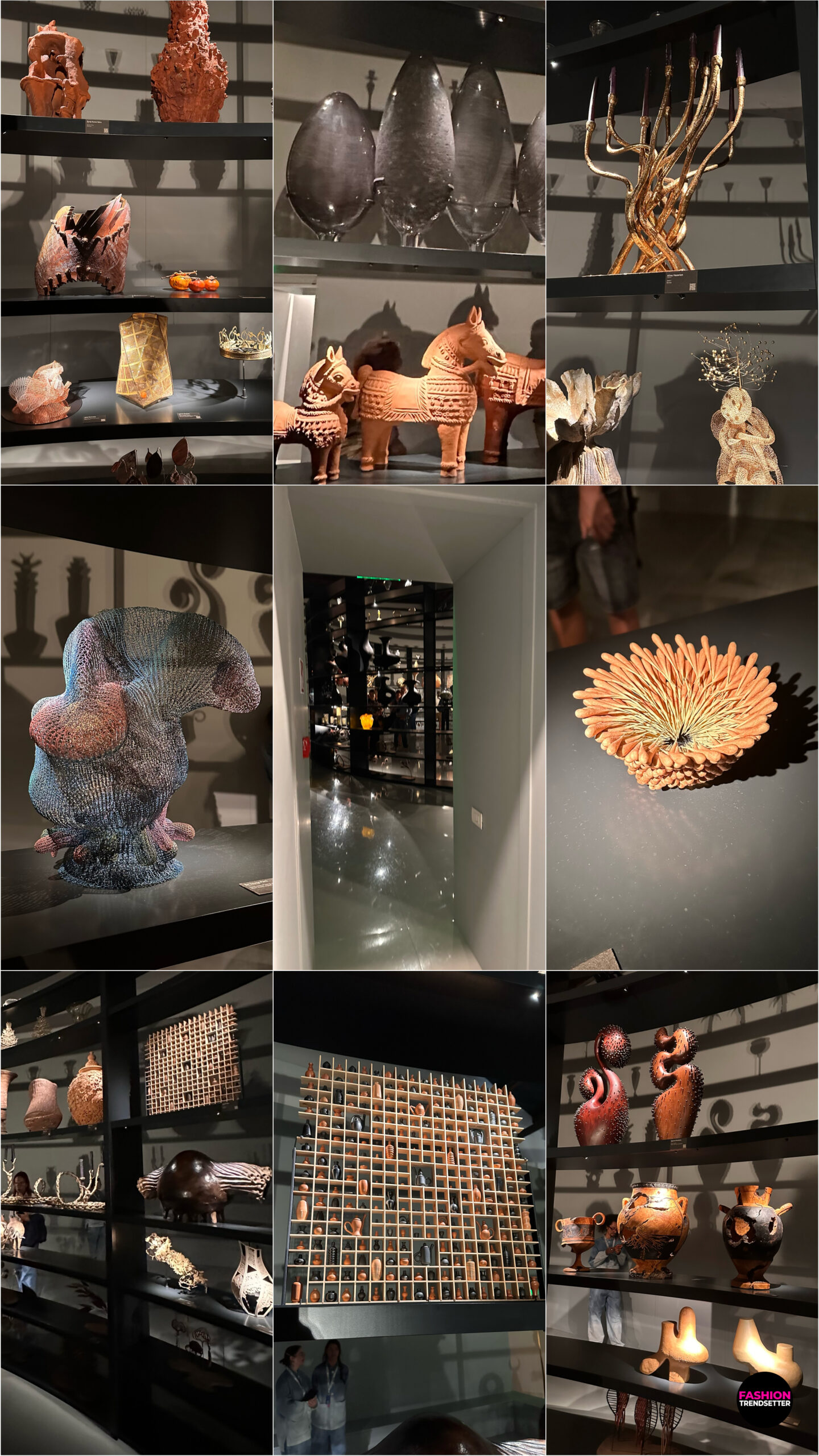
Homo Faber 2026: An Island of Light – An Alphabet of Objects
Every object told a story, and its form became a language through which craftsmanship expressed beauty, meaning, and imagination. A kinetic installation slowly rotated through 360 degrees, projecting the silhouettes of selected objects onto the surrounding wall and transforming them into an ever-changing visual composition. Chosen for their intricate shapes, earthy tones, and interaction with light, the objects created a dynamic interplay of shadows that recalled humanity’s earliest visual expressions. As the installation revolved, light, form, and shadow continuously shifted, revealing the poetic language of objects through an immersive exploration of craftsmanship and visual perception. Photos © 2026, Senay Gokcen & Efe Kaan Gokcen for Fashion Trendsetter.
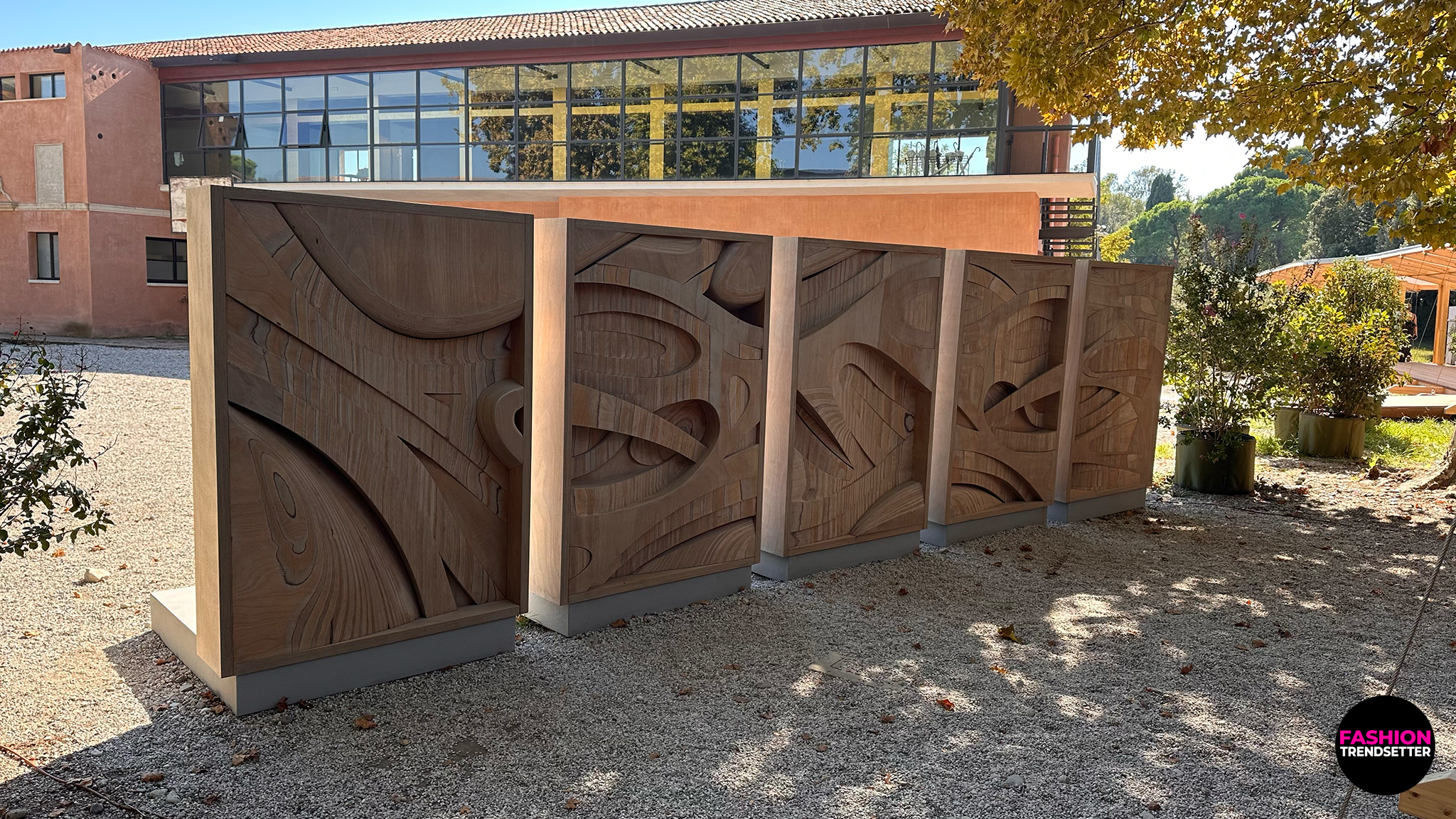
Homo Faber 2026: An Island of Light – A Library of Lungs
Known as the lungs of Venice, San Giorgio Maggiore provided a natural setting for an installation that explored the relationship between craftsmanship and the living world. Inspired by Es Devlin’s signature paper sculptures, a series of sculptural structures incorporated soundboards that seemed to breathe or whisper as visitors passed by. Through the interplay of sound, form, and natural materials, the installation evoked the rhythms of the biosphere and highlighted the delicate connections between artisanal practice, the environment, and the ecosystems that sustain all living organisms. Photo © 2026, Senay Gokcen for Fashion Trendsetter.
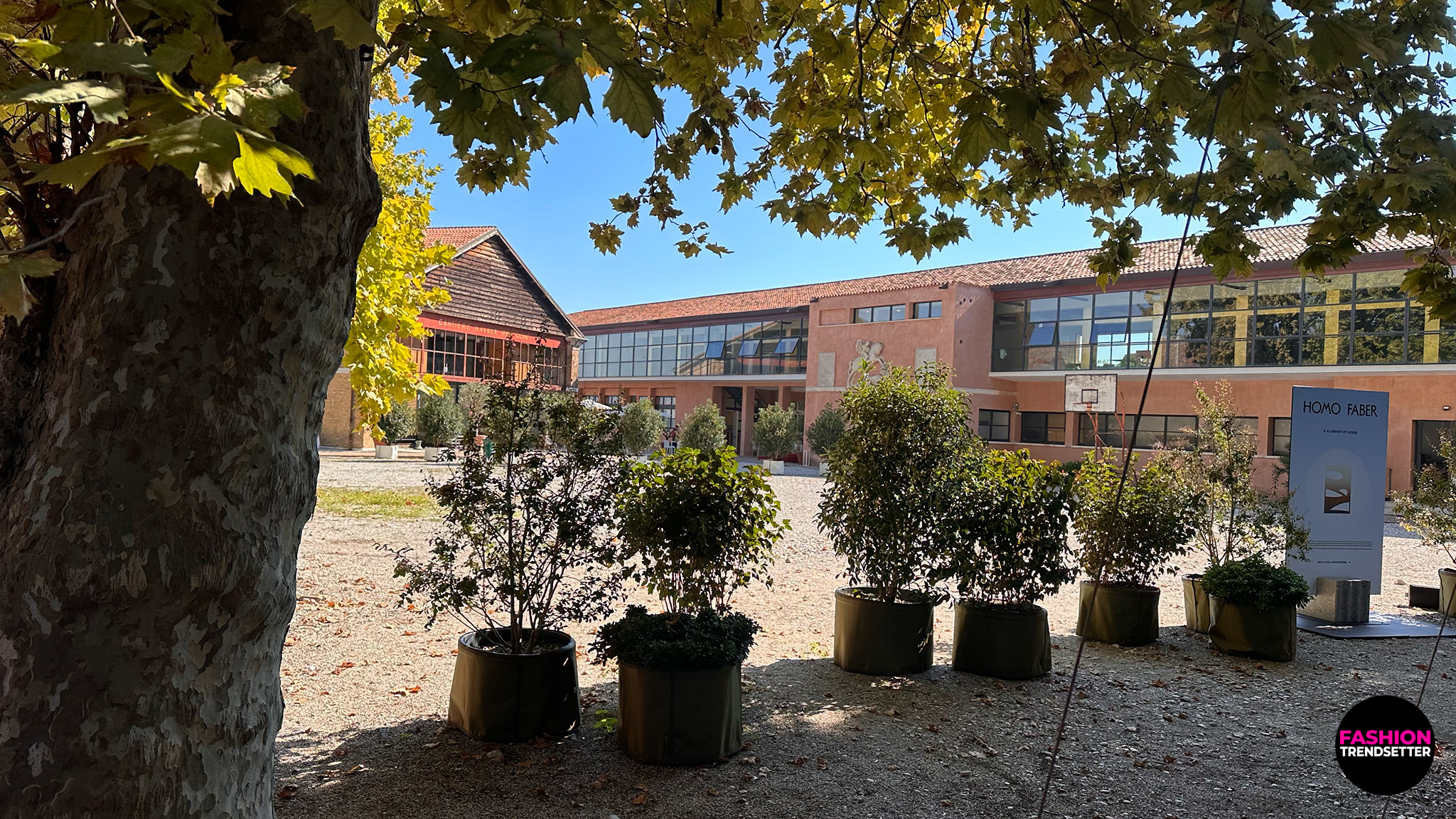
Homo Faber 2026: An Island of Light – A Library of Lungs
Photo © 2026, Senay Gokcen for Fashion Trendsetter.
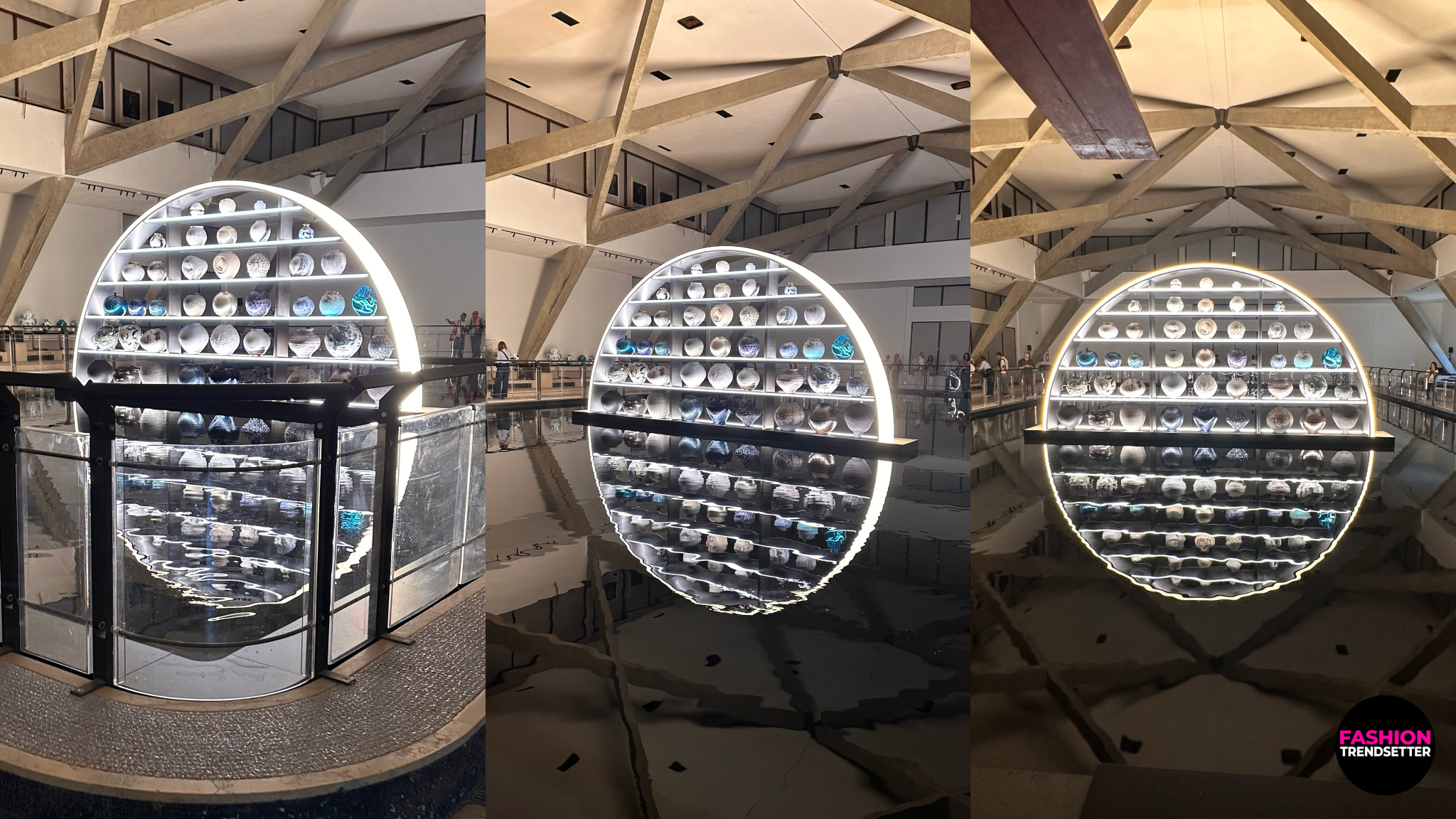
Homo Faber 2026: An Island of Light – “A Full Moon Rising” Installation by Es Devlin
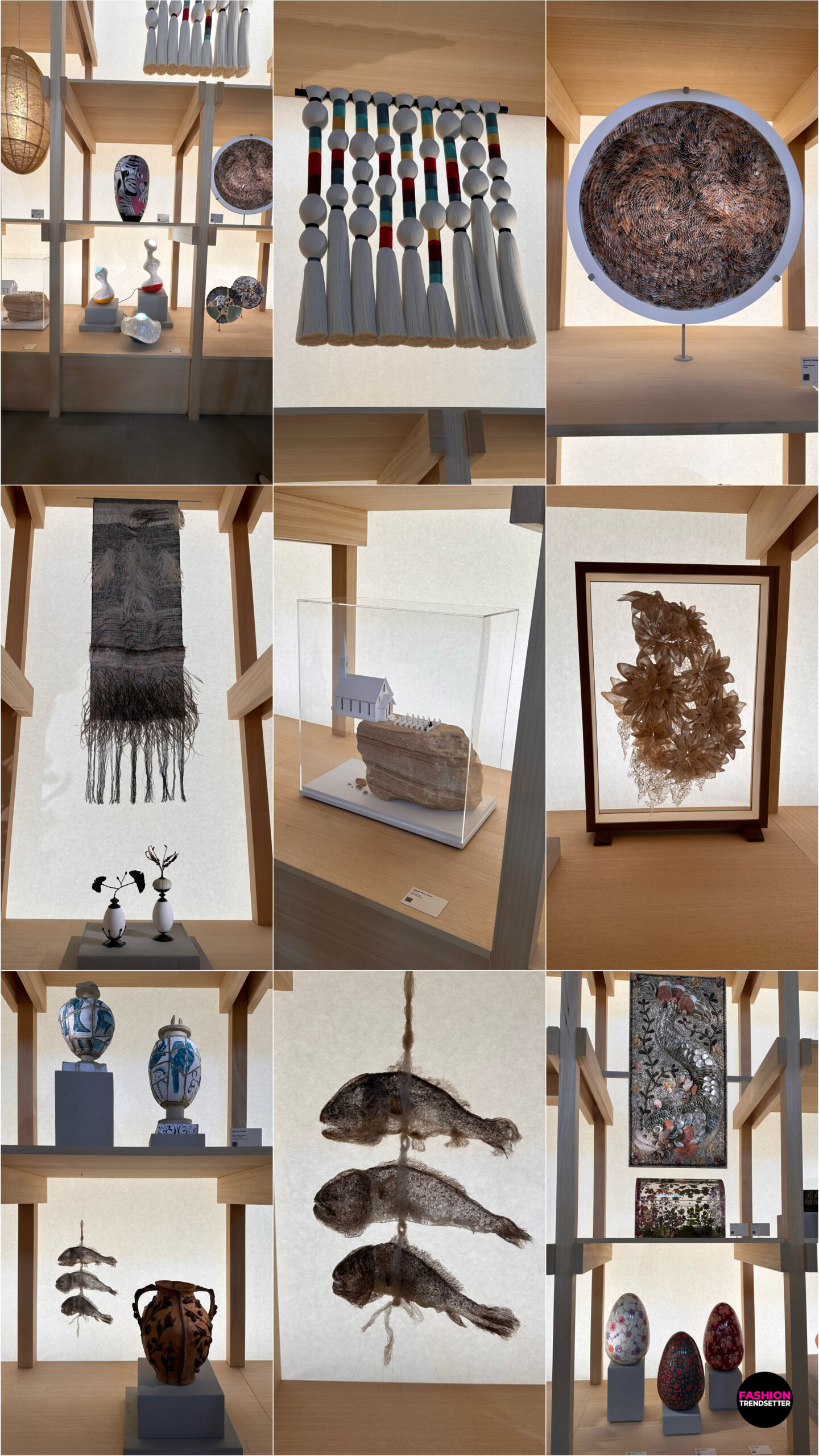
Set within the former swimming pool of Fondazione Giorgio Cini, this evocative installation brought together the imagery of a rising moon, a shimmering sea, and vessels inspired by water. At its heart was the Korean moon jar, a centuries-old ceramic form celebrated for its simple, rounded silhouette and quiet beauty. Alongside it, vessels crafted from different materials and rendered in watery hues explored the relationship between form, function, and cultural tradition. Through the poetic interplay of light, reflection, and handcrafted objects, the installation celebrated water as a source of life and inspiration, revealing how a universal element shaped both material culture and the art of making. Photos © 2026, Senay Gokcen for Fashion Trendsetter.
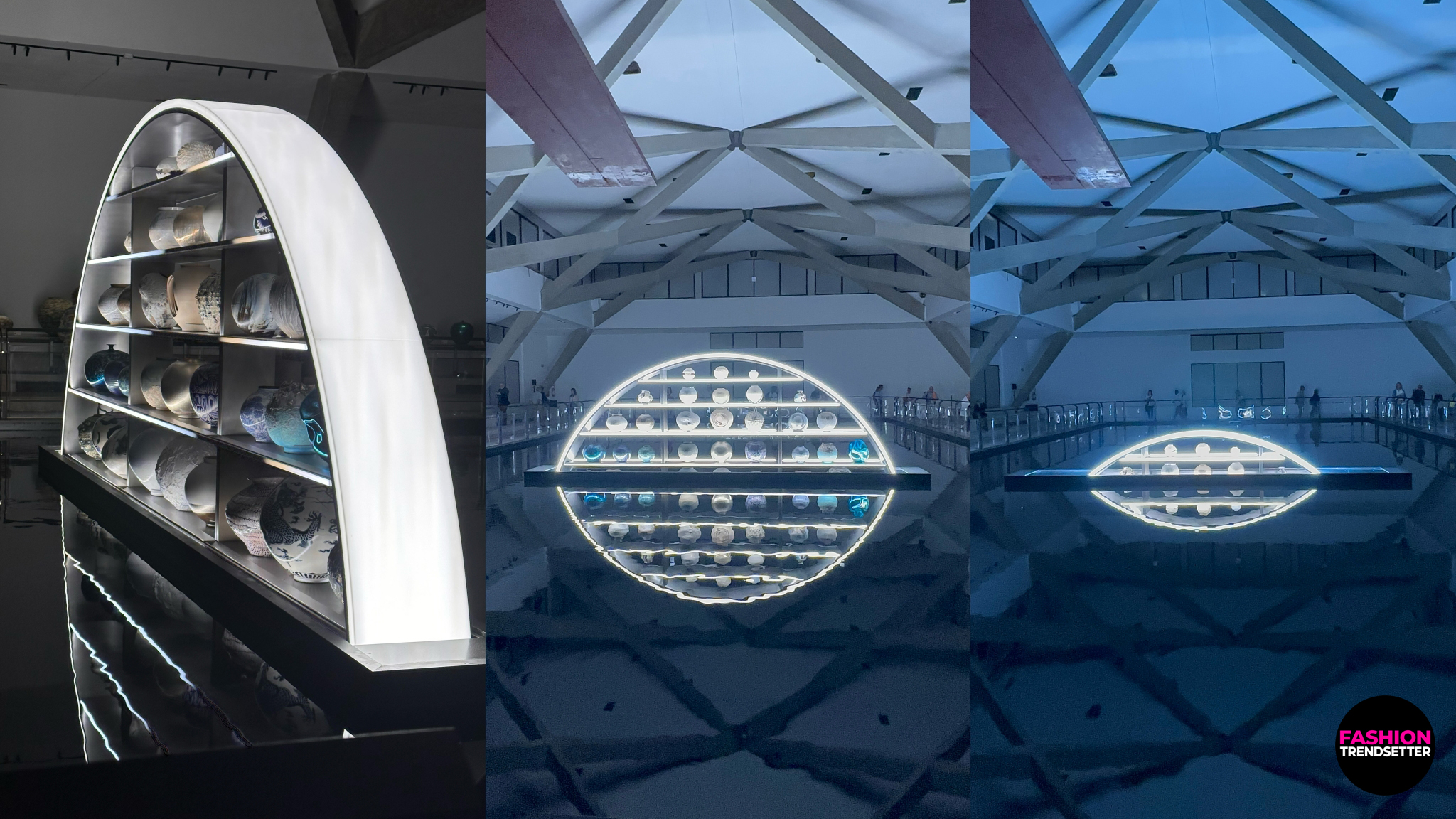
Homo Faber 2026: An Island of Light – “A Full Moon Rising” Installation by Es Devlin
Photos © 2026, Senay Gokcen for Fashion Trendsetter.
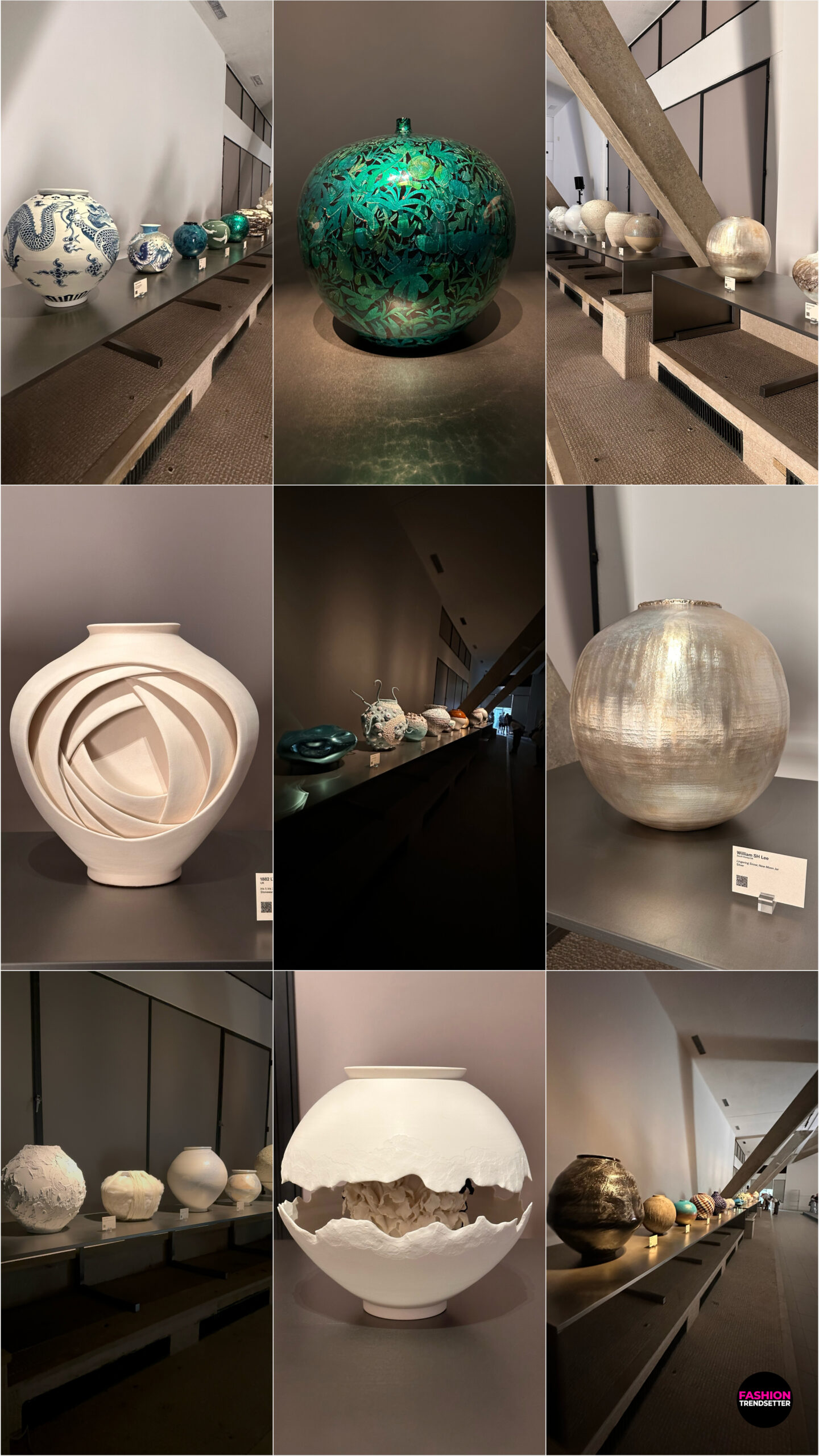
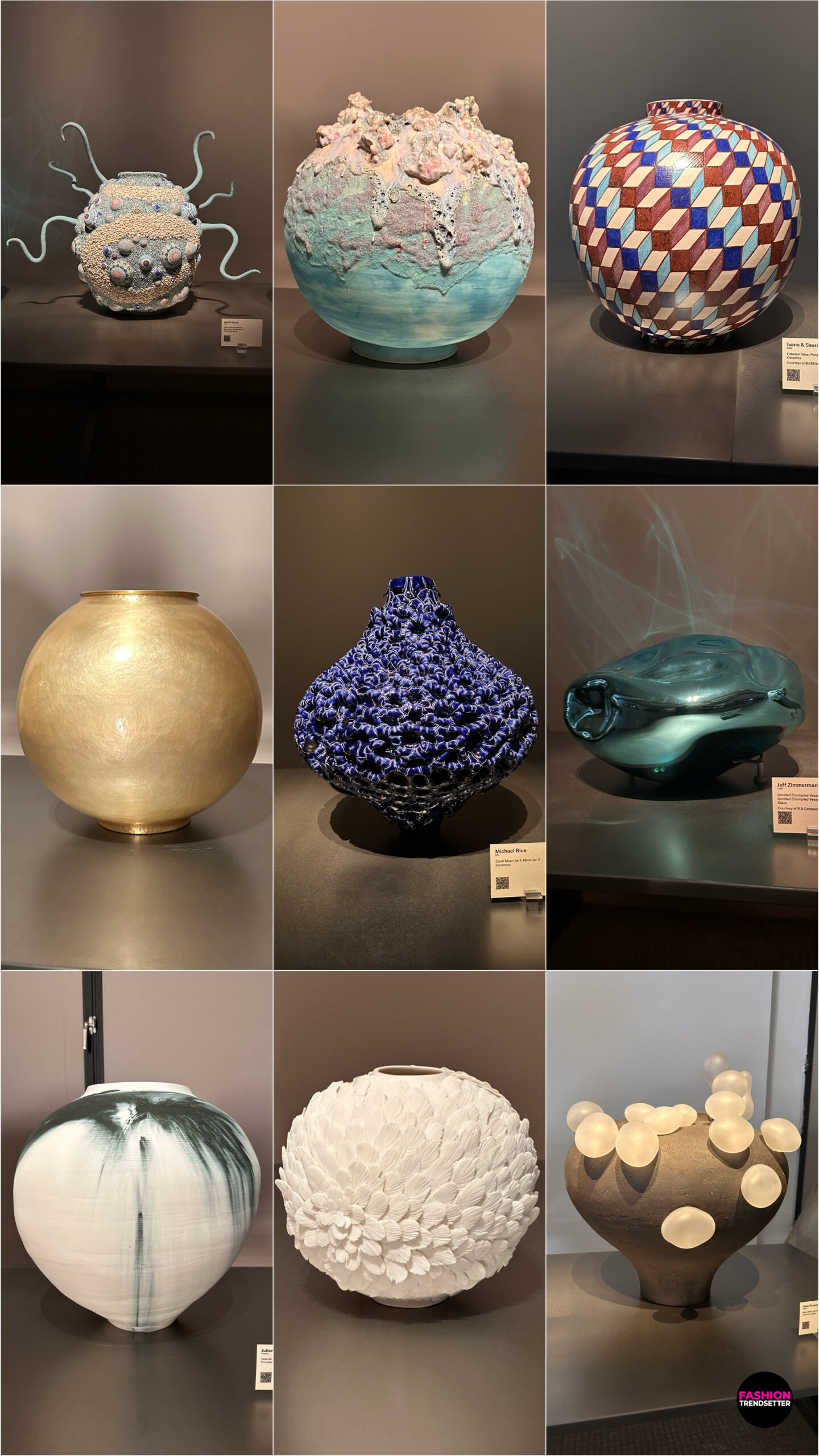
During the Homo Faber 2026: An Island of Light biennial, numerous acclaimed ceramicists and porcelain makers from around the world displayed their works. Set within the former swimming pool of Fondazione Giorgio Cini, these remarkable works by master artisans from around the world surrounded A Full Moon Rising, creating a captivating dialogue between craftsmanship, texture, form, and light. Photos © 2026, Senay Gokcen for Fashion Trendsetter.
In several areas, craftspeople were not simply represented by their finished works. Visitors could actually see them working. An Atelier Alive, for example, recreated a working craft studio where master artisans demonstrated techniques involving porcelain, leather, paper, textiles and other materials. A Rooted Ascent brought woodworkers and weavers into the exhibition itself, allowing visitors to see how organic materials become part of their creative practices. [1]
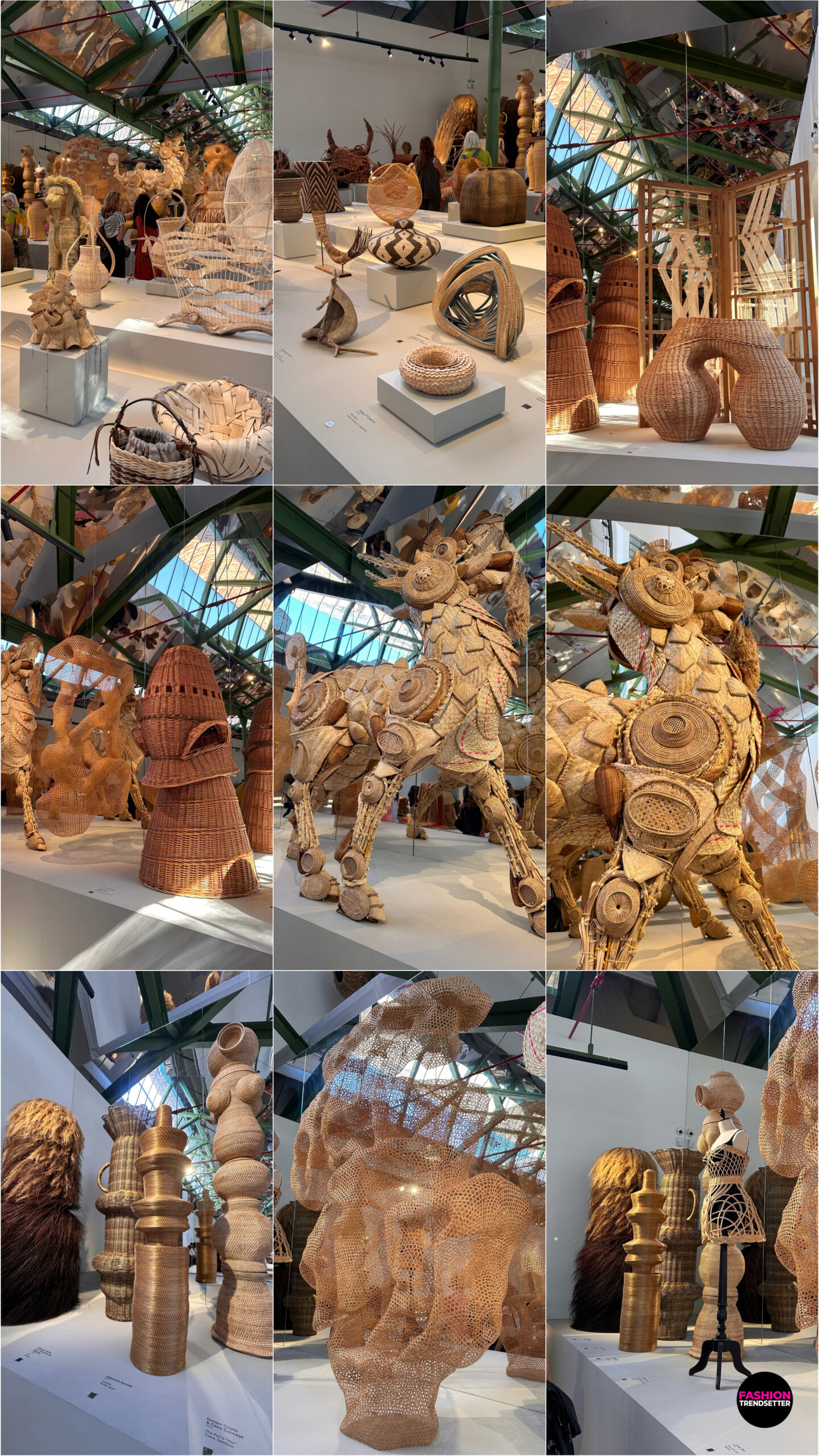
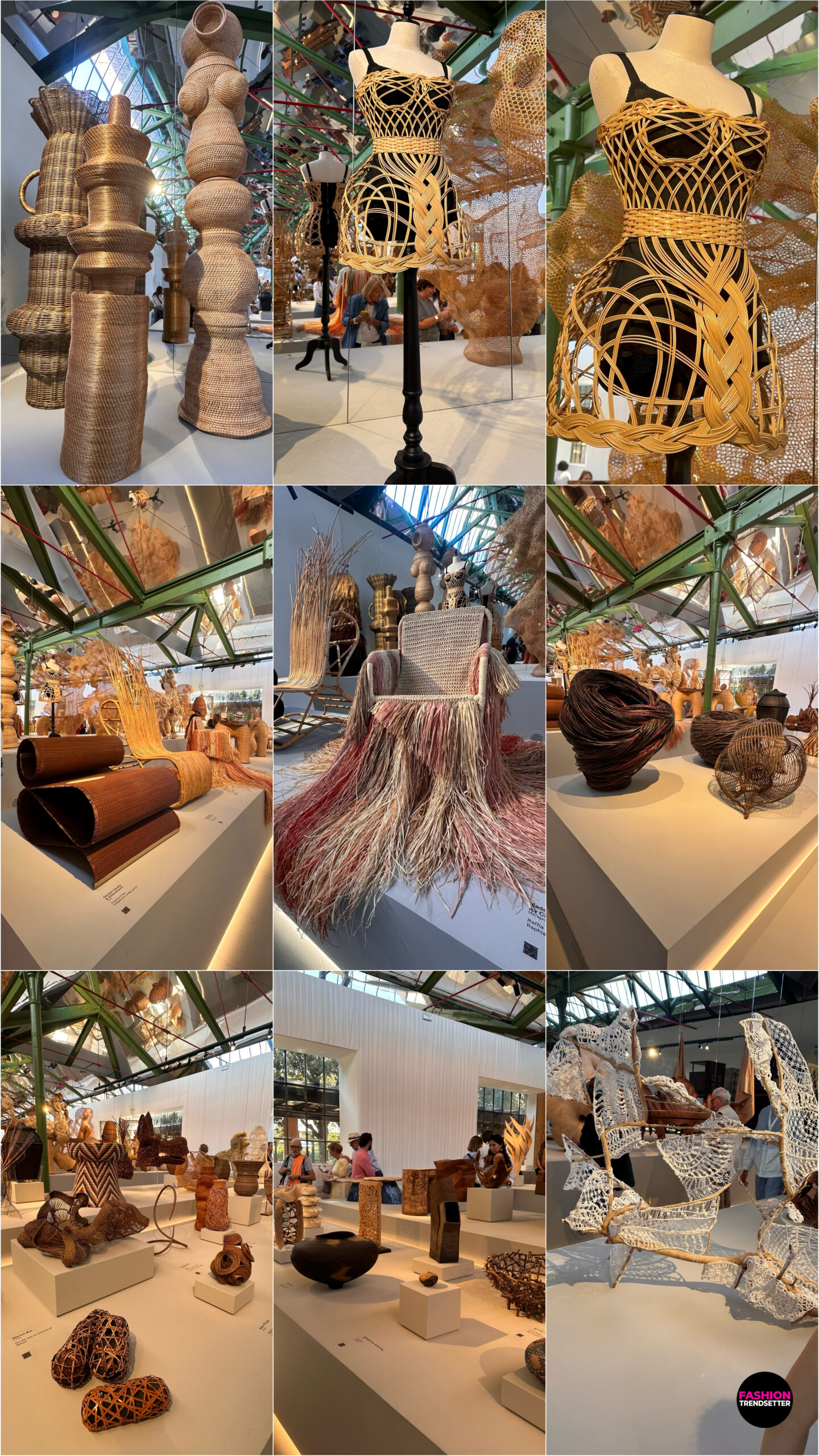
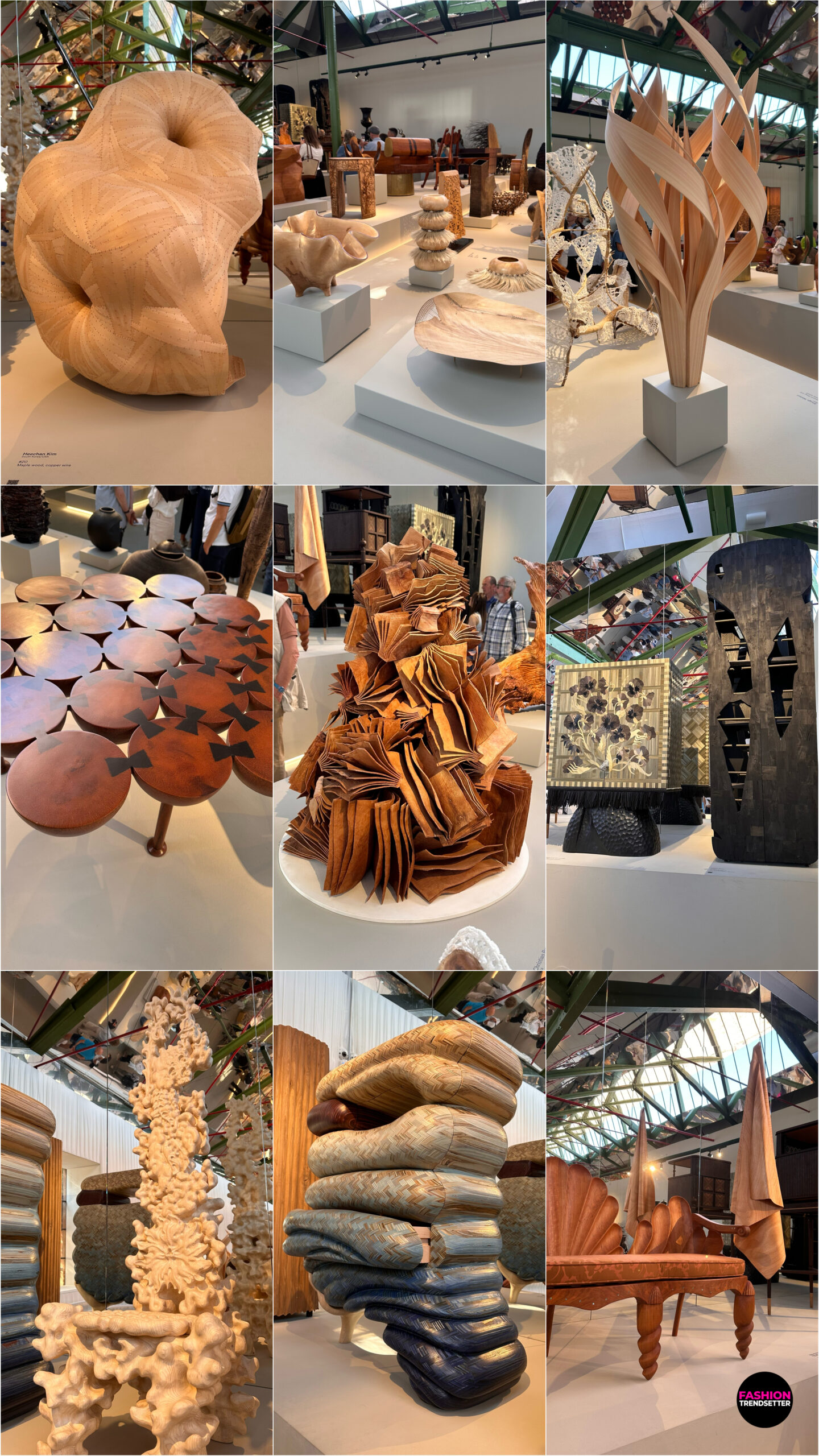
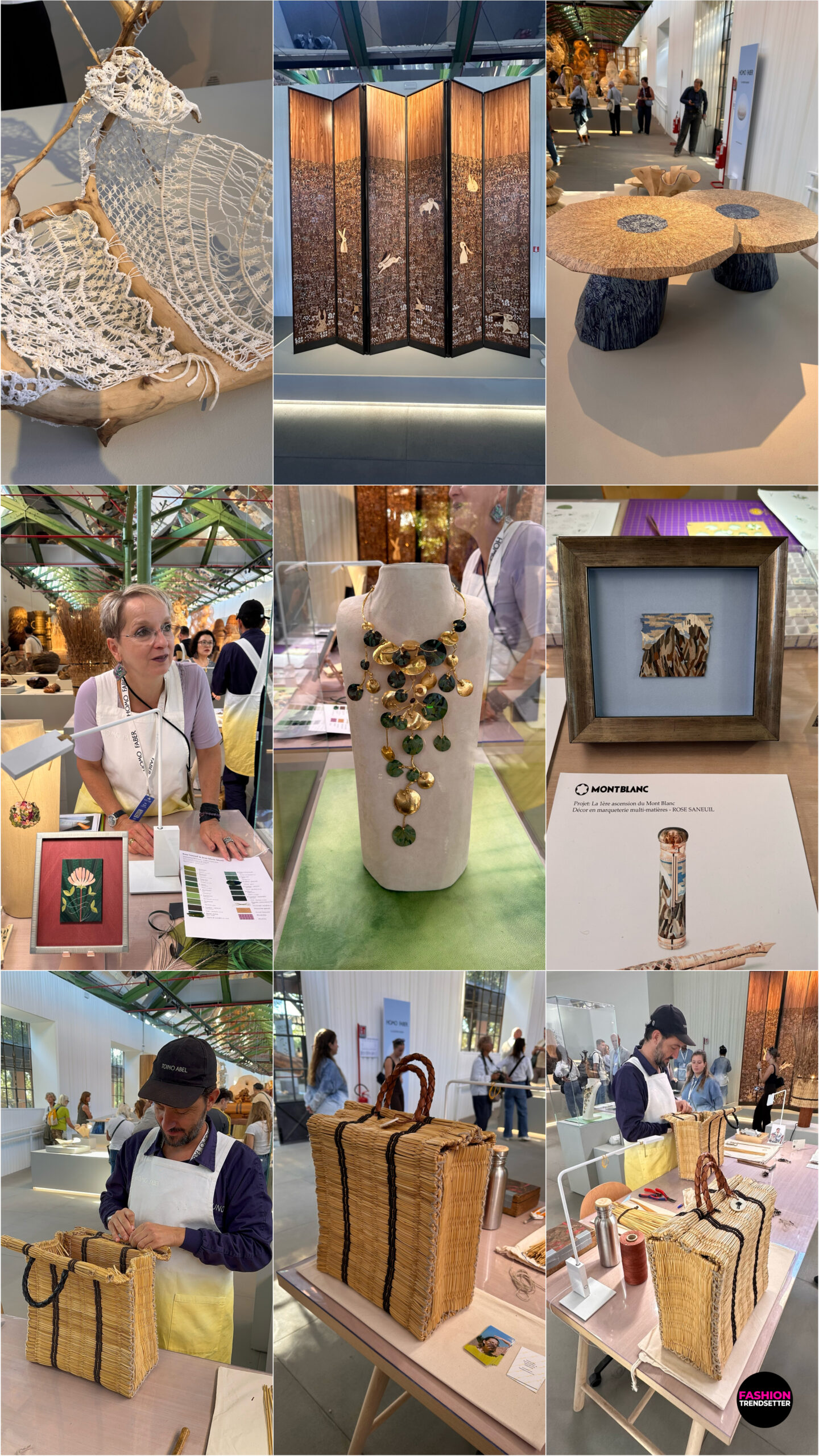
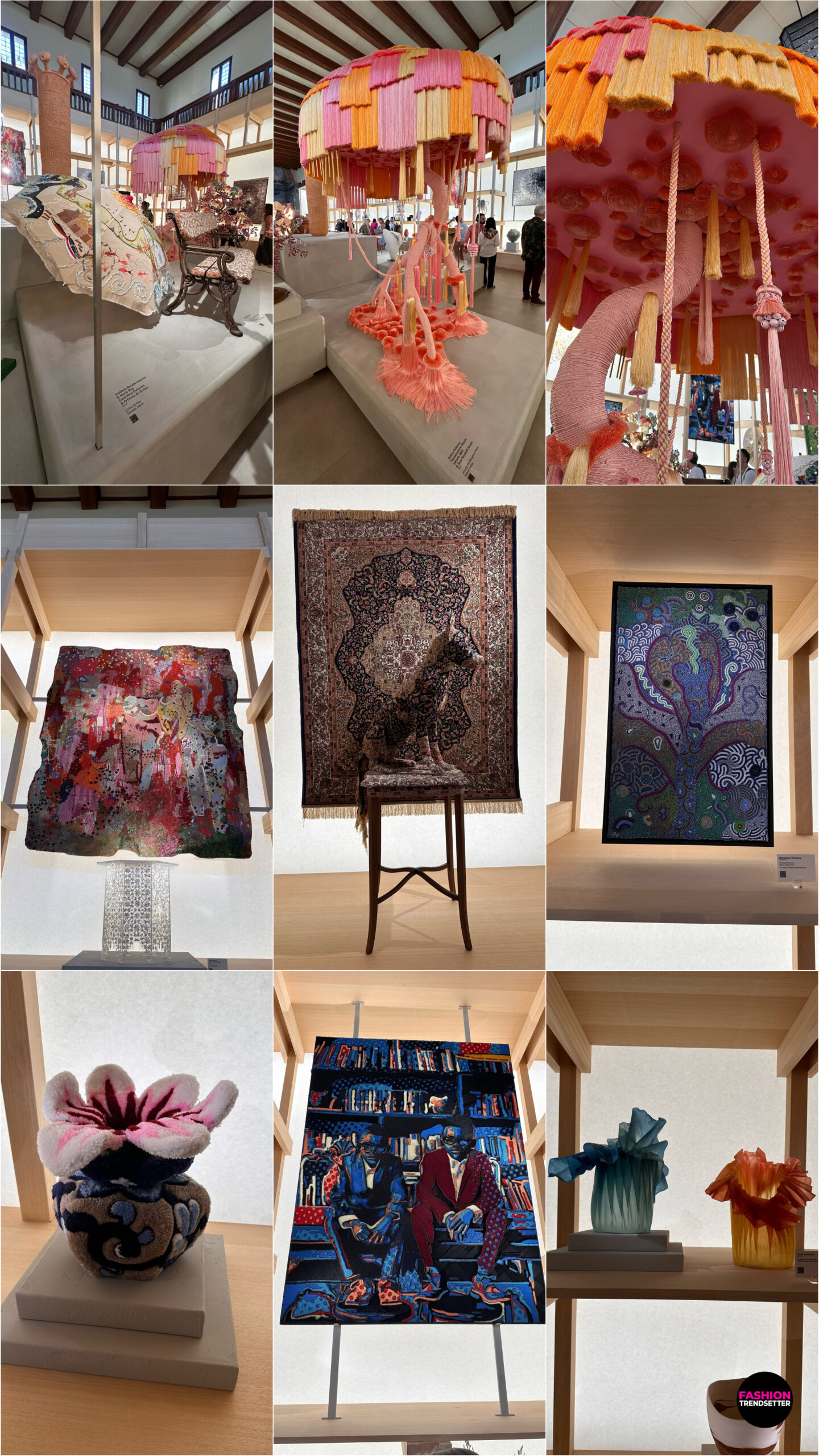
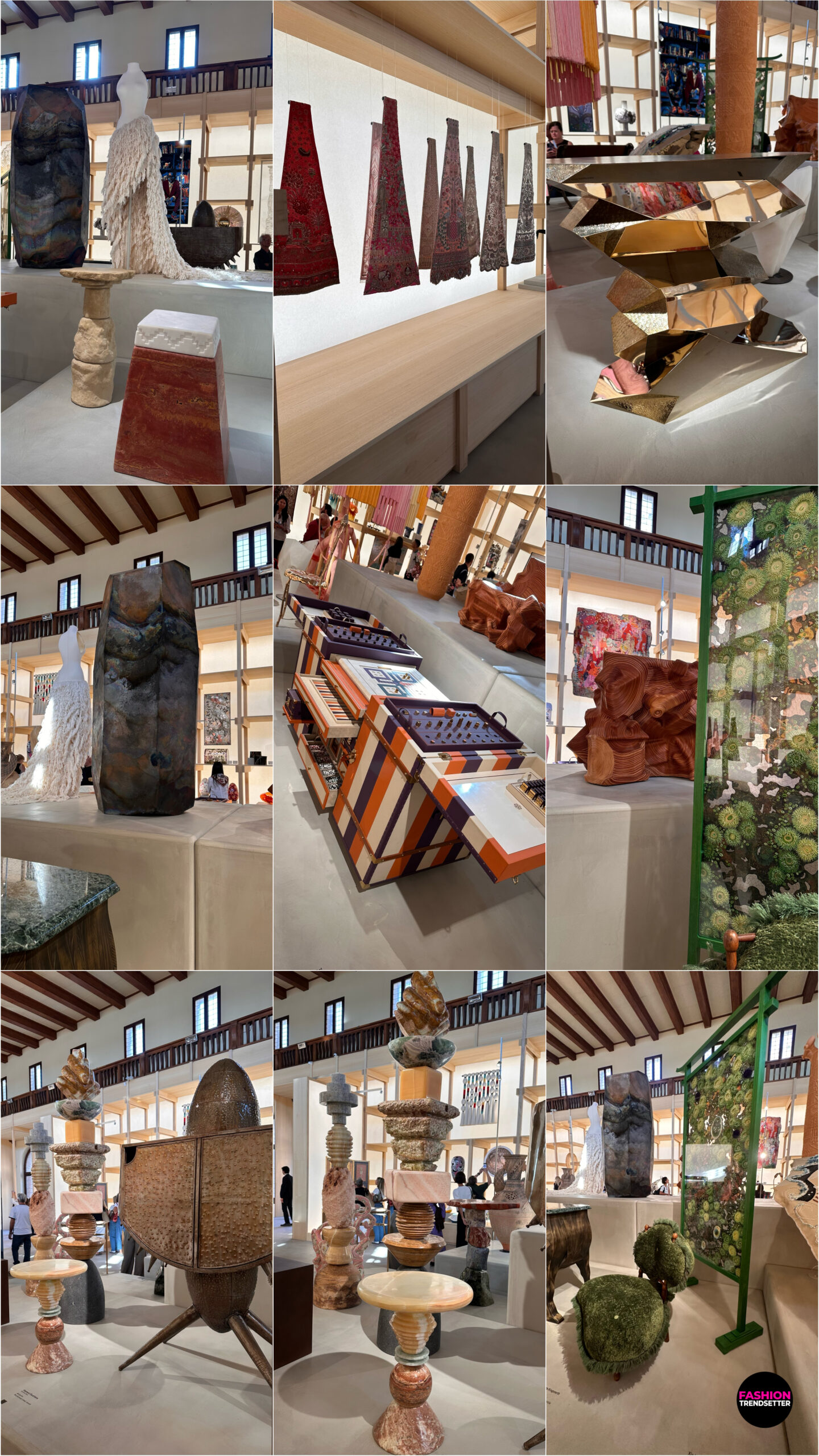
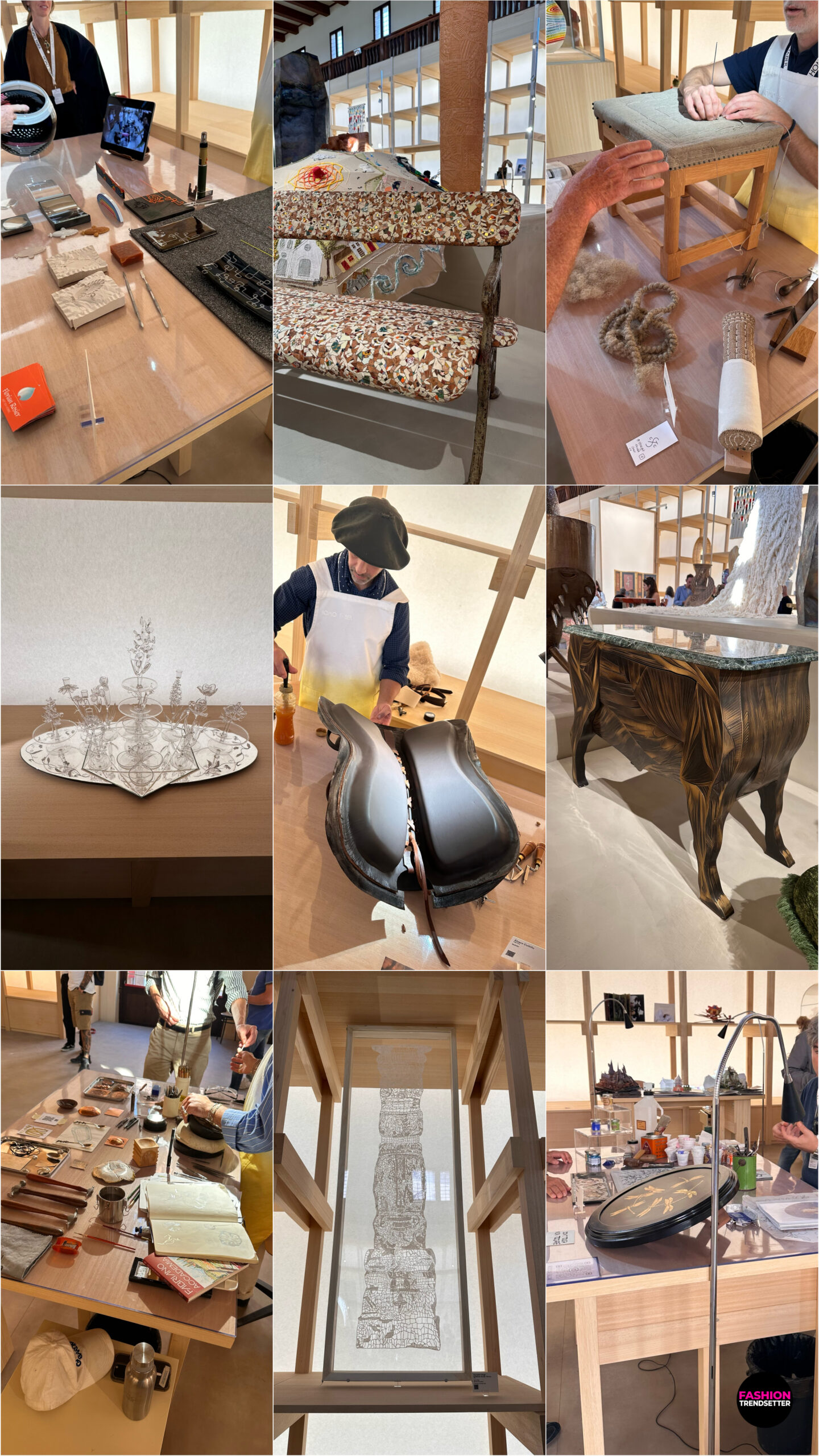
In several areas, craftspeople were not simply represented by their finished works. Visitors could actually see them working. An Atelier Alive, for example, recreated a working craft studio where master artisans demonstrated techniques involving porcelain, leather, paper, textiles and other materials. A Rooted Ascent brought woodworkers and weavers into the exhibition itself, allowing visitors to see how organic materials become part of their creative practices. Photos © 2026, Senay Gokcen & Efe Kaan Gokcen for Fashion Trendsetter.
This distinction matters. There is something very different about looking at a beautifully finished object and watching the person who knows how to make it.
The sequence was important because Homo Faber did not feel like a conventional exhibition where visitors simply moved from one display to the next. Light, water, mirrors, movement and sound were used throughout the installations to create an environment in which craftsmanship could be experienced rather than simply observed. [1] The result was remarkably cohesive.
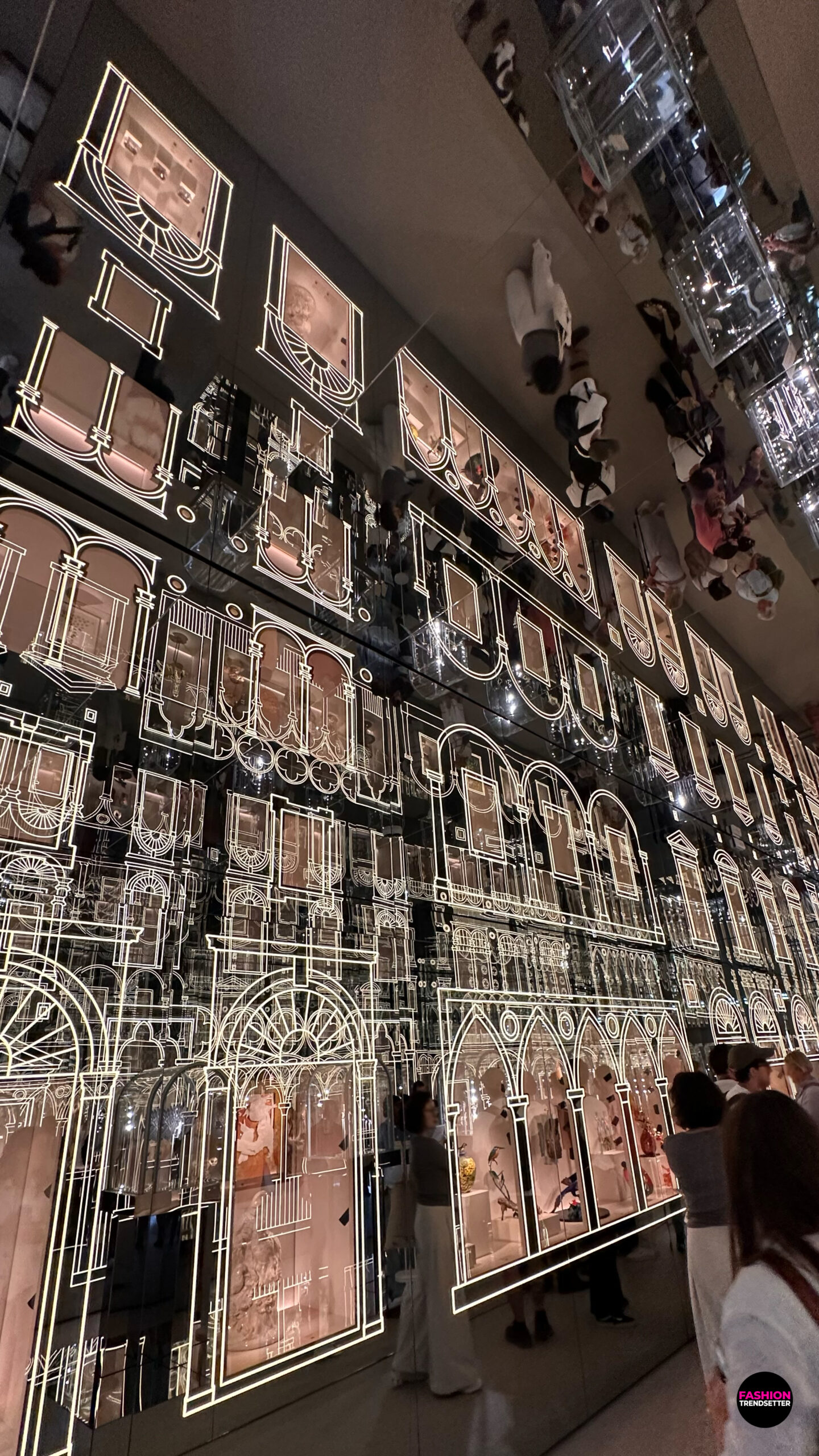
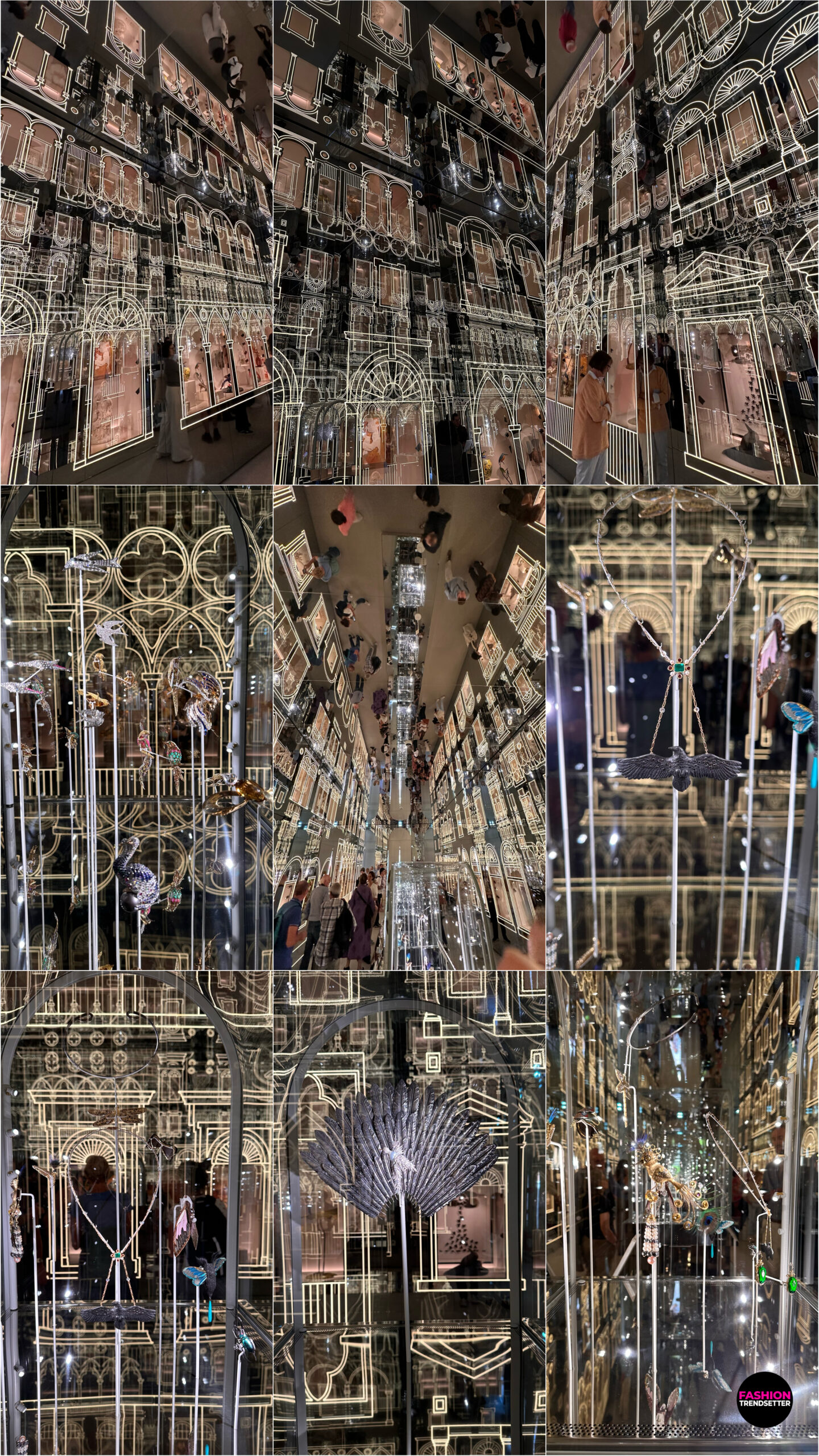
Homo Faber 2026: An Island of Light – An Infinite Birdsong
Inspired by the architectural elegance of Venice, An Infinite Birdsong presented an ethereal celebration of winged creatures and their enduring influence on artistic imagination. Birds, butterflies, moths, dragonflies, and other insects served as muses for an extraordinary collection of jewelry and artworks crafted from diverse materials, including paper, porcelain, metal, and glass. Illuminated mirrors framed the installation, evoking the reflections of Venice’s arched windows shimmering across the water after dark. Through the interplay of light, reflection, and intricate craftsmanship, the space explored the delicate beauty of the natural world and the limitless possibilities of translating its forms into art. Photos © 2026, Senay Gokcen for Fashion Trendsetter.
Even within the grand architecture of Fondazione Giorgio Cini, the installations never allowed the objects to disappear behind the spectacle. The atmosphere supported the work rather than competing with it, while the craftspeople and their stories remained at the heart of the experience.
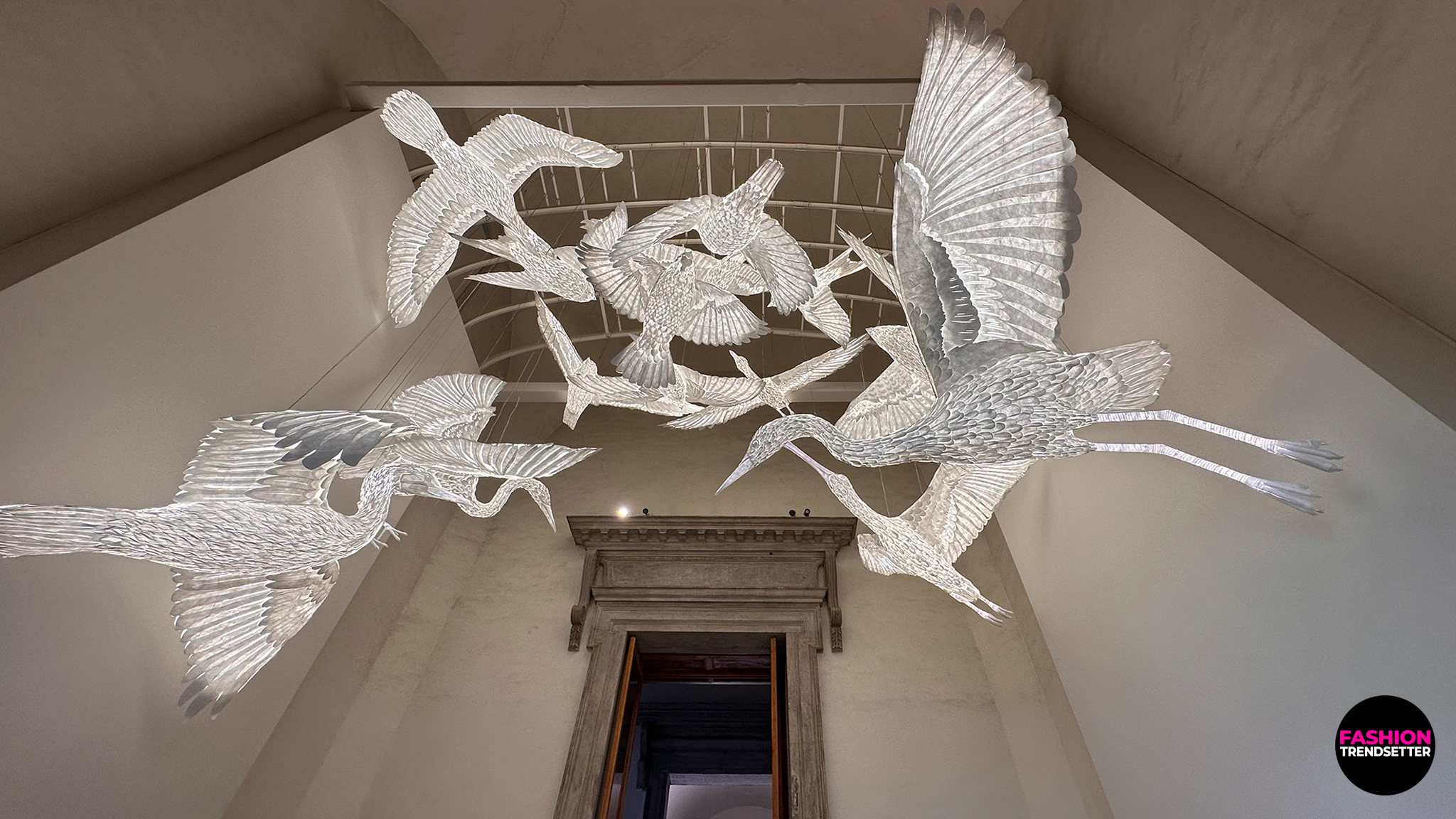
Homo Faber 2026: An Island of Light – “A Luminous Ark” by QIUWEN WEN
Suspended above the staircase, A Luminous Ark celebrated the delicate beauty of paper through an enchanting assembly of illuminated bird sculptures. Created by Chinese artist Wen Qiuwen, the installation drew on Es Devlin’s sketches of Venetian birds, translating their forms into graceful paper creations. Kestrels, egrets, herons, terns, and other winged inhabitants of the Venetian landscape appeared to float in the air, their translucent forms glowing like lanterns. Blending artistic interpretation with the poetic qualities of light and material, the installation paid tribute to Venice’s natural heritage and the remarkable potential of paper as a medium for sculptural expression…Discover more about this artwork. Photo © 2026, Senay Gokcen for Fashion Trendsetter.
Why Craftsmanship Matters Now
Perhaps the most important message of Homo Faber 2026 was not about the past at all. It was about the future. In a world increasingly shaped by digitalization and artificial intelligence, the closing report describes the biennial as a powerful reminder of the exceptional ability of the human hand and the importance of preserving long-held traditions and skills for future generations. Around 65,000 visitors experienced the exhibition during its month-long run. [2] This feels particularly relevant today.
We are surrounded by objects every day, but we rarely stop to think about where they came from, who made them, what materials were used, how long they took to produce or what knowledge was required to create them. Es Devlin’s intention was to change that relationship between people and objects. She hoped visitors would leave with a greater appreciation of how things are made and perhaps even feel inspired to make something themselves. It is a powerful idea. [2] Perhaps the future of craftsmanship does not depend on choosing between tradition and technology. Perhaps it depends on learning how to use technology without forgetting the value of the human hand.
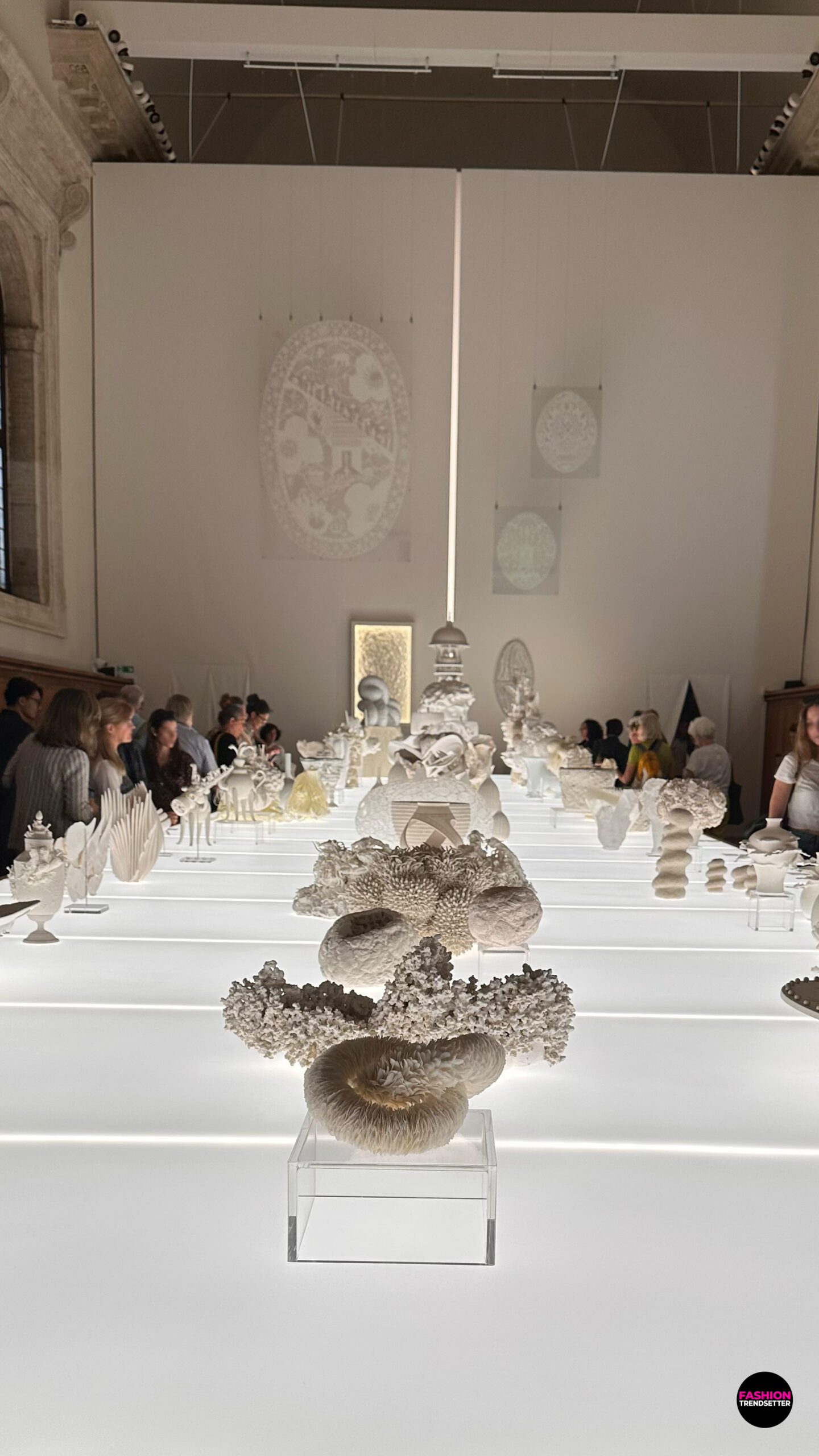
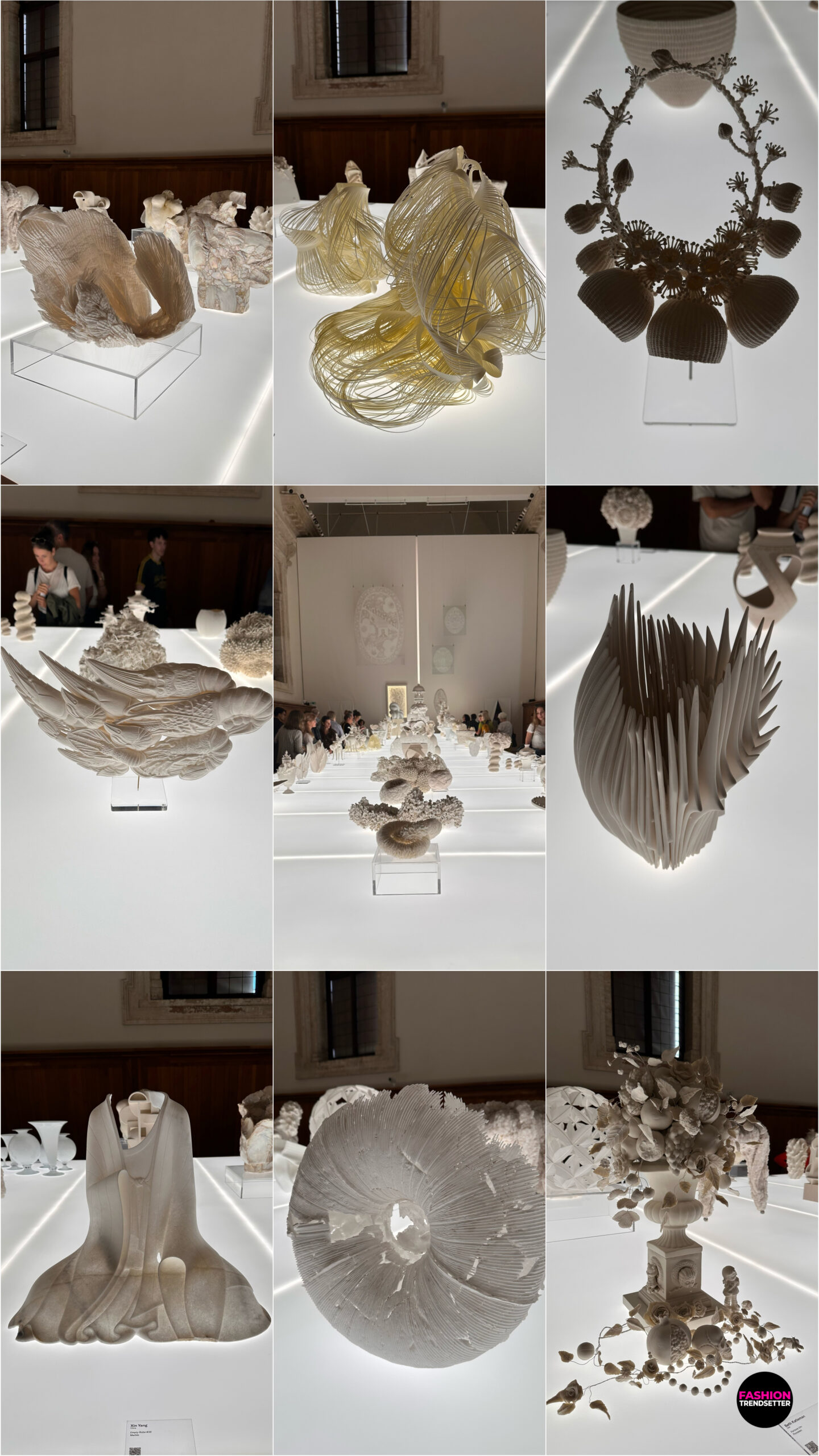
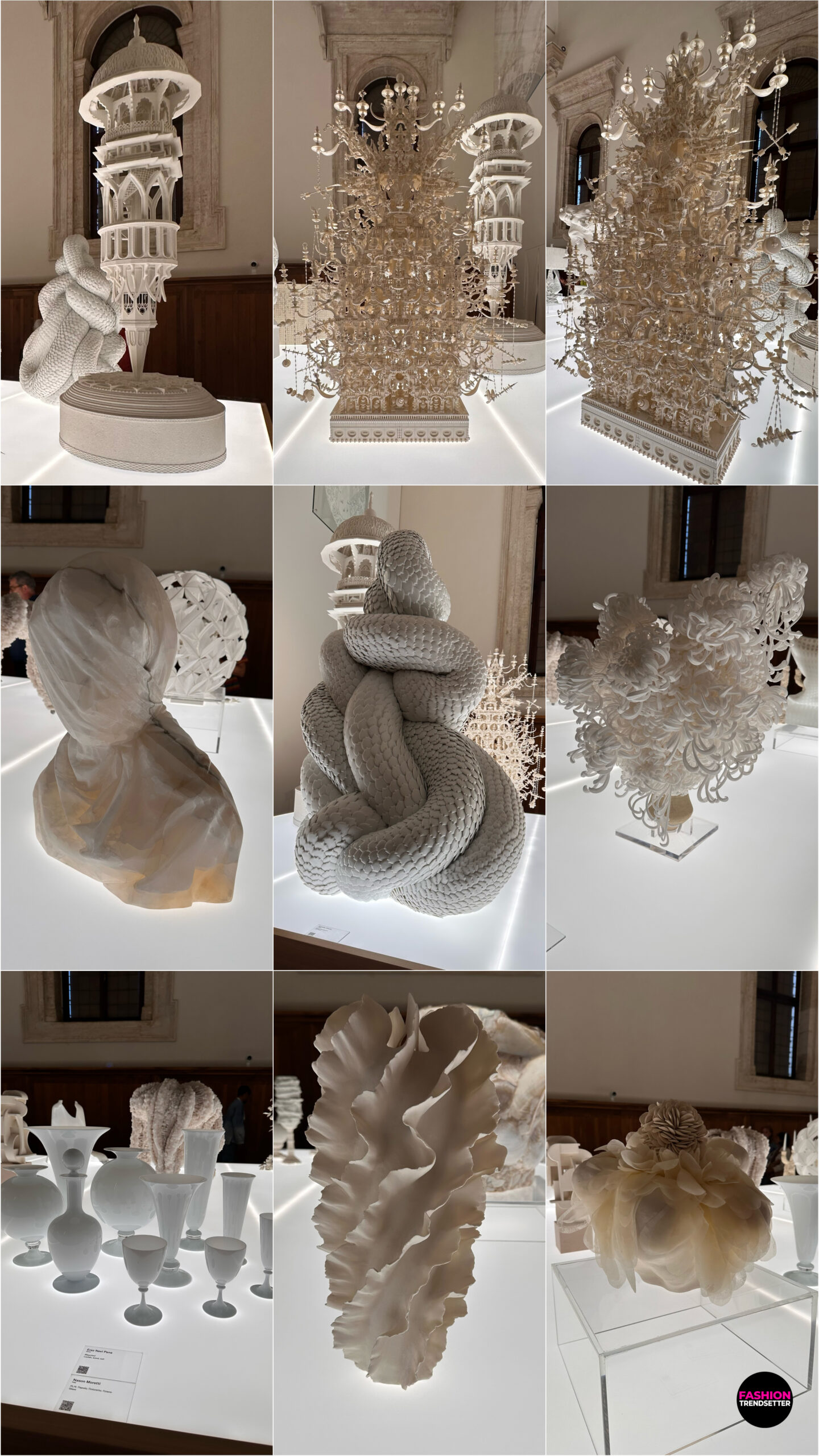
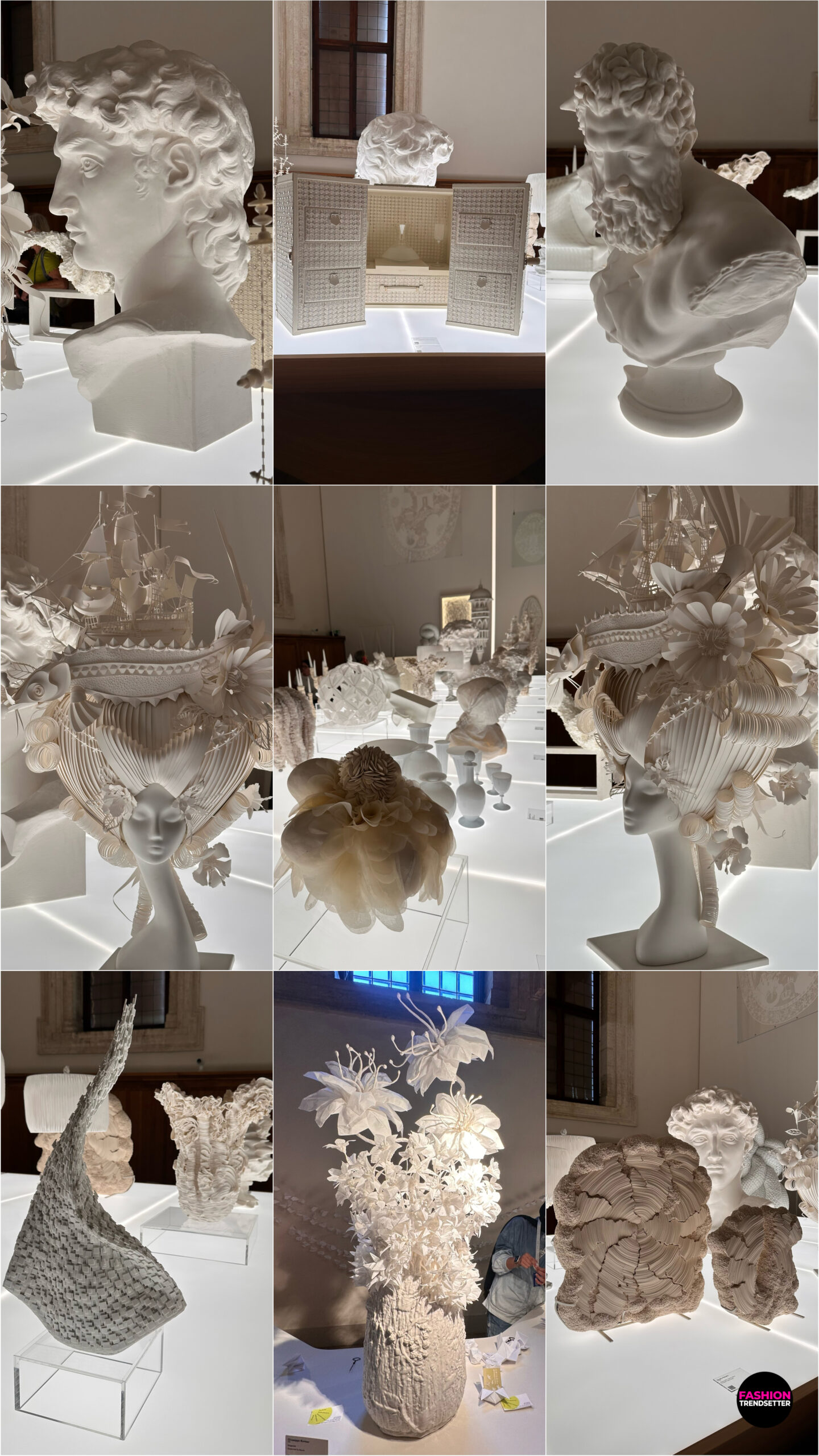
Homo Faber 2026: An Island of Light – A Feast of Light
A Feast of Light explored the transformative power of light through the delicate interplay of translucency, material, and form. Within the magnificent Palladian Refectory, a vertical line of light divided the space, illuminating a curated collection of white objects and revealing the subtle qualities of their surfaces. Delicate paper cuttings were displayed above a lightbox table featuring sculptural works in porcelain, glass, textiles, paper, and other materials. United by a restrained monochromatic palette, these creations demonstrated how light could reveal intricate details, soften contours, and lend materials an almost ethereal presence. Behind the wall, an extraordinary reproduction of Paolo Veronese’s The Wedding at Cana offered a striking artistic counterpoint, connecting the contemporary celebration of craftsmanship with the grandeur of Venetian art. Photos © 2026, Senay Gokcen & Efe Kaan Gokcen for Fashion Trendsetter.
Keeping the Hands of the Future Moving
One of the things that makes Homo Faber particularly meaningful is that it does not treat craftsmanship as something that belongs in a museum and should simply be admired from a distance. The wider Homo Faber initiative focuses on supporting contemporary craftspeople, connecting artisans with collectors and professionals, and creating opportunities for younger generations. The 2026 edition included the first Homo Faber Summit, the Young Ambassadors Programme with 90 students, Homo Faber Finds, and the continuation of the Homo Faber Fellowship for emerging talents and master artisans. [2] That makes the exhibition more than a celebration. Because preserving craftsmanship is not simply about preserving objects. It is about preserving knowledge. A technique can disappear when there is no one left to teach it. A material tradition can disappear when there is no longer a profession built around it. And an entire form of cultural memory can disappear when younger generations are given no reason or opportunity to continue it. Homo Faber is helping create those opportunities.
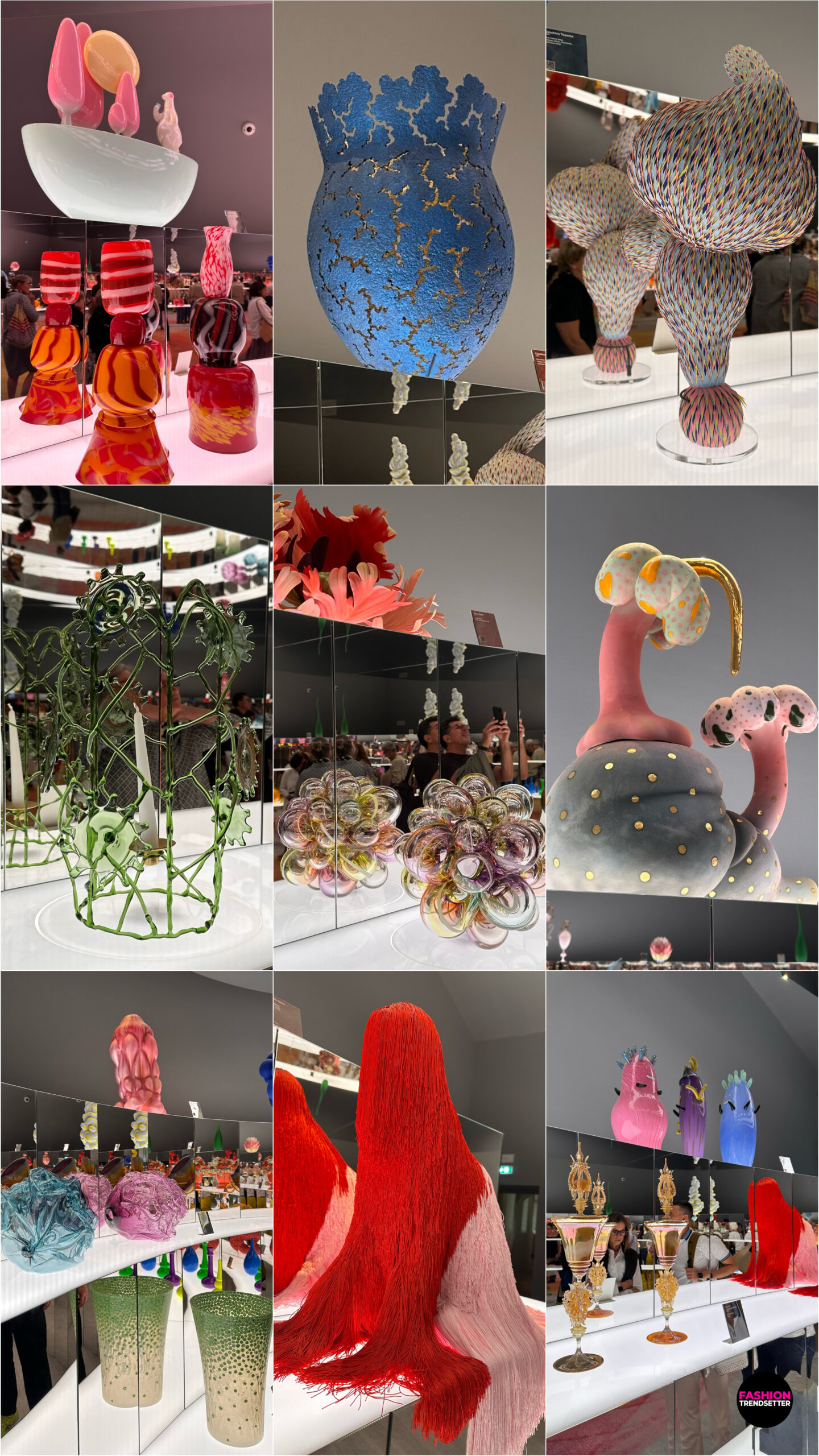
Homo Faber 2026: An Island of Light – A Rainbow of Forms
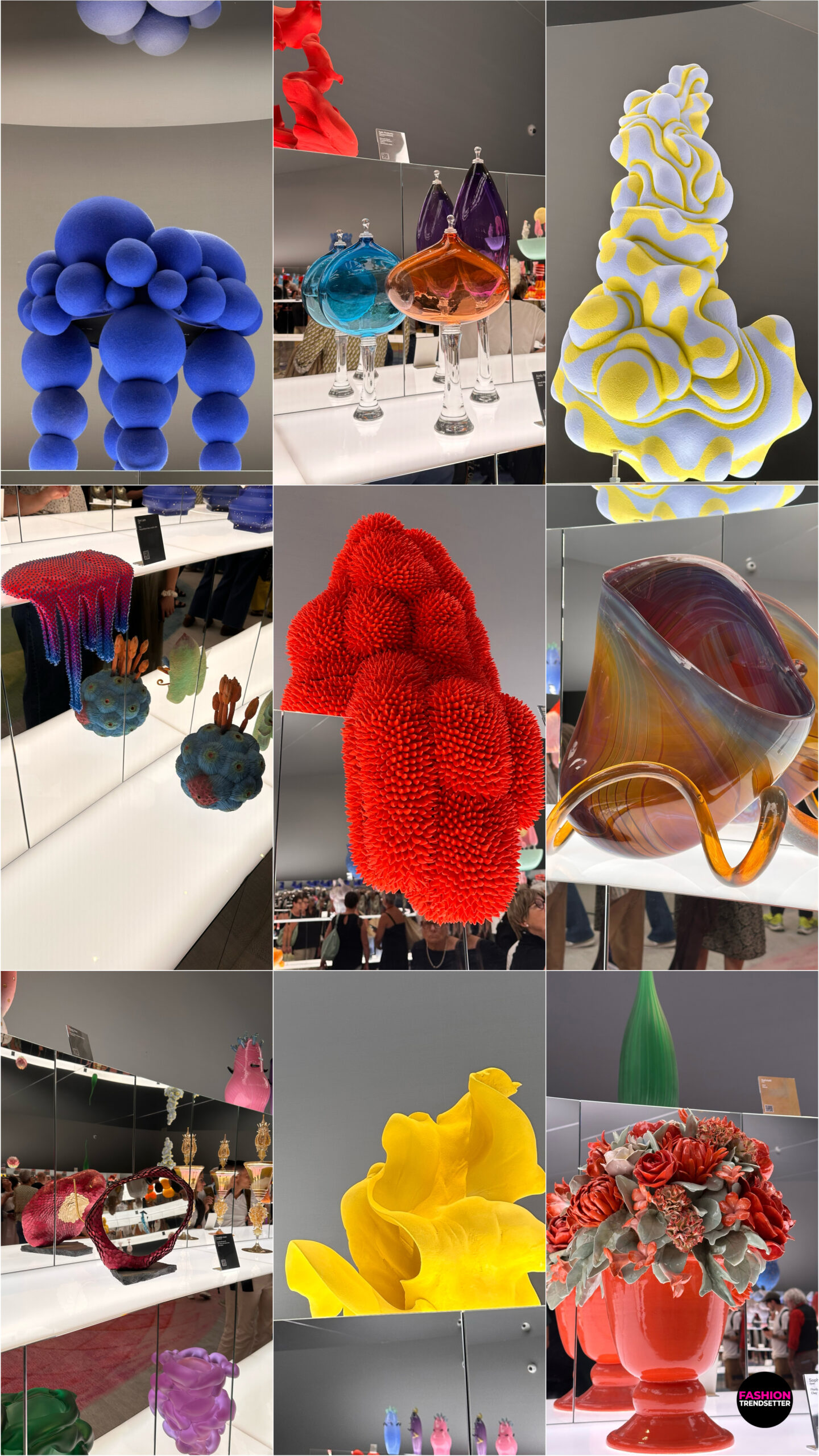
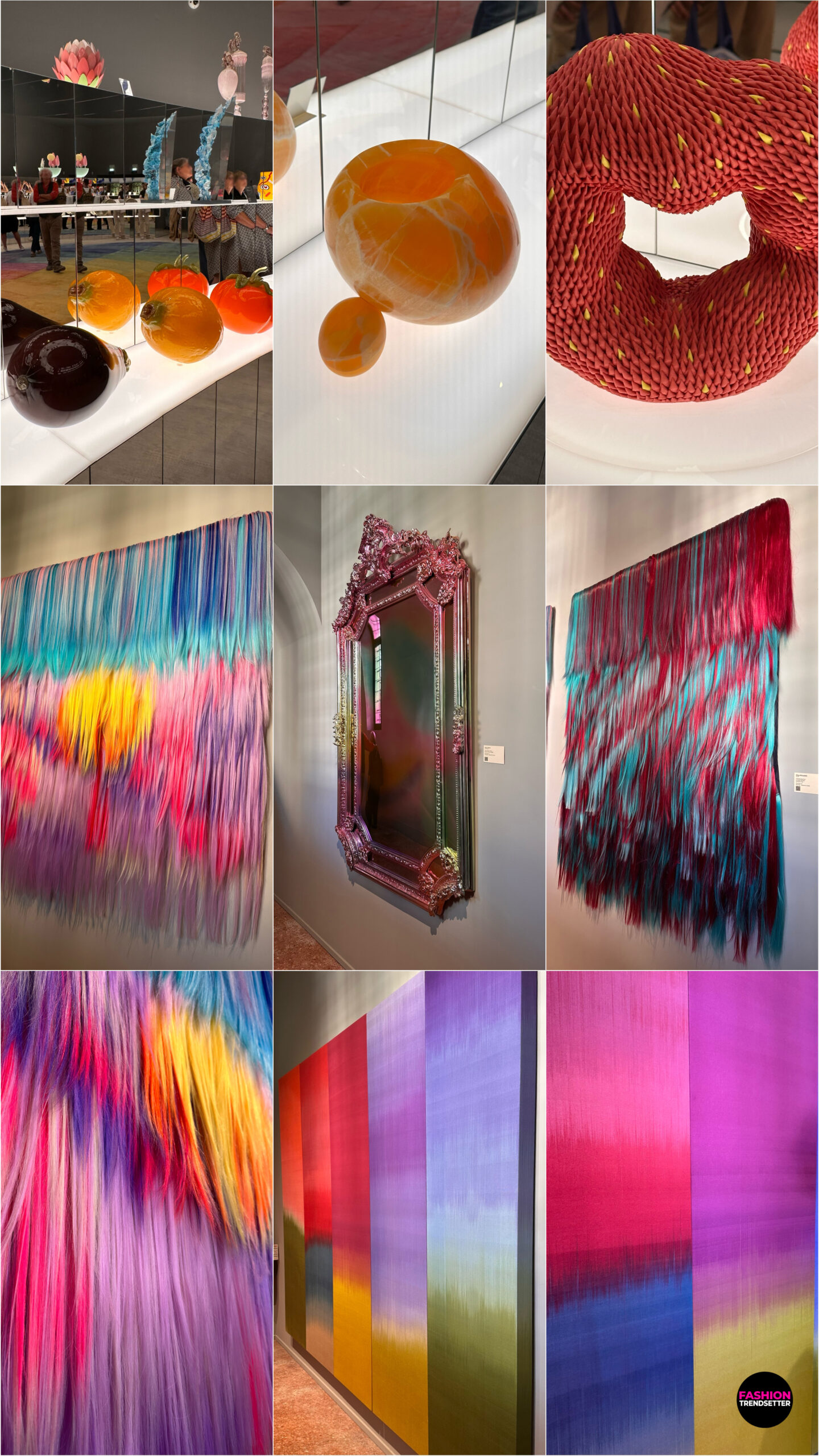
A Rainbow of Forms, supported by JSW Foundation, celebrated the expressive power of color through an exuberant collection of objects crafted from plastic, enamel, resin, glass, and a wide range of other materials. Arranged on mirrored shelves and rotating bases beneath an expansive mirrored ceiling, the pieces created an immersive environment in which color, light, and reflection continually transformed the perception of form. The interplay of surfaces and perspectives lent the exhibition space a sense of movement and visual abundance, revealing the versatility of contemporary craftsmanship across diverse materials. Anchoring the installation was an exquisite rug designed by Es Devlin and inspired by Goethe’s Theory of Colours, bringing an artistic and conceptual dimension to this vibrant exploration of colour, perception, and design. Photos © 2026, Senay Gokcen for Fashion Trendsetter.
Homo Faber 2026: An Island of Light – A Great Turning
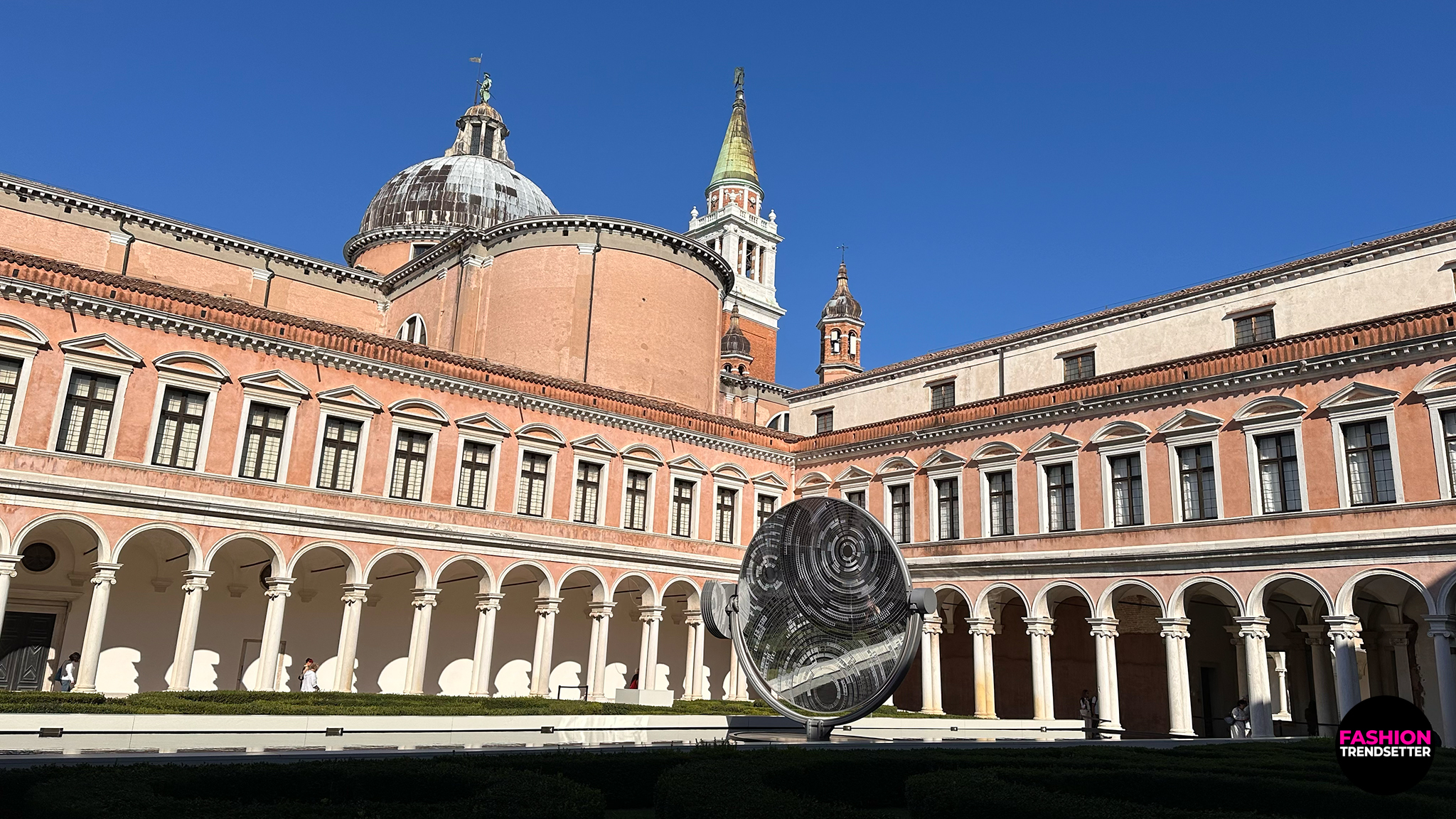
A Great Turning transformed the Palladian Cloister into a captivating study of light, water, reflection, and architectural geometry. A shallow pool running along the central walkway mirrored the cloister’s elegant arches, creating a fluid dialogue between architecture and its reflection. Above the water, a kinetic mirror sculpture captured and reshaped the changing daylight, introducing movement and shifting perspectives into the historic setting. Inspired by the circular patterns formed by raindrops falling onto the Venetian lagoon, the revolving sculpture evoked the rhythms of nature and the beauty of fleeting moments, revealing how light and reflection could transform the perception of space. Photo © 2026, Senay Gokcen for Fashion Trendsetter.
Homo Faber 2026: An Island of Light – Twenty Silent Songs
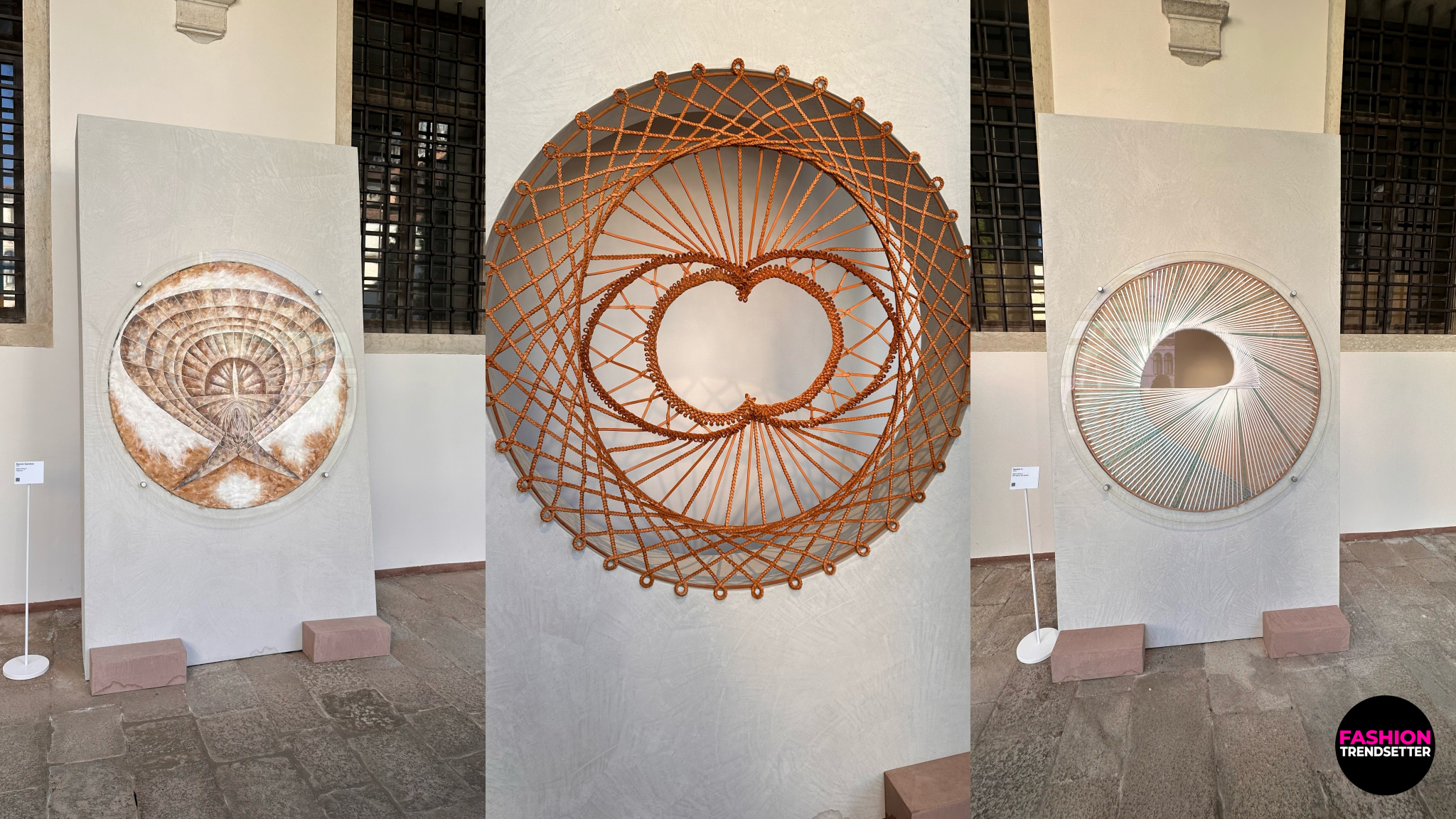
Set within the tranquil Cypress Cloister, Twenty Silent Songs explored the relationship between sound, movement, and material through an extraordinary collection of twenty artworks. Inspired by the bells of the Basilica of San Giorgio Maggiore, which once called the monks of the former monastery to prayer, the installation translated the vibrations of twenty bells into cymatic patterns, giving visual form to the invisible rhythms of sound. Each artwork was created by a maker from a different country, using a distinct craft and artistic approach. Together, these silent compositions celebrated the diversity of artisanal traditions, individual perspectives, and shared human inspirations, revealing how craftsmanship could express the essence of music without producing a single audible note. Photos © 2026, Senay Gokcen for Fashion Trendsetter.
An Island of Light
By the time we reached the end of the exhibition, what remained with us was not one particular object, one spectacular installation or one impressive number.
It was the accumulated feeling of having spent hours surrounded by people who still know how to make things. That may sound simple, but in a world where images can be generated in seconds, forms can be reproduced endlessly and machines can increasingly imitate creative processes, the evidence of the human hand feels more valuable than ever.
Homo Faber 2026 reminded us that craftsmanship is not simply a beautiful connection to the past.
It is a living language.
And if we want it to have a future, we need to keep listening to the hands that speak it.
Our gratitude goes to everyone who made Homo Faber 2026 possible: the Michelangelo Foundation for Creativity and Craftsmanship; Alberto Vanderbilt Cavalli, Director of the Michelangelo Foundation; the Fondazione Giorgio Cini; the Fondazione Cologni dei Mestieri d’Arte; Es Devlin and her team; the participating artisans, designers, and curators; the partners and ambassadors; and everyone who contributed to this remarkable celebration of craftsmanship.
And above all, to the artisans who continue to dedicate their lives to making, teaching and preserving their knowledge:
Thank you for keeping these traditions alive, for reminding us of the value of the human hand, and for giving craftsmanship a future.
Homo Faber
homofaber.com | @homofaber
The Homo Faber Biennial is an international celebration of contemporary craftsmanship in Venice, curated by the Michelangelo Foundation for Creativity and Craftsmanship. The flagship project of Homo Faber, a cultural movement centred on creative artisans worldwide, it brings together the work of hundreds of master artisans, rising stars and designers in the magnificent setting of Fondazione Giorgio Cini.
The Michelangelo Foundation for Creativity and Craftsmanship is a non-profit institution based in Geneva, which champions contemporary craftspeople worldwide with the aim of promoting a more human, inclusive and sustainable future. The Foundation seeks to highlight the connections between craft, the wider arts and the design world. Its mission is to both celebrate and preserve craftsmanship and its diversity of makers, materials and techniques, by increasing craft’s everyday recognition and its viability as a professional path for future generations. The Foundation presents Homo Faber, a cultural movement centred on creative artisans worldwide. Its signature projects comprise: Homo Faber NextGen, a suite of education programmes for the next generations of artisans; Homo Faber Guide, an online platform showcasing artisans around the world; Homo Faber Finds, which identifies craft excellence and proposes imaginative ideas to inspire collaborations, private commissions and acquisitions; and a yearly programme of events including flagship celebration Homo Faber Biennial and curated exhibition series Homo Faber Capsule.
British contemporary artist and designer Es Devlin views an audience as a temporary society and invites public participation in communal choral works. Her revolving Library of Light drew 500,000 visitors to Pinacoteca di Brera at Salone di Mobile Milan 2025 featuring the words of Italian theoretical physicist Carlo Rovelli, and was followed by her luminous Library of Us commission for Faena Art Miami. She has created public sculptures and installations at the V&A Museums, National Portrait Gallery, Serpentine Galleries and Imperial War Museum, and outside at Tate Modern, Trafalgar Square and the Lincoln Centre, as well as kinetic stage designs at the Metropolitan Opera NYC, Royal Opera House, the National Theatre and Teatro alla Scala. She and her studio have also conceived Olympic ceremonies, Super Bowl half-time shows, and monumental illuminated stage sculptures for large scale stadium concerts with celebrated musicians, as well as collaborations with international fashion houses including the Metropolitan Museum Costume Exhibition About Time in NYC in 2020 and the landmark Gucci Cosmos touring exhibition in 2023. She has collaborated with Cartier over the past decade on a series of projects including the Women’s Pavilion at the World Expo Osaka 2025 and her monumental choral sculpture Come Home Again, for which she made drawings of 250 endangered London species outside Tate Modern. In 2024 she drew 50 portraits of strangers in partnership with The Courtauld and Kings College London in support of UK for UNHCR (the United Nations High Commission for Refugees). She conceived a pavilion at the United Nations Headquarters in New York drawing attention to the United Nations Global Goals, while her Nevada Ark video installation highlighted Nevadian endangered species at U2’s inauguration of the Sphere, Las Vegas in 2023. She is the subject of Thames & Hudson’s monographic sculptural book, An Atlas of Es Devlin, and her practice is documented in a series of retrospective exhibitions at the Design Museum in London, Casa Bradesco São Paulo, Futura Seoul and the Cooper Hewitt Smithsonian Design Museum in New York. Devlin was the first female designer of the UK Pavilion at Expo 2020, creating a pavilion that used AI to generate a collective poem across its 20-metre diameter facade. She has been awarded the Eugene McDermott Award for the Arts at MIT (Massachusetts Institute of Technology) as well as The Critics Circle Award in the Visual Arts, The London Design Medal, three Olivier Awards and a Tony Award. She has been honoured by the Emmy Awards and Ivor Novello Awards and has been appointed Royal Designer for Industry by the Royal Society of Arts. She is the recipient of a CBE for Services to Design and has received honorary doctorates in arts and letters from the Universities of Kent and Bristol. She has been appointed as a fellow of the Royal Academy of Music and the University of the Arts London, Bloomberg Digital Fellow and Visiting Professor of Contemporary Theatre at the University of Oxford.
INSTITUTIONAL PARTNERS
Fondazione Cologni dei Mestieri d’Arte, based in Milan, promotes cultural, academic and educational initiatives for the protection and diffusion of artistic crafts, and its purpose is to rescue them from the threat of oblivion by fostering a “new Renaissance”.
Founded in 1951, the Fondazione Giorgio Cini is one of the world’s leading cultural institutions, safeguarding an extraordinary heritage of art, architecture and historical archives. Through its seven institutes and three research centres, it drives high-level humanistic research and hosts global symposia that foster cultural dialogue.
Sources:
[1] Homo Faber 2026: An Island of Light – Opening Press Release. Michelangelo Foundation for Creativity and Craftsmanship, September 2026.
[2] Homo Faber 2026: An Island of Light – Closing Press Release. Michelangelo Foundation for Creativity and Craftsmanship, October 2026.
Photography by Senay Gokcen & Efe Kaan Gokcen.
All images © 2026 Fashion Trendsetter. All rights reserved.
September 29, 2026, San Giorgio Maggiore Island, Venice, ITALY.
Tags: Accessories, Alberto Vanderbilt Cavalli, art exhibition, artisan, artisanal, artists, arts crafts, artwork, Color, contemporary design, craftsmanship, creativity, cultural events, culture, curator, design, design elements, design events, design exhibition, designers, diamond jewelry, Efe Kaan GOKCEN, enamel, Es Devlin, Exhibition, fabrics, fashion, fine jewelry, Fondazione Cologni dei Mestieri d'Arte, Fondazione Giorgio Cini, glass, Handcrafted, home decor, Homo Faber, interior, interior design, Italy, jewelry, light, Michelangelo Foundation, objects, paper dress, plastic, product design, resin, San Giorgio Maggiore Island, Senay GOKCEN, textile art, textile arts, textiles, Top, Venice
Share this page